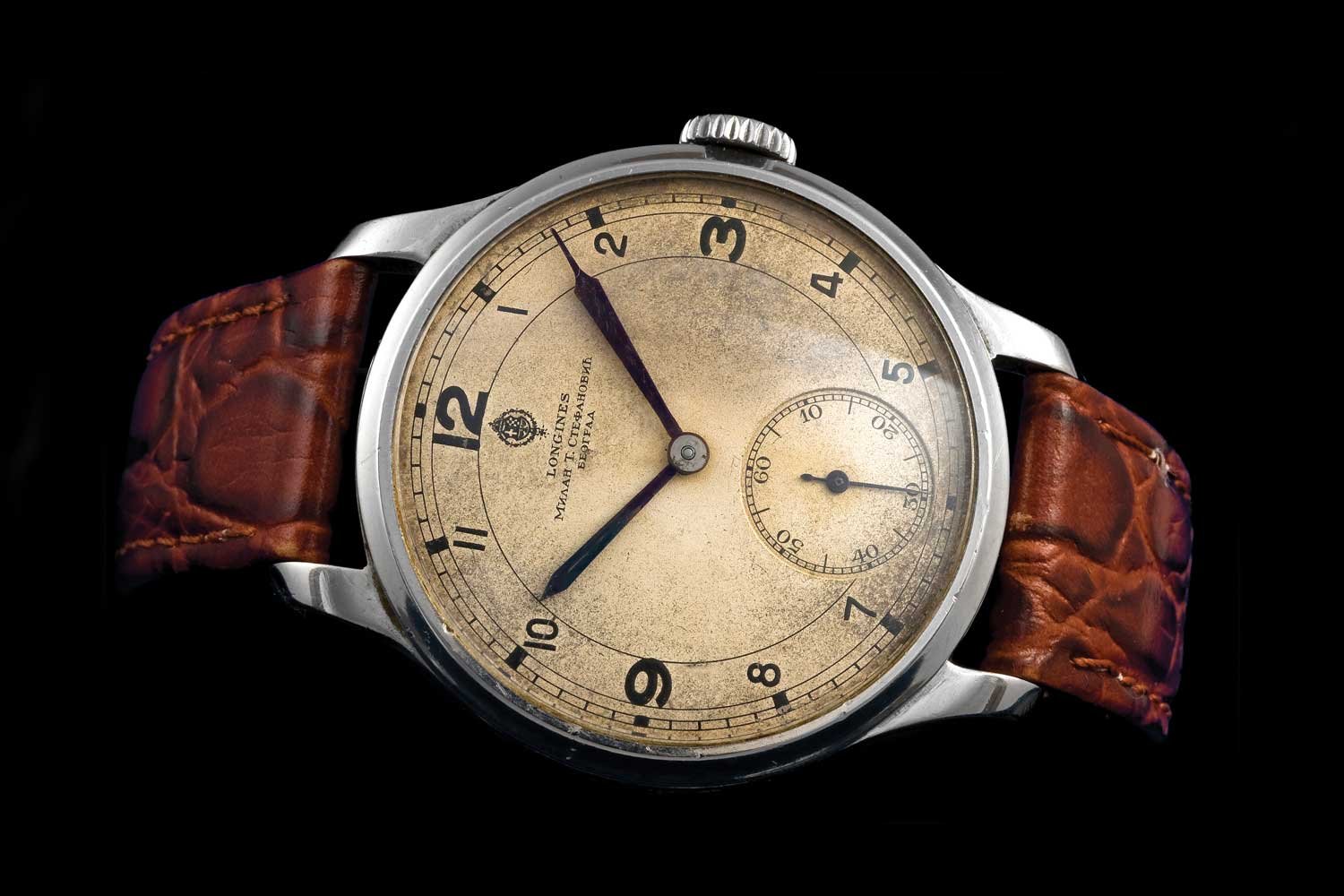
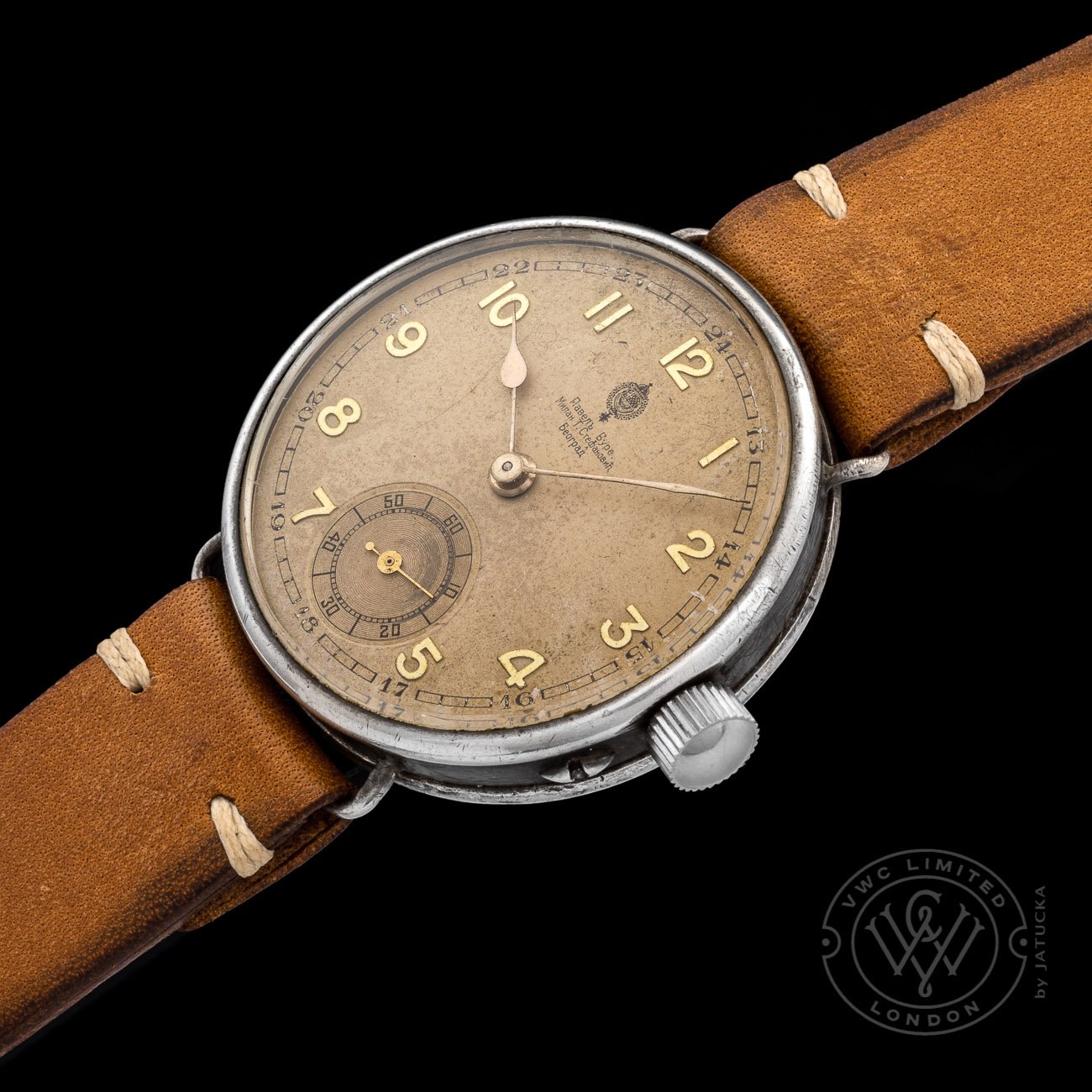
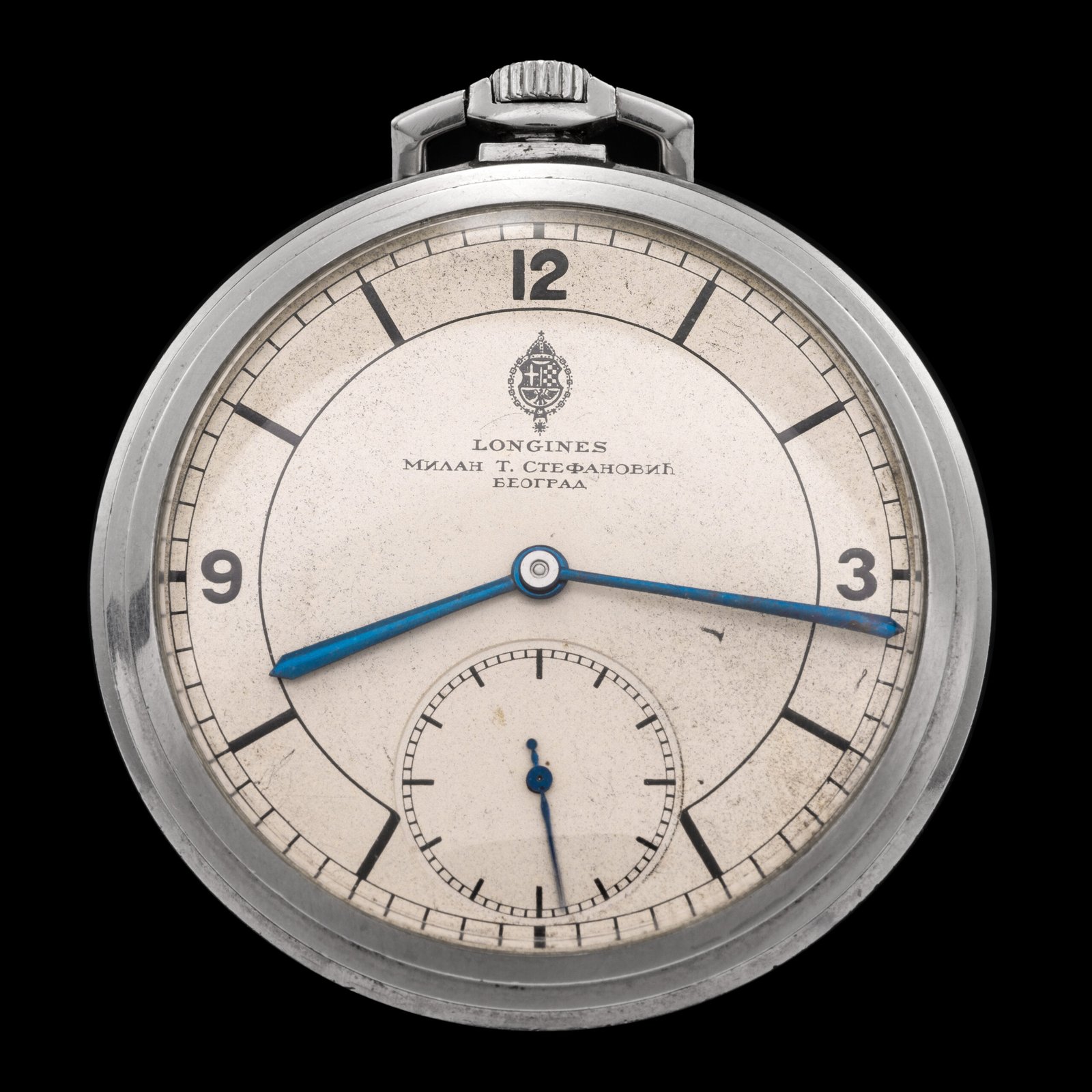
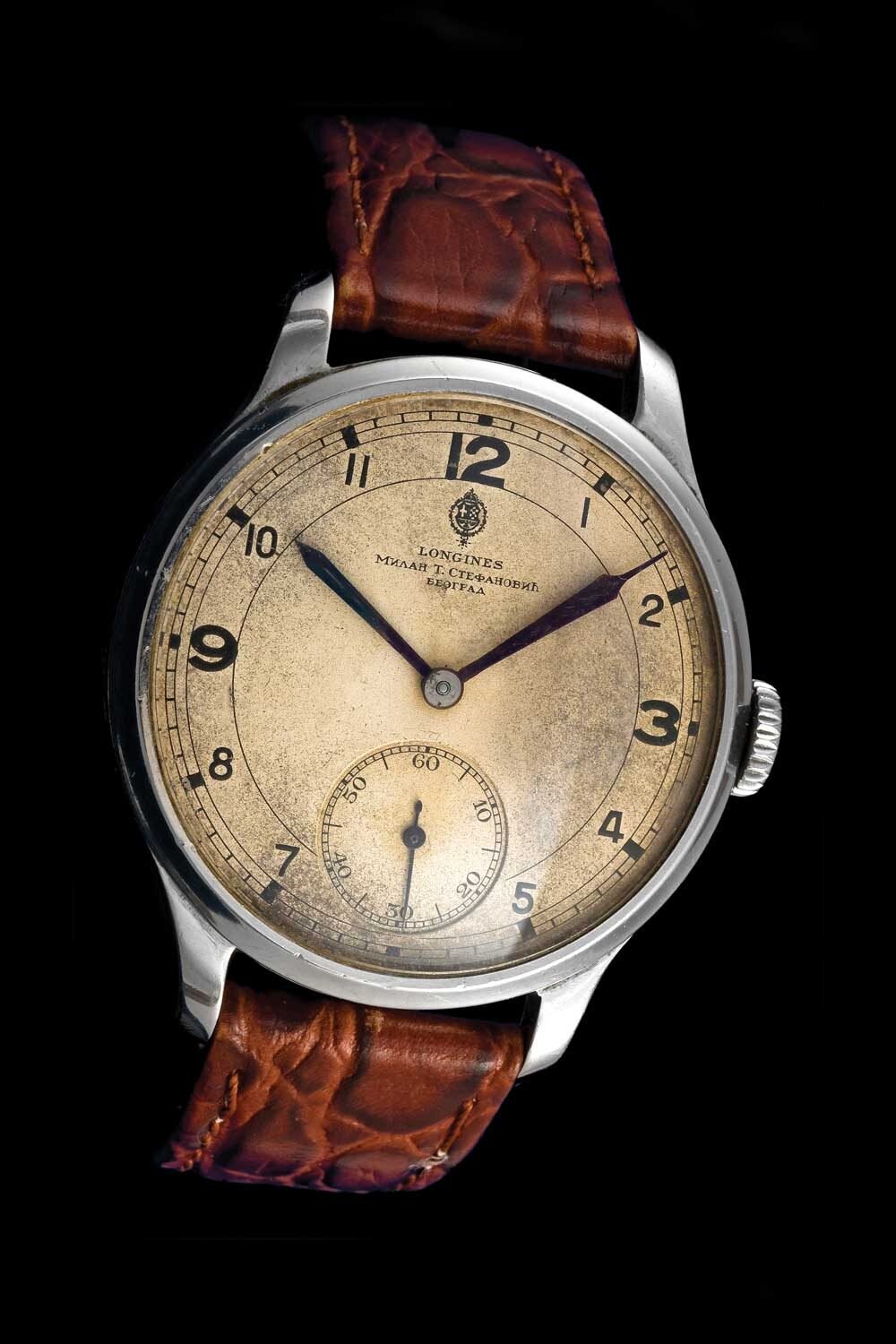
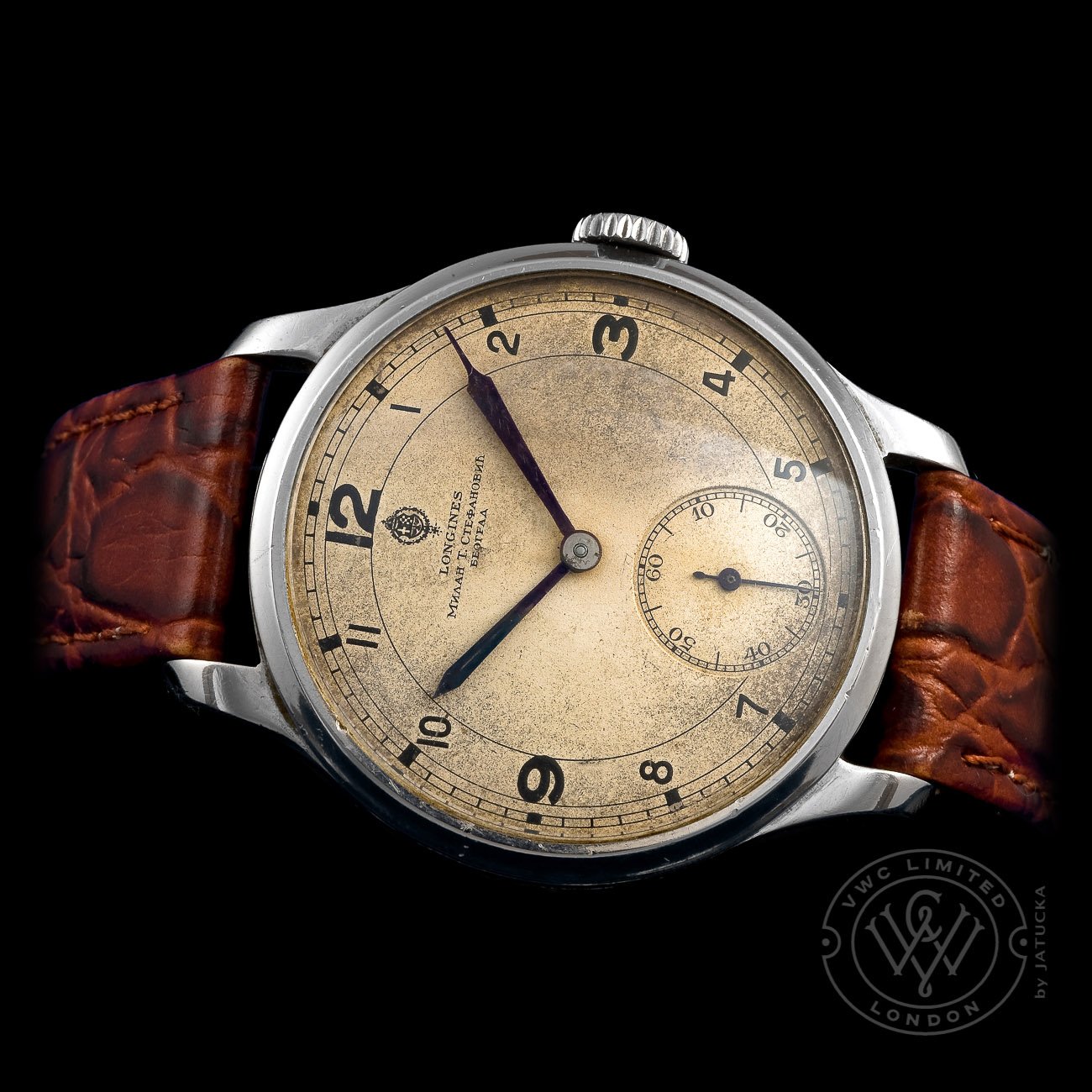
A first-batch Longines Serbian with white dial. Reference 3494, order number 19477, invoiced 11 September 1937 to Stefanovich. The hands are blued steel ‘Feuille’/leaf hands, the case is a great size at 38mm diameter
In this article
Summary
The Longines ‘Serbian’ watches represent exceptional military presentation timepieces produced in two batches, a white dial reference 3494 (1937) and black dial reference 2326 (1939). Commissioned by Milan T. Stefanovich, Belgrade’s premier court-appointed retailer, for the Royal Yugoslav Military Academy graduates. Approximately 20 examples currently known to the market (15 black, 5 white) circa 127 various Longines watches produced for Stefanovich, (only 47 examples with reference 2326). These watches feature distinctive Yugoslav coat of arms on dial and case back, Stefanovich retailer signature in Cyrillic, and robust calibre 15.26 movements. This reference article hopes to provide a comprehensive analysis of both references, also showcasing my own travels in finding one!
Travels to pick up the Serbian
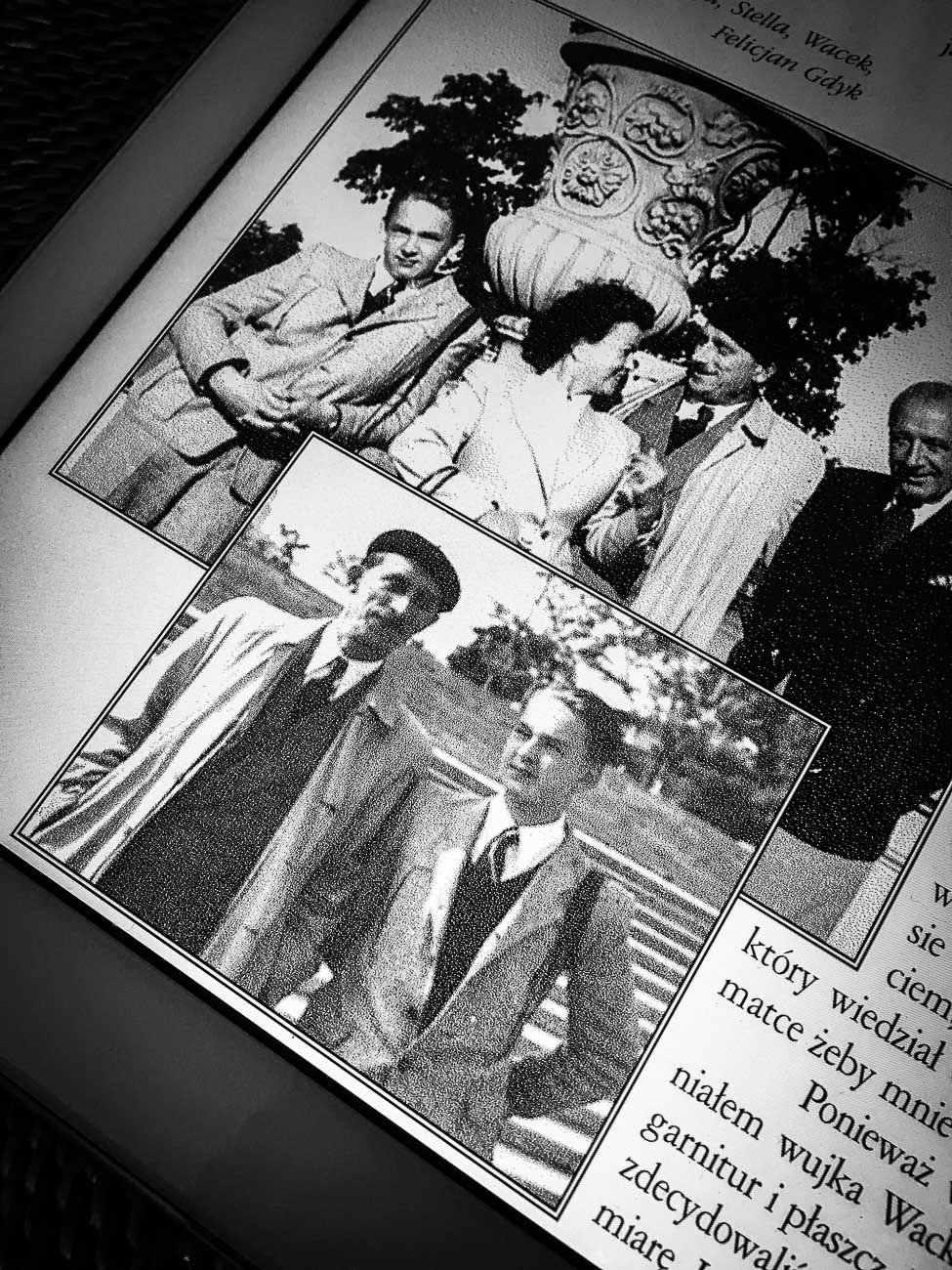
Interesting and rare watches often pop up in the most unexpected of places; this is for sure the case here. This watch found in Cork Ireland, from the nephew of the previous owner. I decided to take some images and document my day trip going to pick up the watch. The name of the original owner shown in photograph was a Waclaw Jarosz, from the region of Todz, Poland seen in images below. According to the information I was given, it wasn’t clear how his Uncle had found it, only that it was around 1945-1947 at the end or just after WWII. I guess most likely the watch was given in trade by a (Serbian) soldier, as was quite often the case that soldiers would trade goods that they had between themselves.
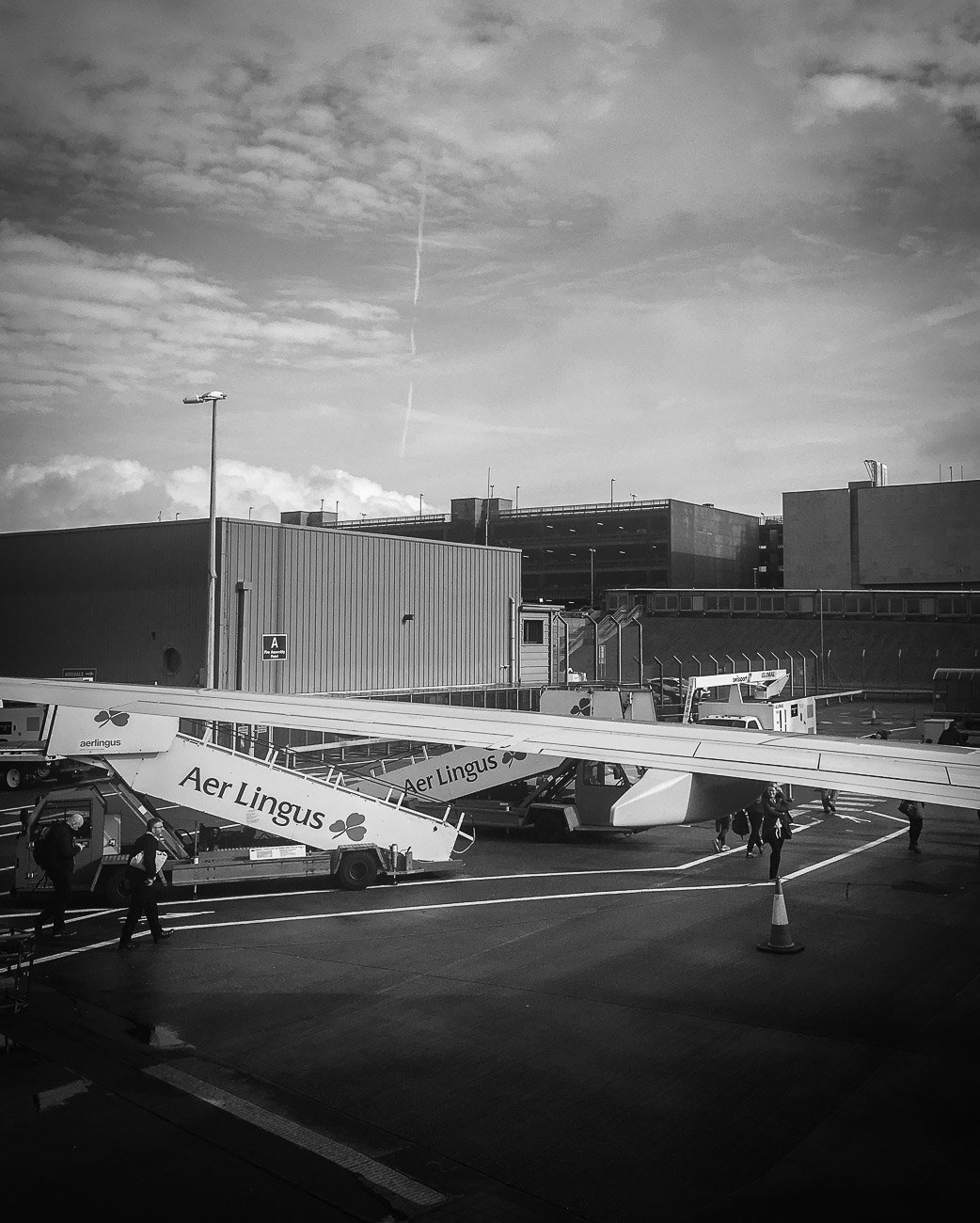
Early morning flight to Cork Ireland…
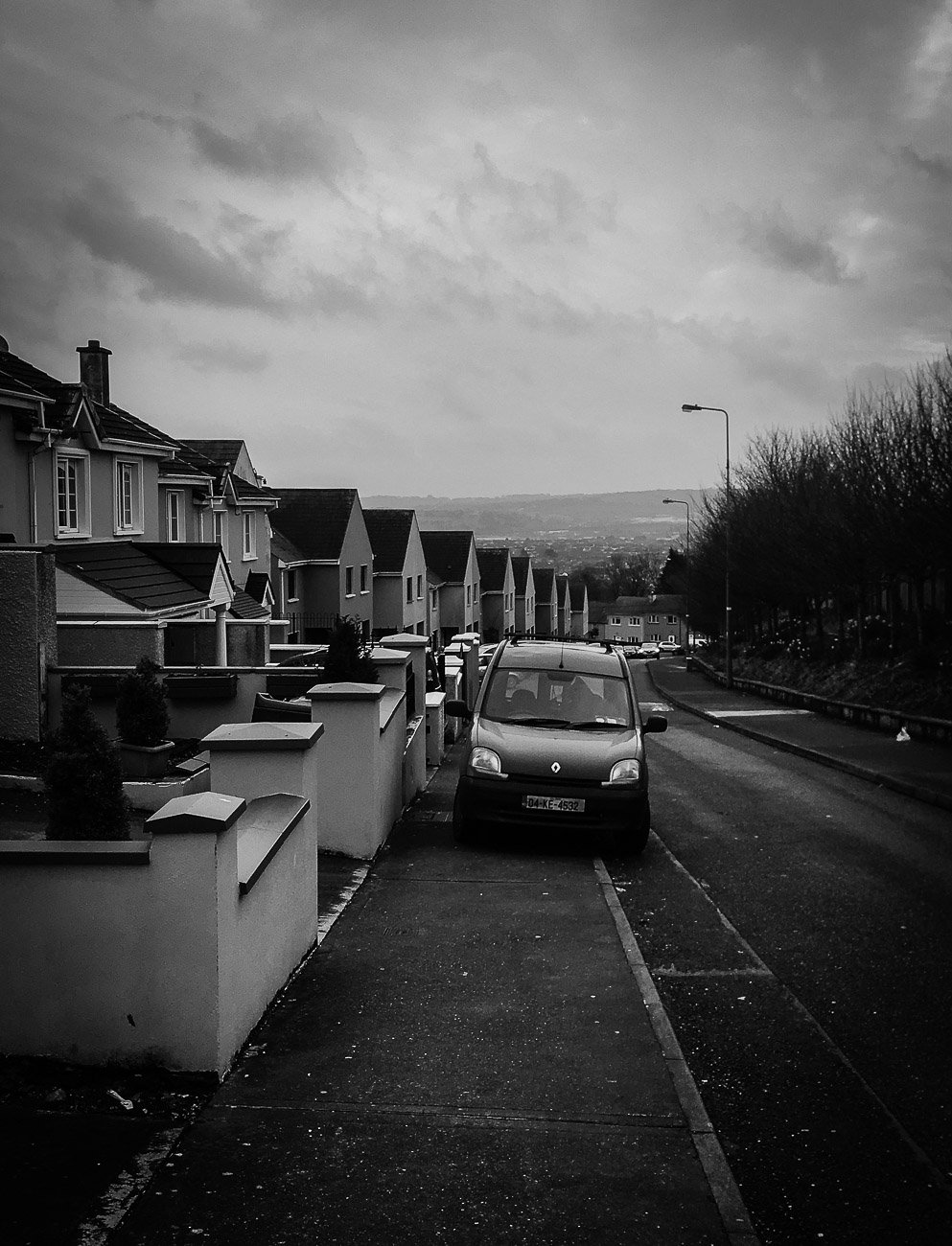
Looking for the right address walking through the outskirts of Cork, finally I get to the house.
Looking for the right address walking through the outskirts of Cork, finally I get to the house.
The name of the original owner shown in photograph left, was a Waclaw Jarosz, from the region of Todz, Poland
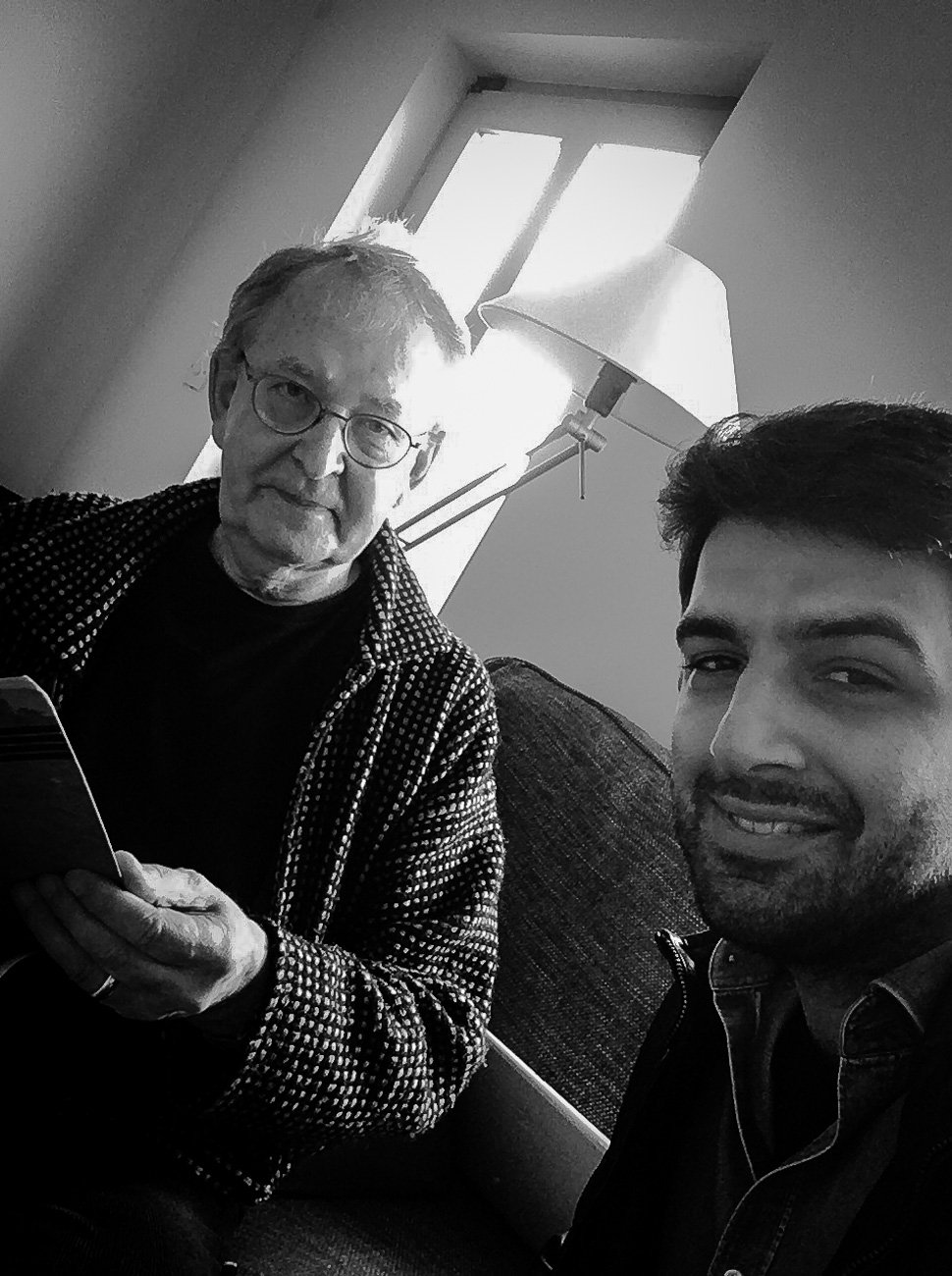
Meeting the owner of the watch.
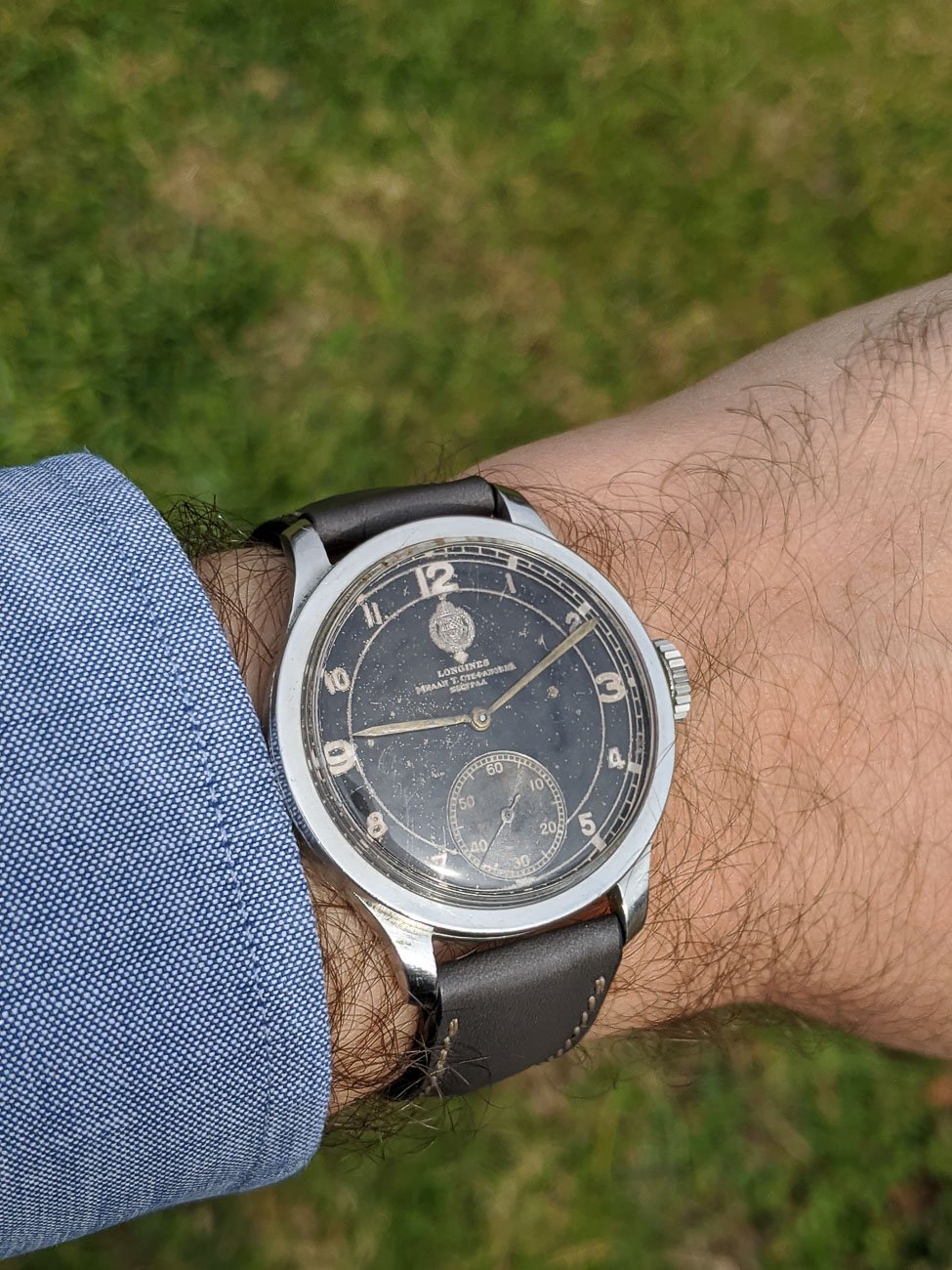
Finally arrived home with the watch…
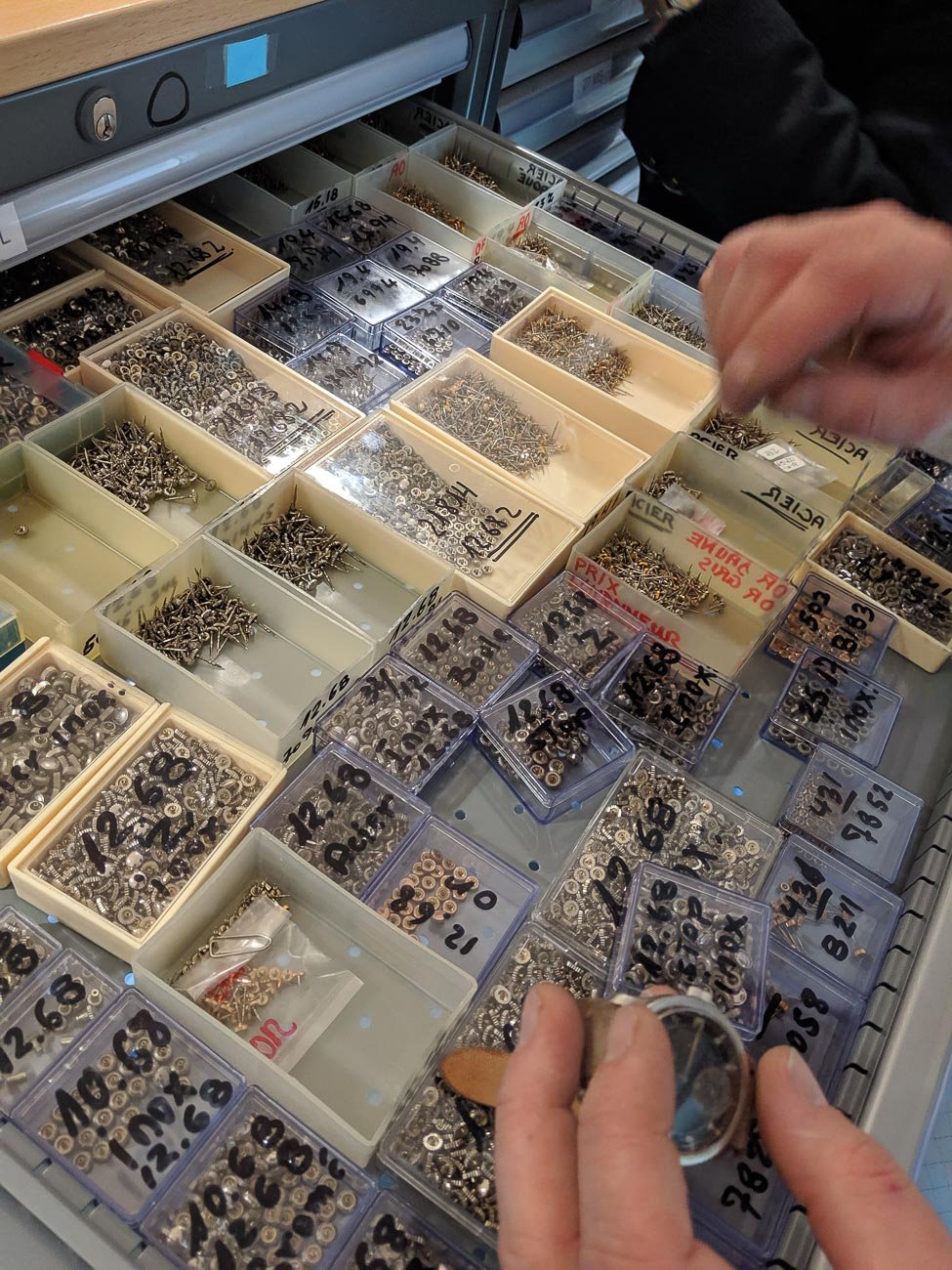
Sometime later, I was lucky to get a crown straight from the draws of Longines at a recent GTG that we had there.
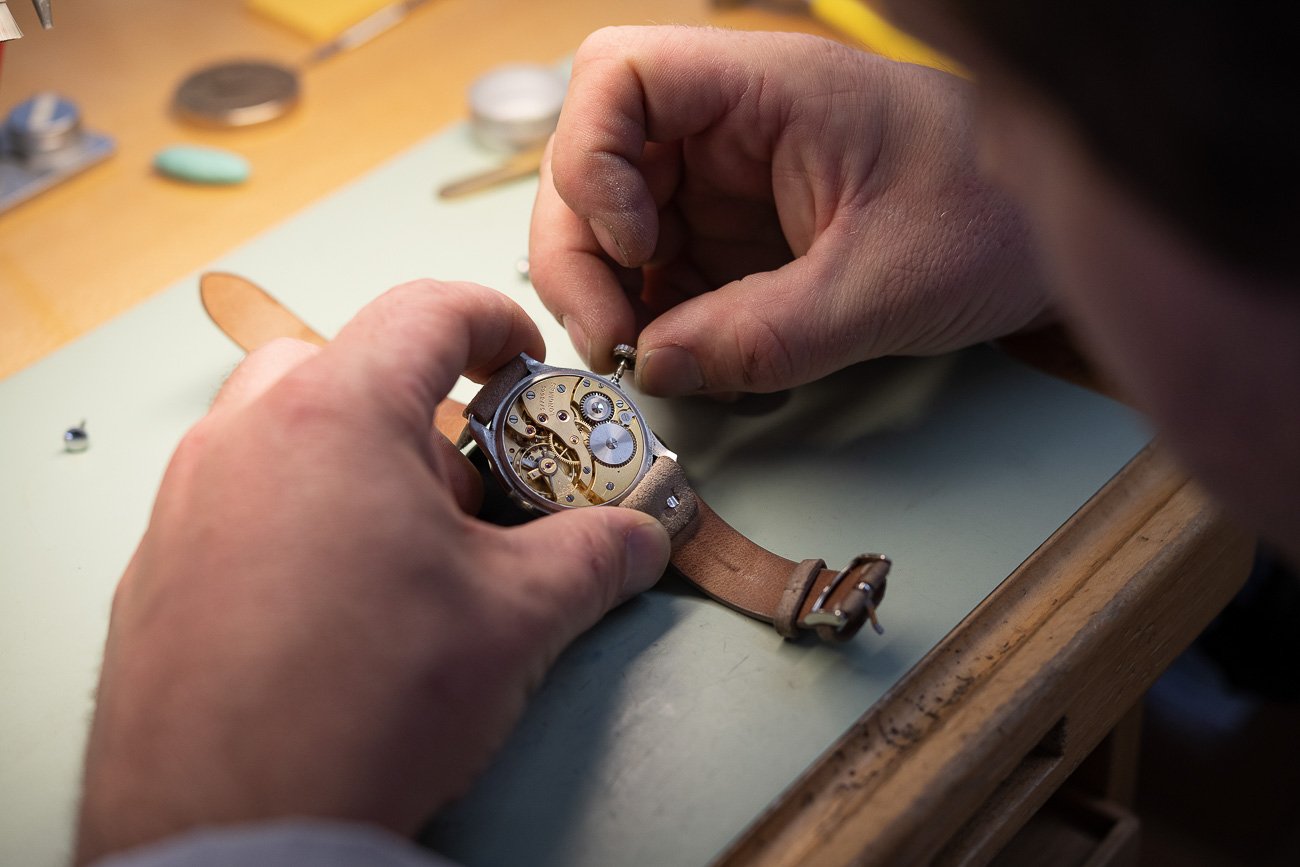
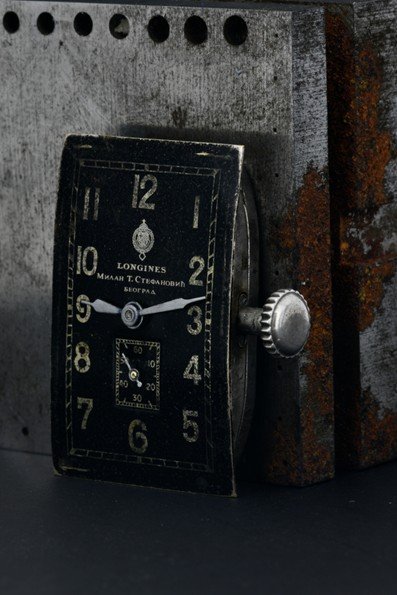
Longines St Imier on the bench
Thanks in advance to Jennifer Bochud, a friend and curator at the Longines museum for her kind help with this article and for all the information from the archives. Here is the info from the archives on the watch.
Brief look at Second Batch 2326 – Black Serbian
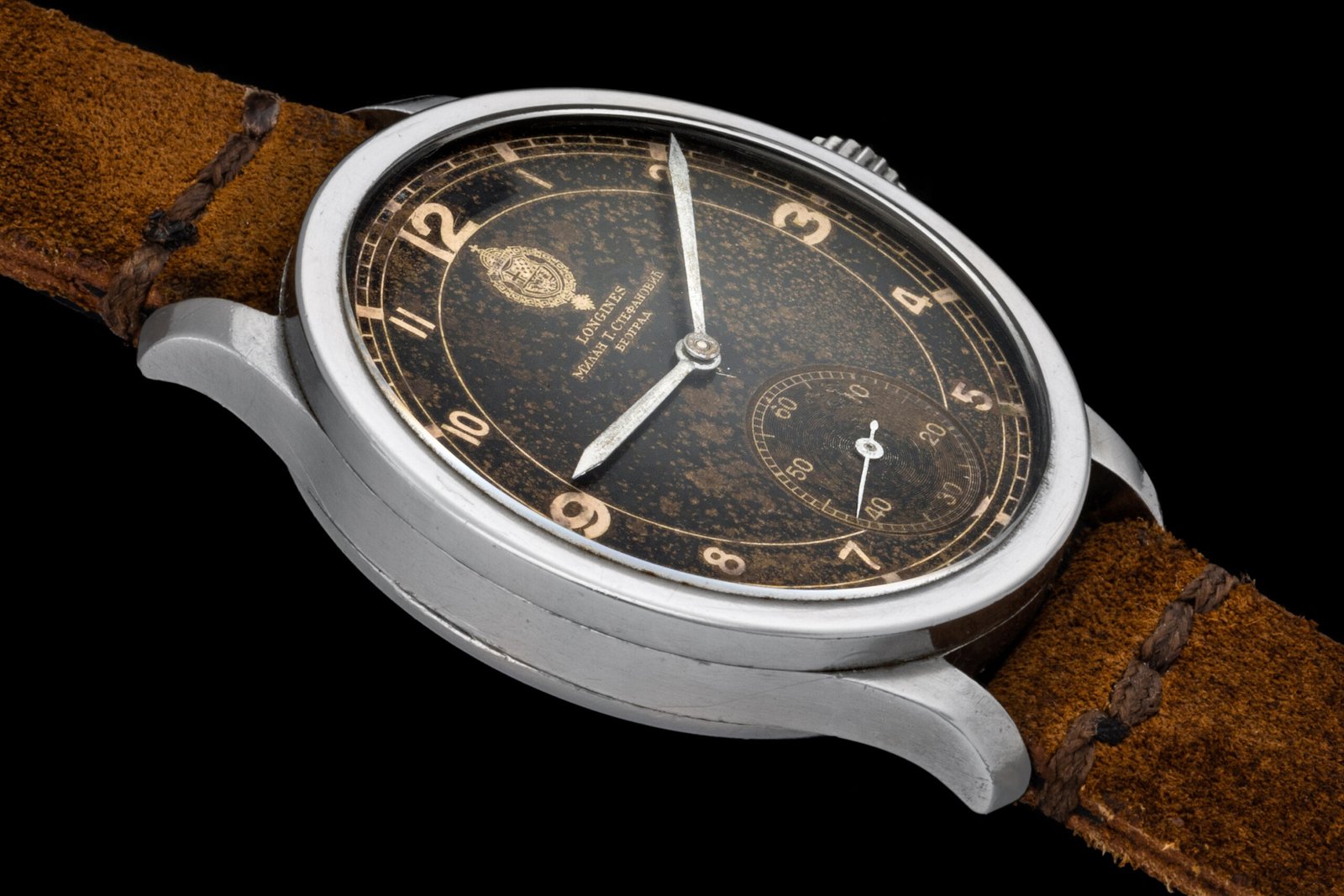
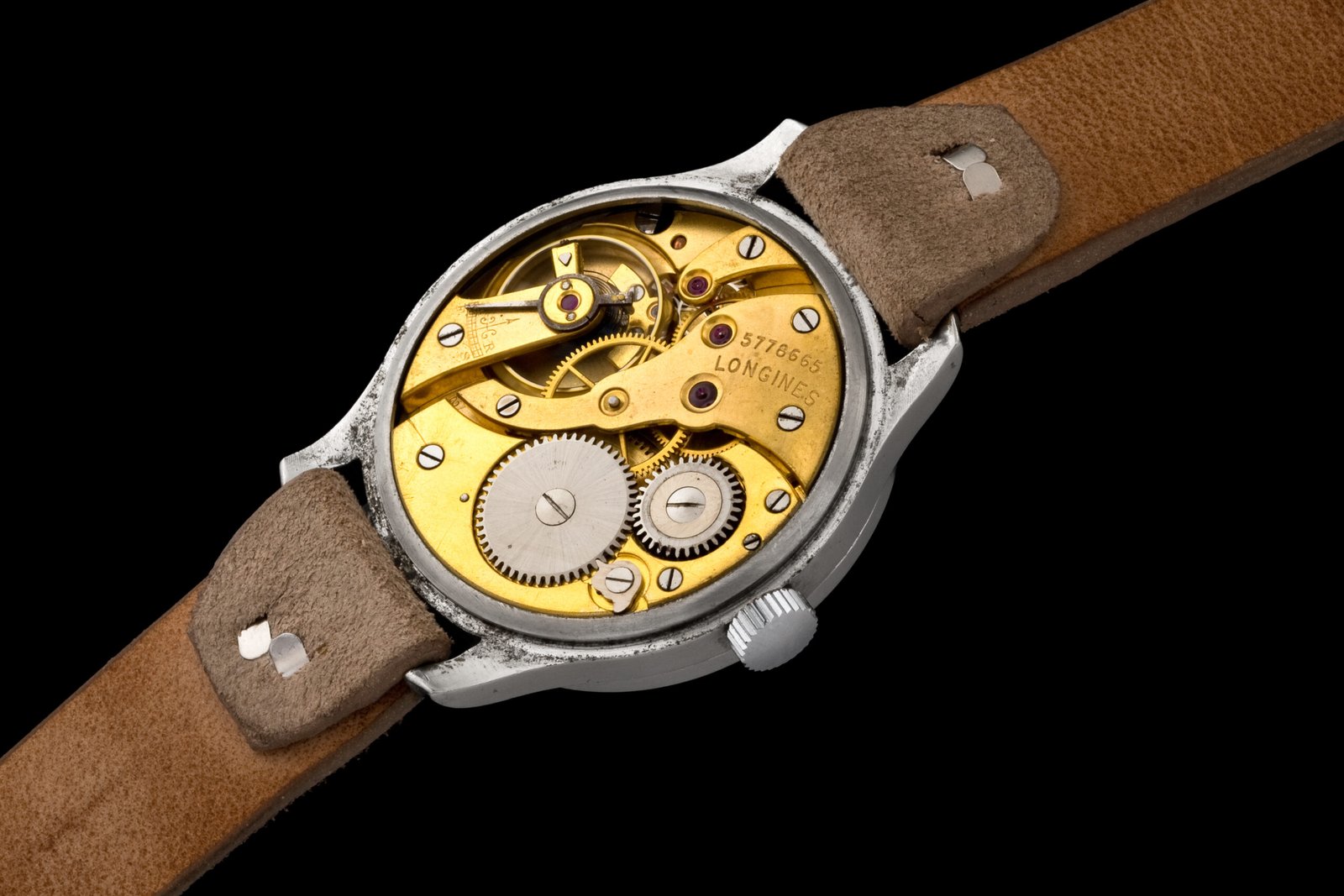
(Second batch Black dial) (Info from Longines) – The original serial number 5,778,665 identifies a wristwatch in stainless steel bearing the reference 2326 (this is also known as the cliché). It is fitted with a Longines manually wound mechanical movement, caliber 15.26 and was invoiced on 15 Sep 1939 to the company Stefanovich Milan T, which was at that time our agent in Belgrade. Also from the archives ‘ I can confirm the order number 20652. The name of Stefanovich and the emblem are on the black dial (in cyrillic). There also is the engraving on the case back of a “military coats of arms”.
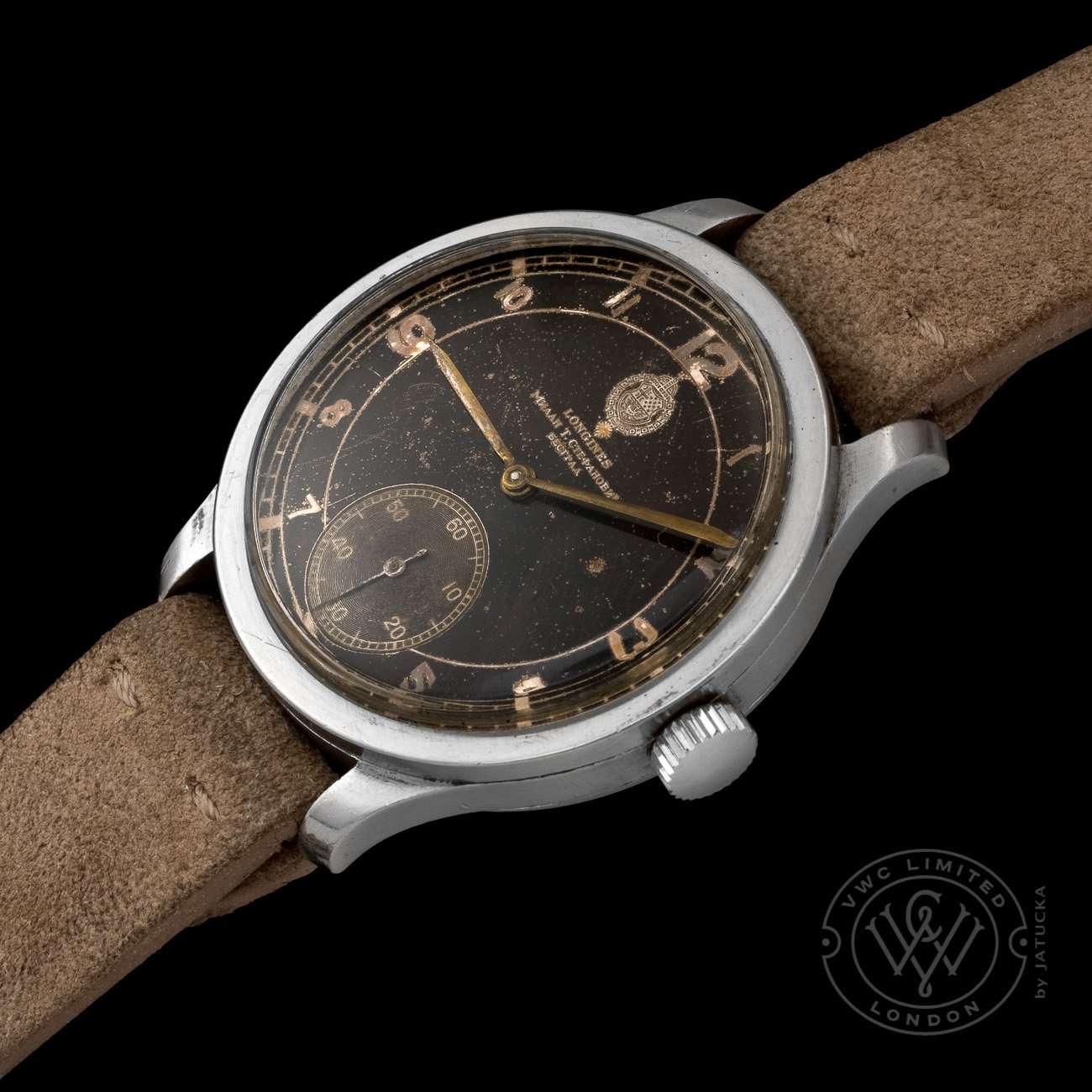
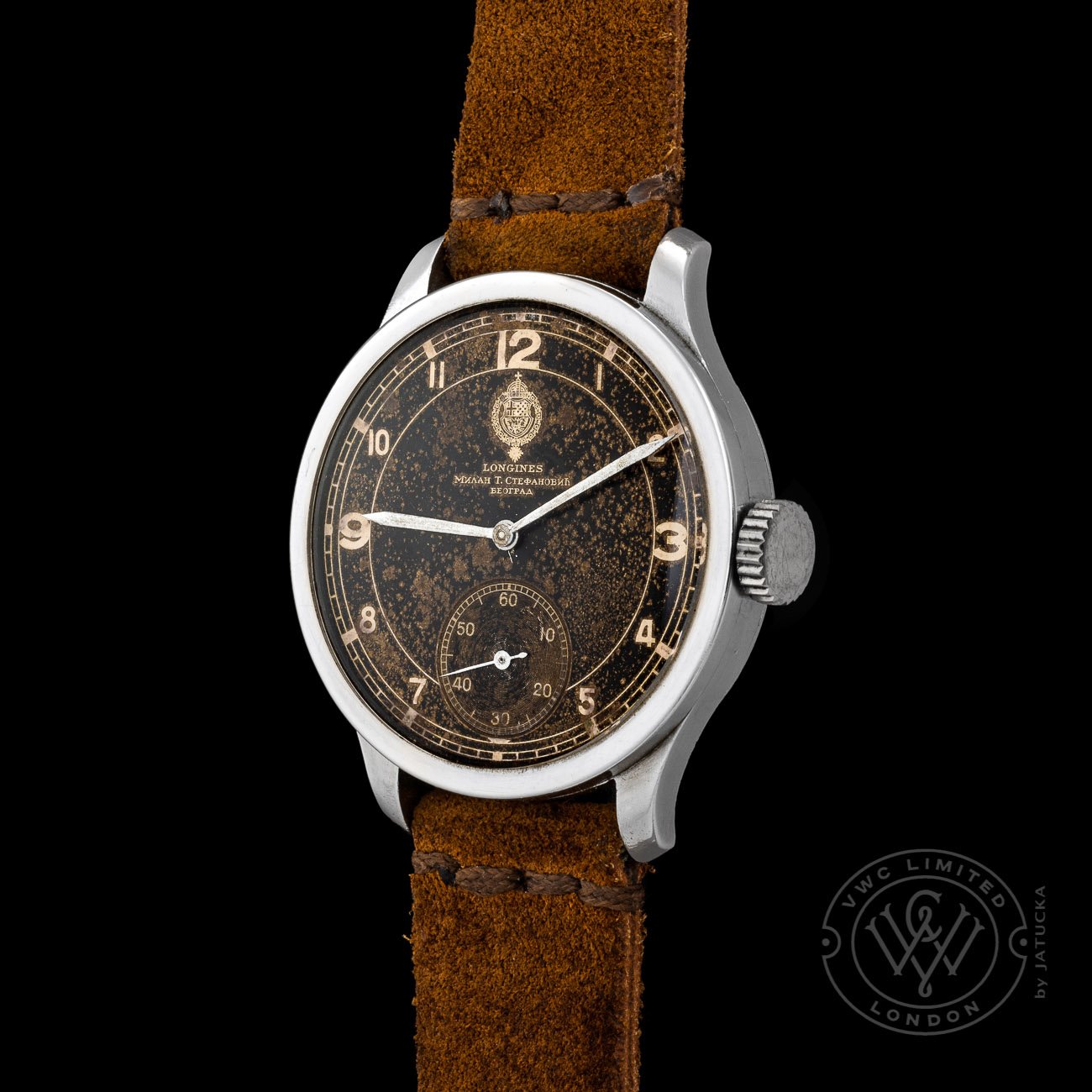
The Serbian, reference 2326
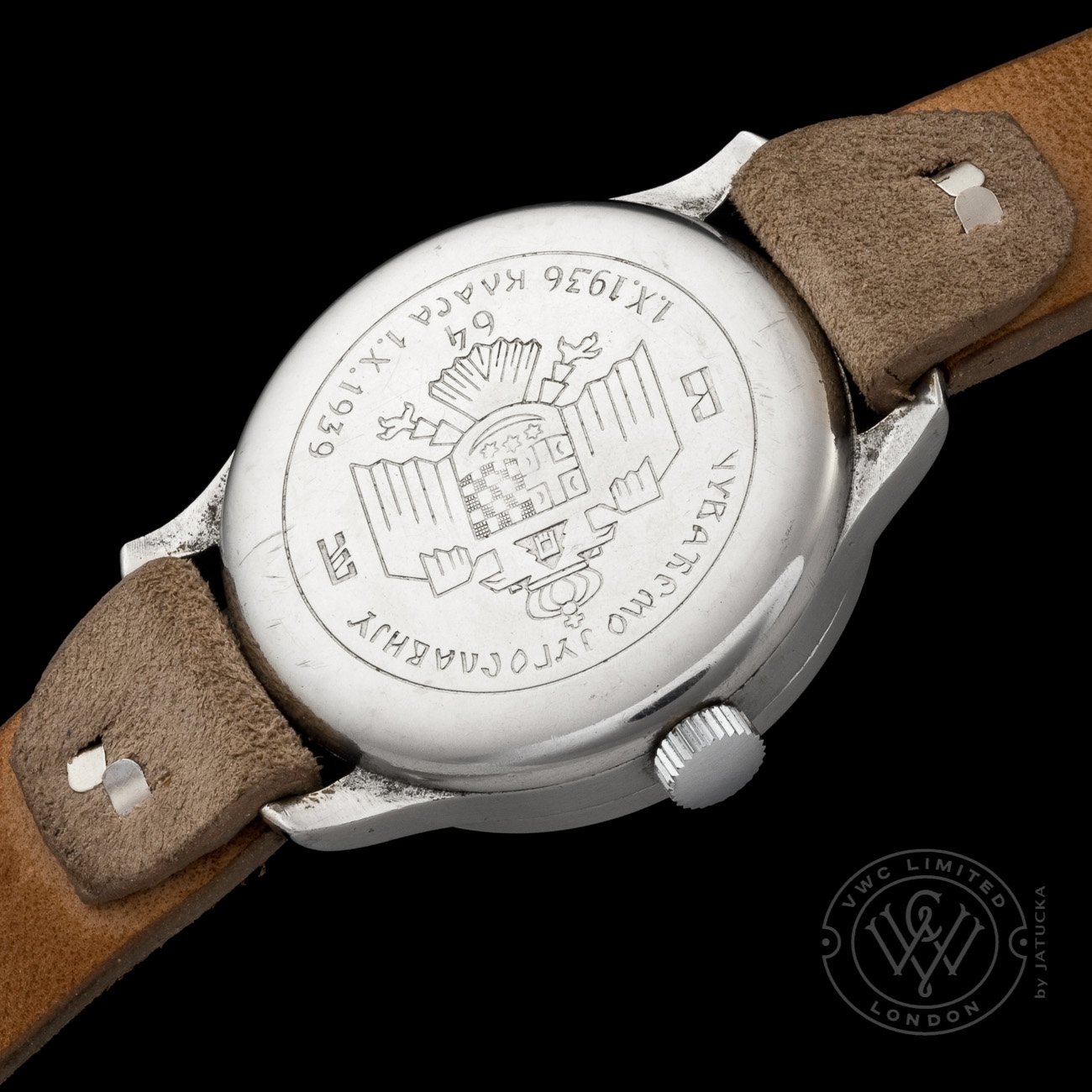
Case-back image of the watch.
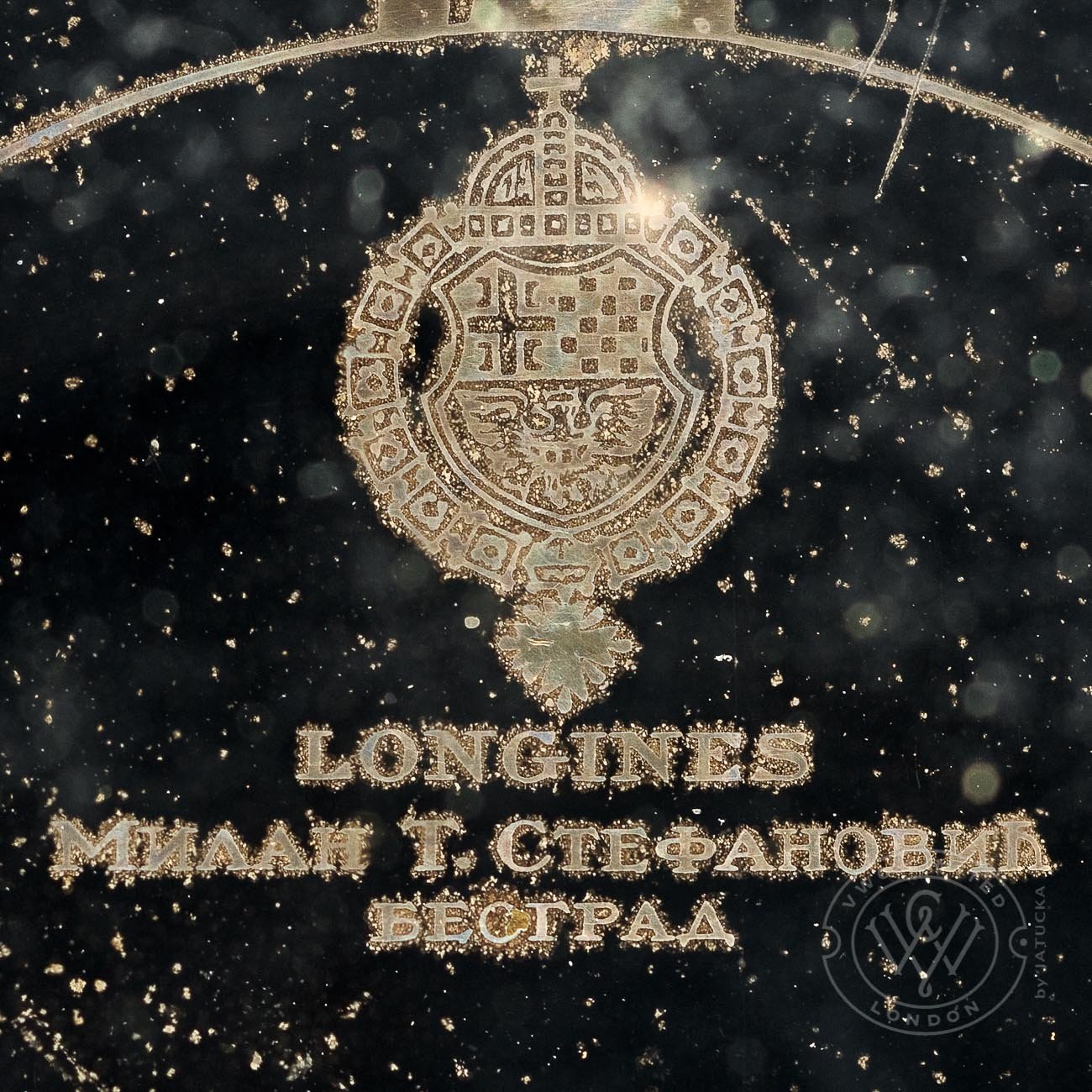
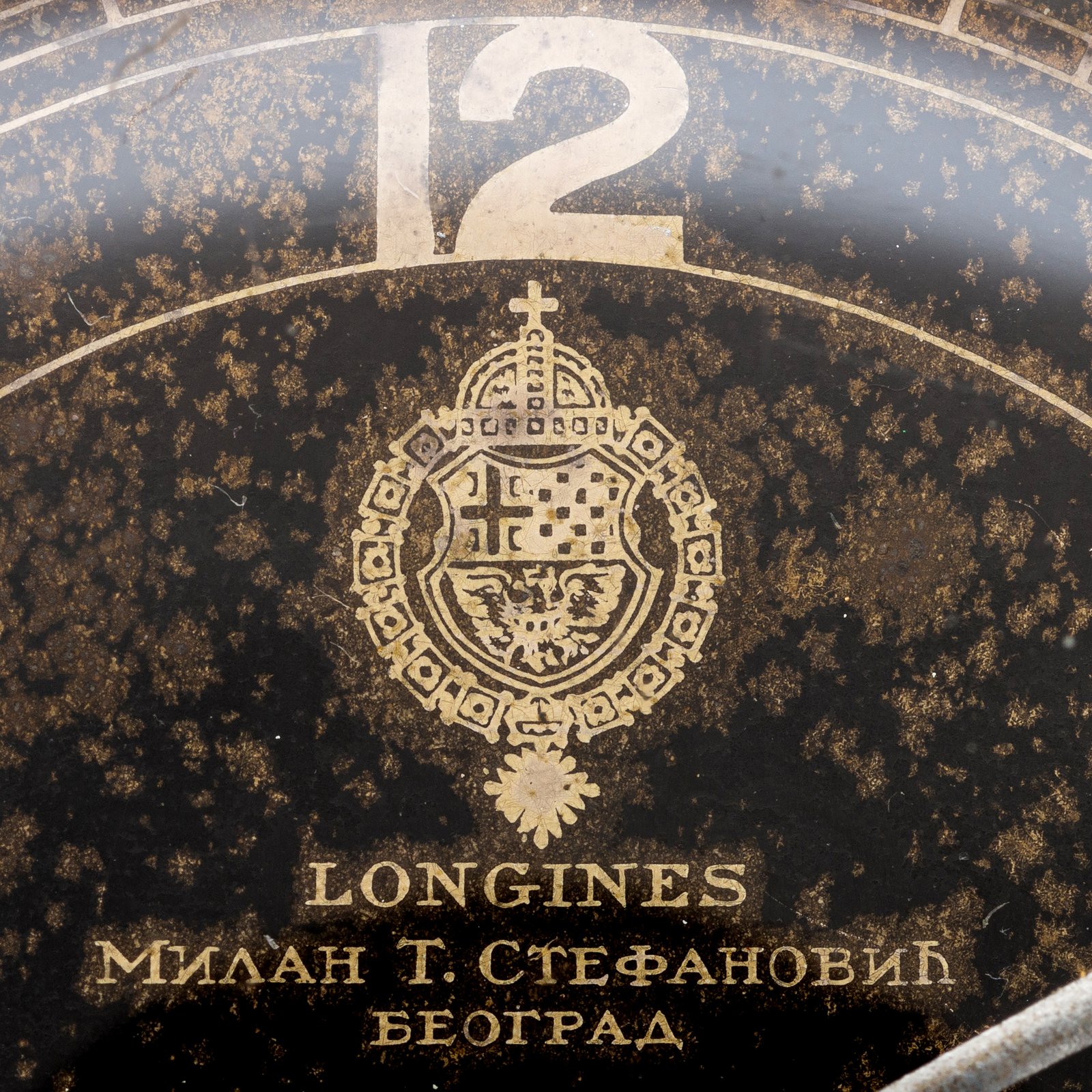
Macro image of the coat of arms and Longines with retailer Milan T. Stefanovich Belgrade.
The Stefanovich Connection
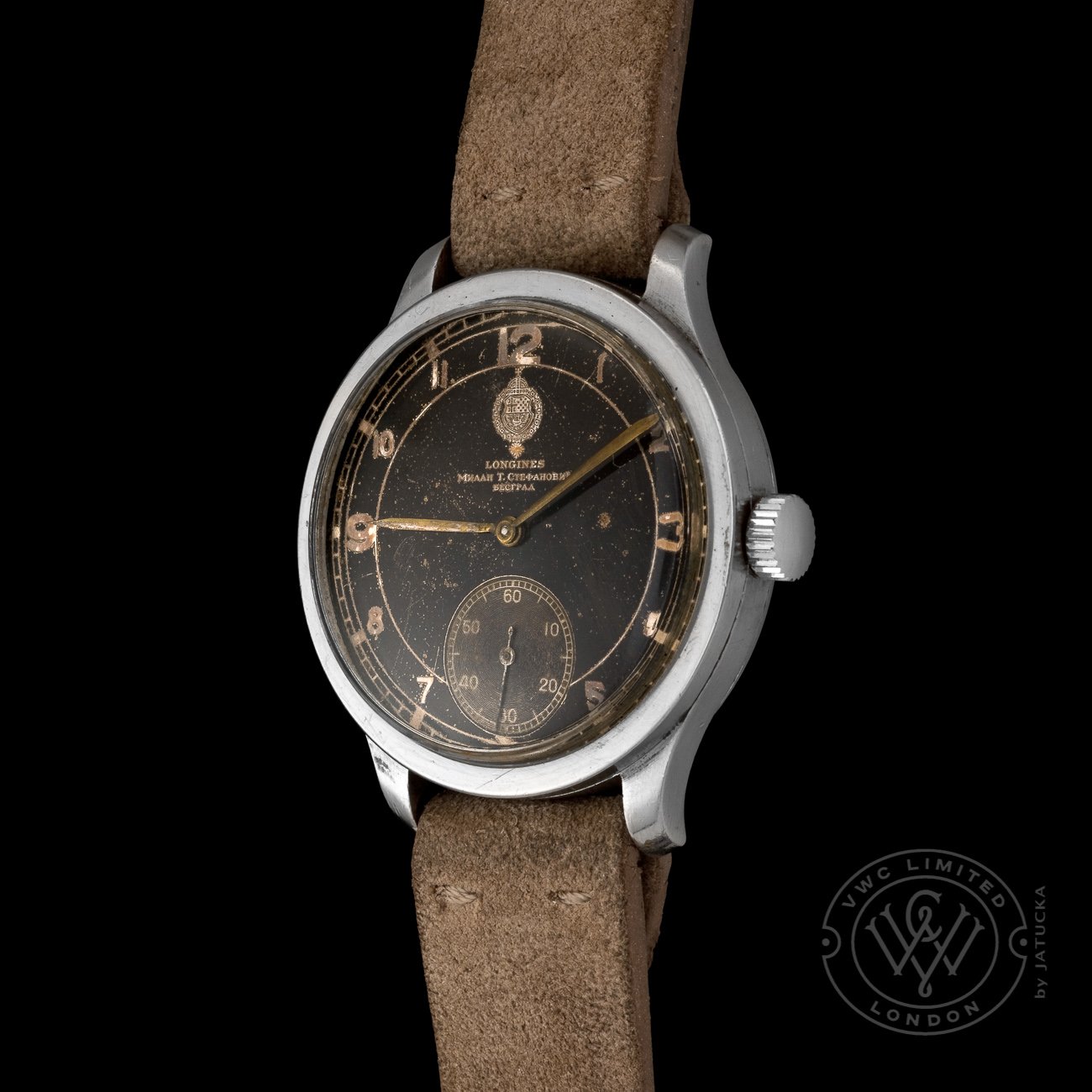
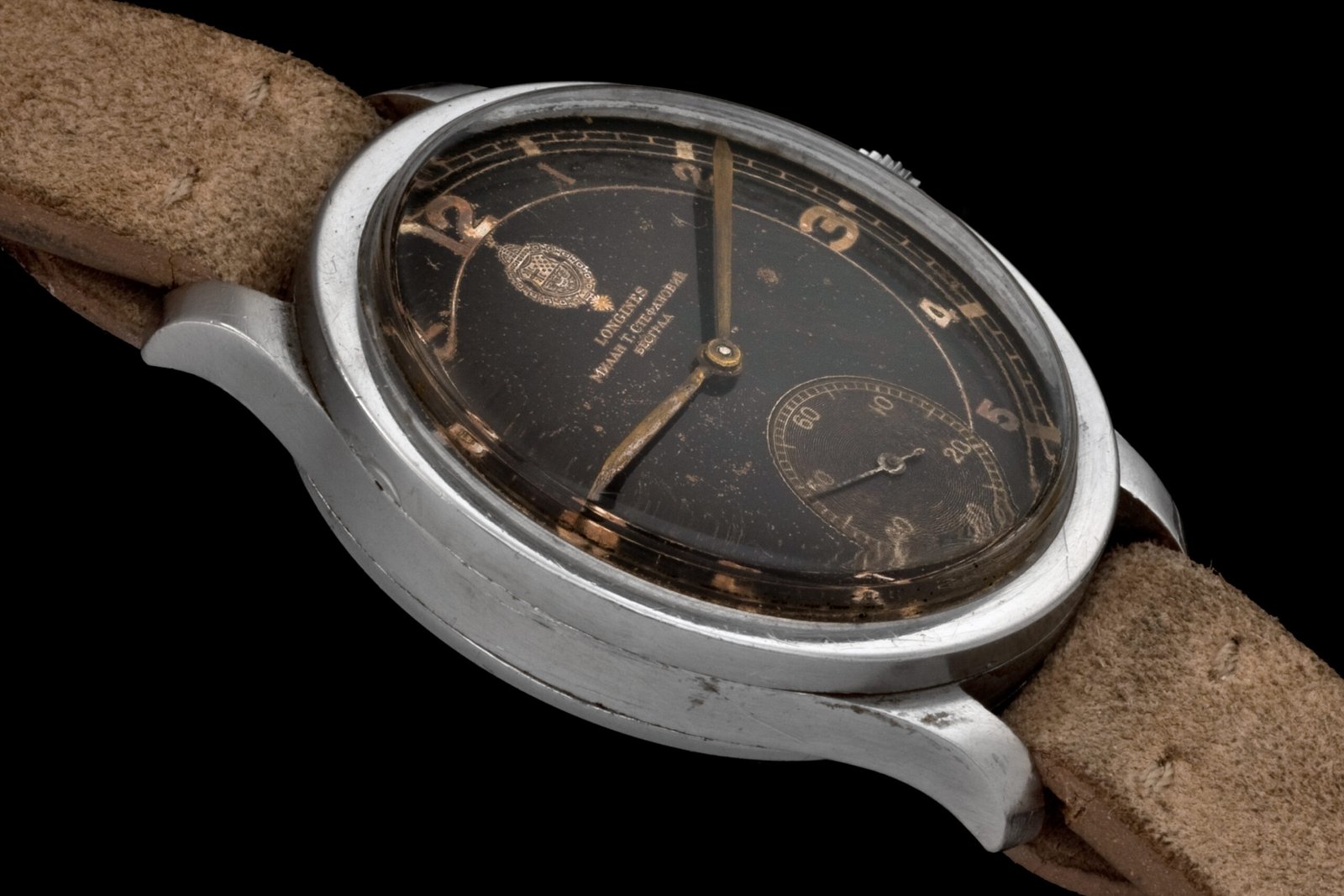
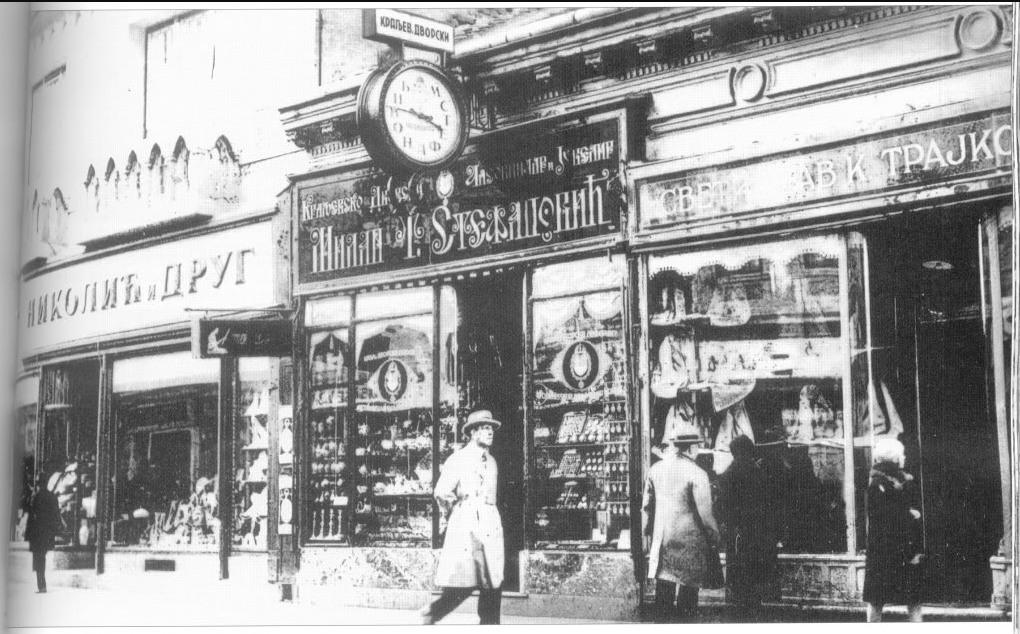
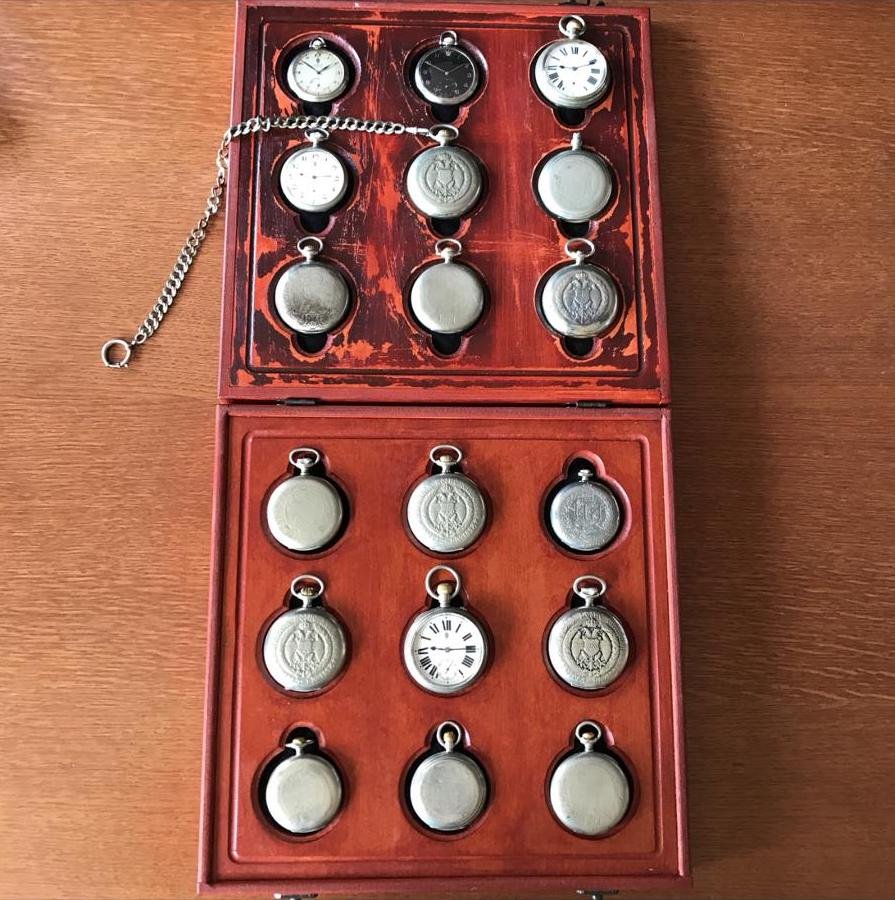
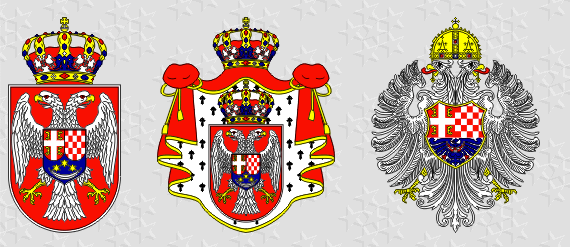
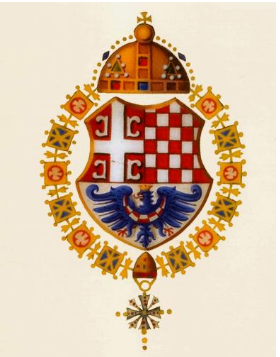
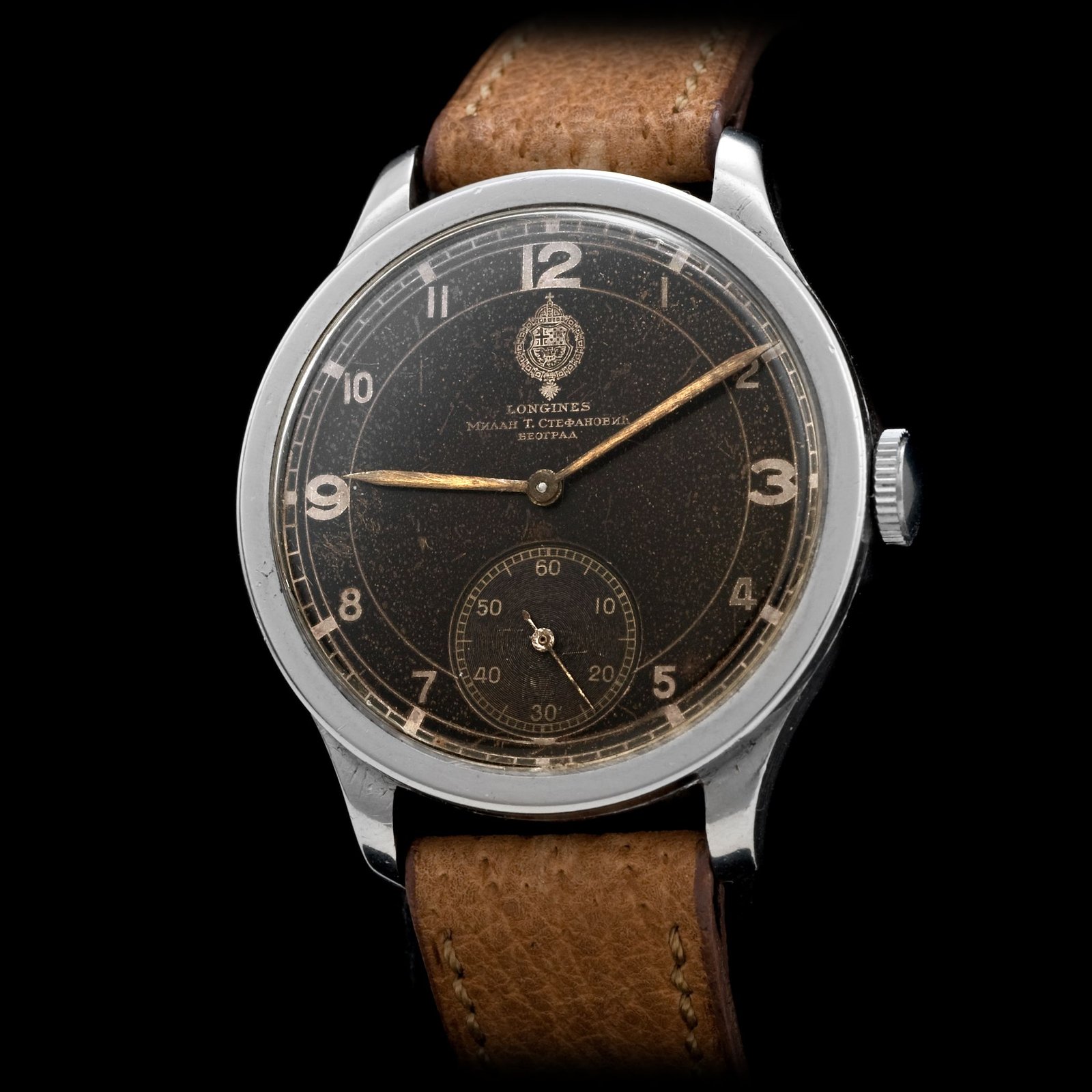
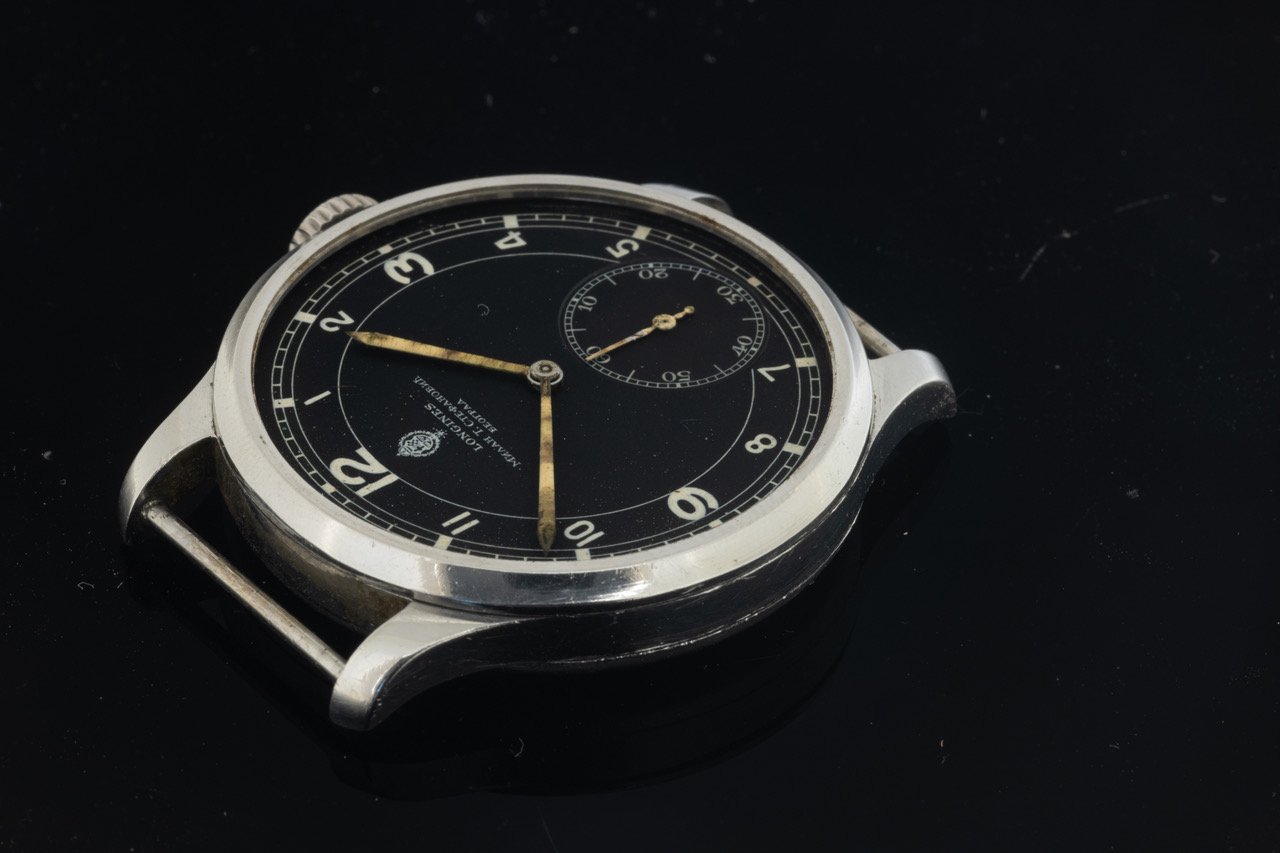
Nicknamed the ‘Serbian’ (or ‘Serbo’ for the Italian collectors), this is the later version (or second batch) with black galvanic dial, coats of arms (Royal House of Karagjordgevic and Saint Lazarus chain emblem) on the dial and Yugoslavian crest (coat of arms) on case back (Serbia was a part of Yugoslavia). The case back engraving is very clear and shows no sign of previously being polished (often the case with some of these watches that its faded or polished off completely), it didn’t have the correct crown when I found it, (too small and incorrect number of teeth, but was very lucky to get one straight out of Longines draws on a later trip to St Imier). Also, on the dial the retailer name ‘Milan T Stefanovich’, which was the most prominent royal retailer (one of three court-appointed retailers) in Belgrade at the time selling both jewellery and watches. We believe that they had 8 shops in the region. Pictured below is an image of the flagship store in Belgrade (circa 1930), before they were to close during WW2 after the invasion of the Nazis. During the 1930’s Stefanovich supplied watches to the military on behalf on the monarchy and previously to the railway companies in the region, many of which have the same coat of arms on the dials and on the case backs.
above an image of the flagship Milan T. Stefanovich store in Belgrade, circa 1930
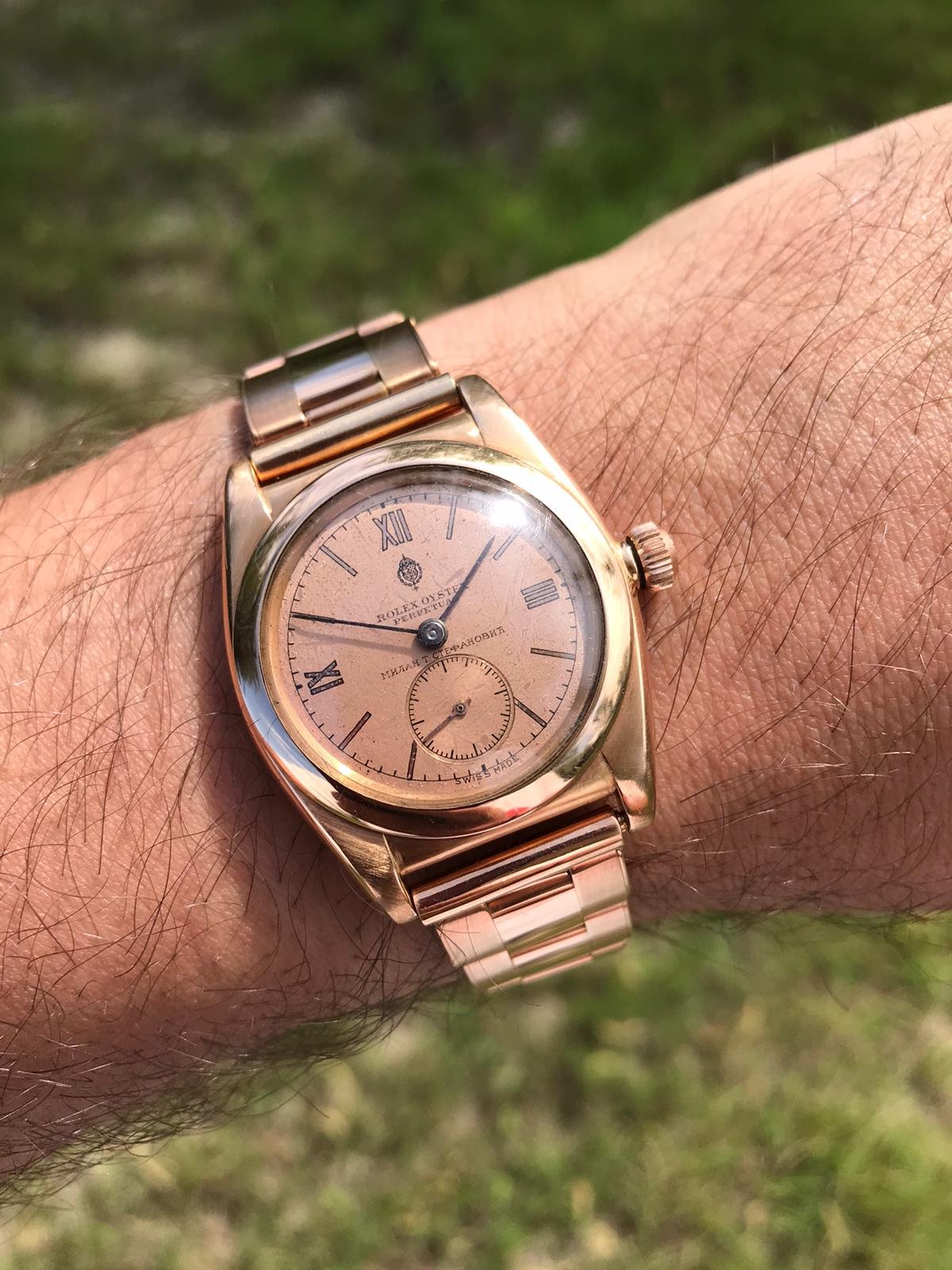
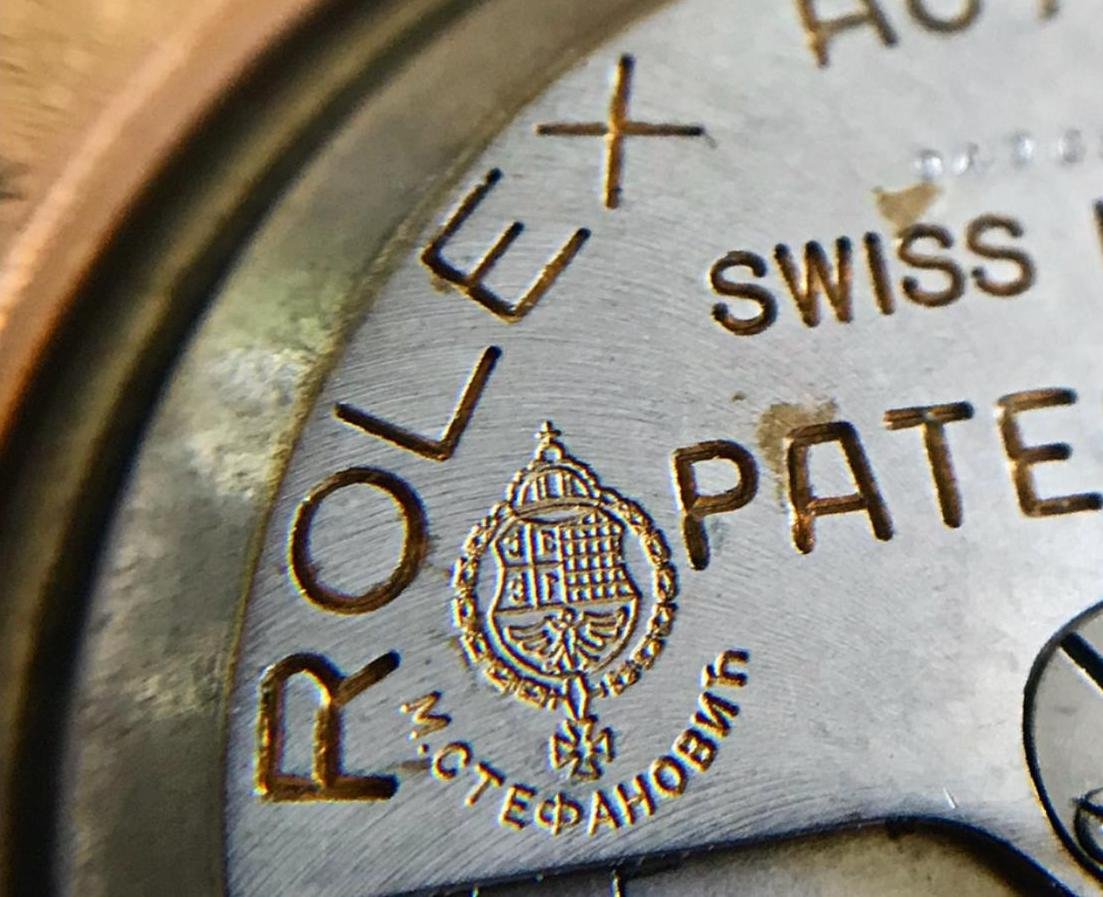
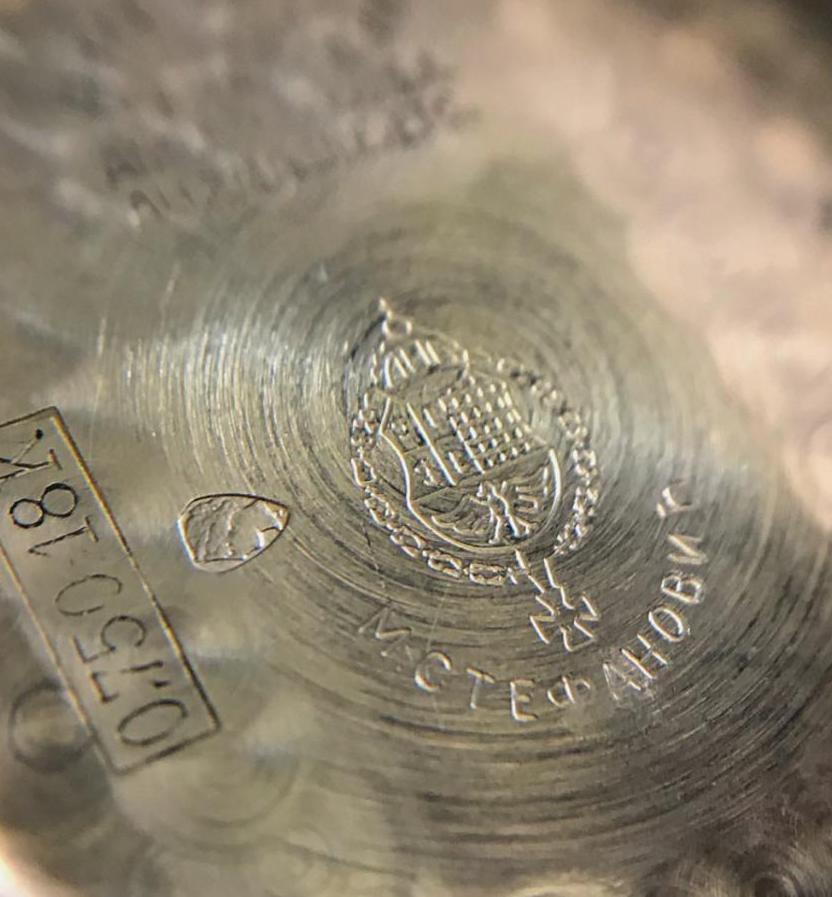
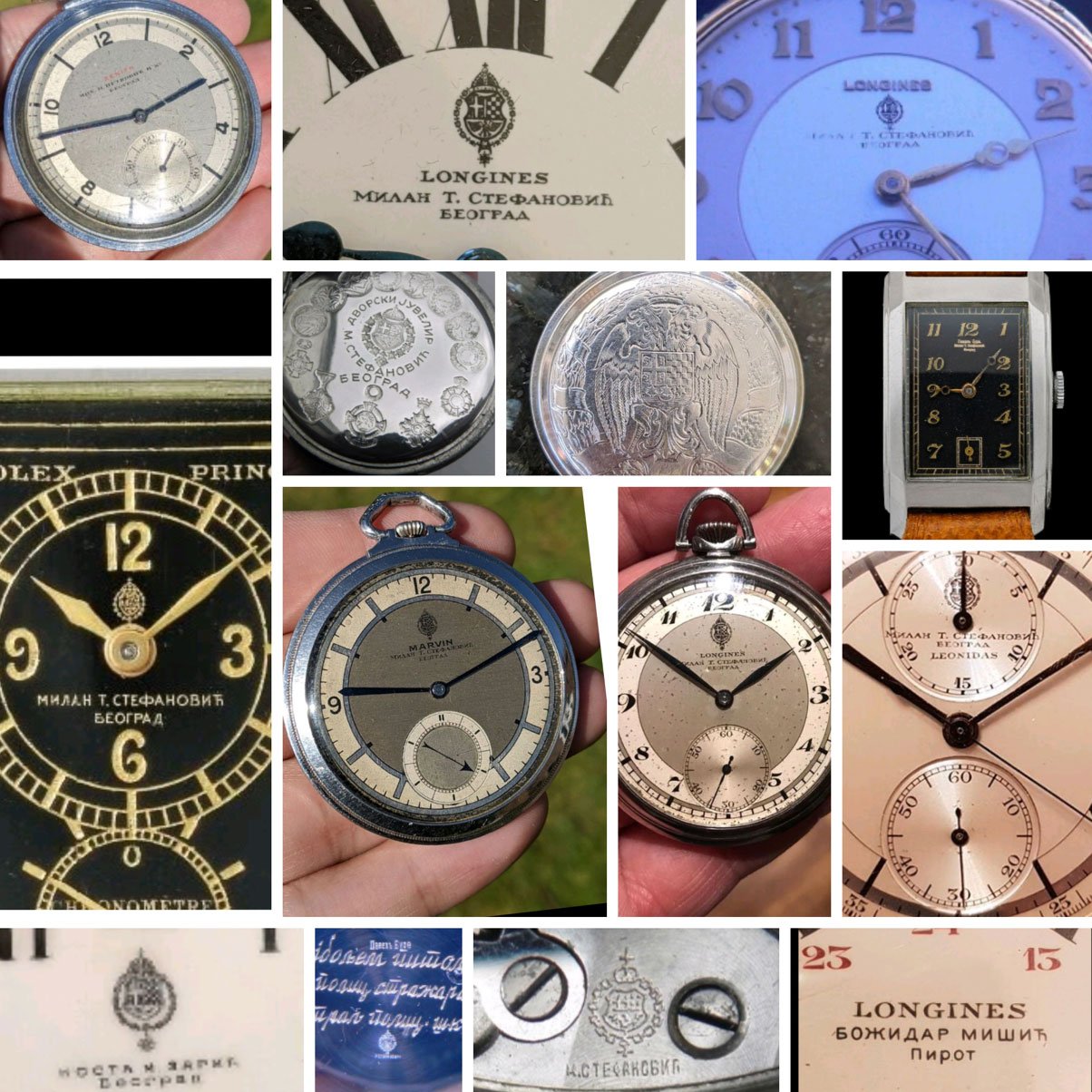
There’s already a great article that exists online about these watches explaining both the history of Serbia and differences in the two variations by Adriano Davidoni (1). Since then, more examples (Stefanovich retailer stamped) have come to light, and not just Longines (although the Longines versions are undoubtedly one of the most collectable), but also from some other brands as well, these include, Rolex, Leonidas, Pavel Bure, Marvin, Laco, Silvana and earlier railroad pocket watches…. Many of these watches have the coat of arms on the dials, case-backs, inner cases, and sometimes even stamped on the movements, so we thought this was a nice moment to showcase and explain some details of these very rare and interesting military watches. **circa 15 examples of black Serbians are known to the market, around 5 of the earlier white examples, 127 examples made of reference 2326.
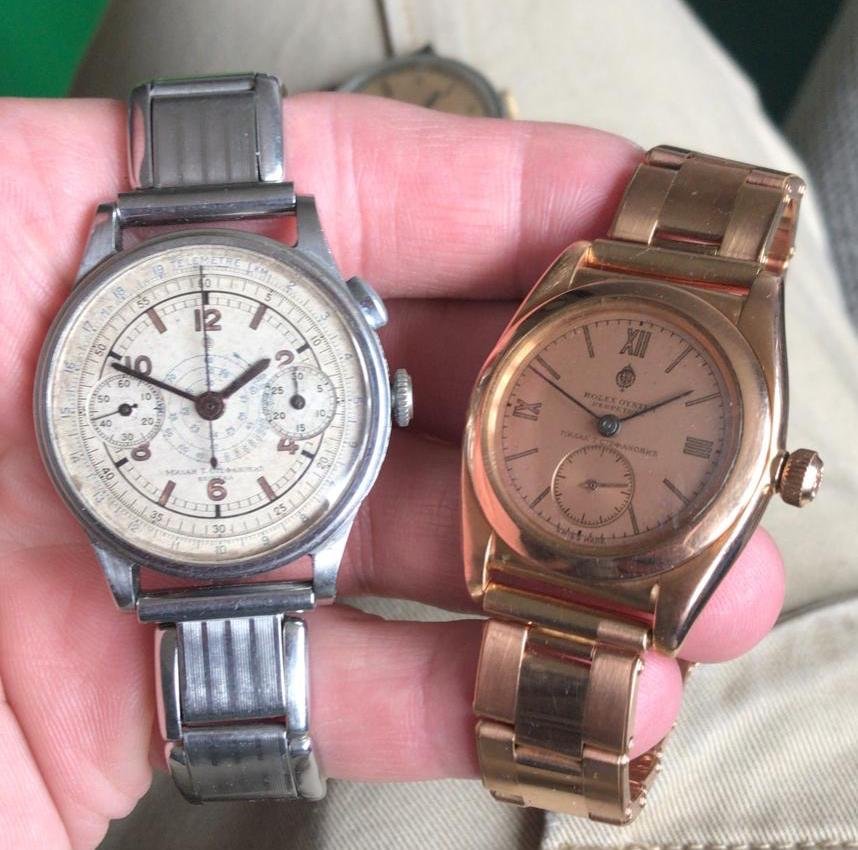
Some examples of Stefanovich retailed watches shown by friends.
An image from a great friend and collector of Stefanovich watches, Srdjan. Perhaps the most important Stefanovich signed watch we’ve seen, a Rolex bubbleback, also with the coat of arms on the dial, and again signed by the retailer above the sub seconds.
Coat of arms and M. Stefanovich stamp on the rotor. Unique to see such a stamp on a Rolex rotor.
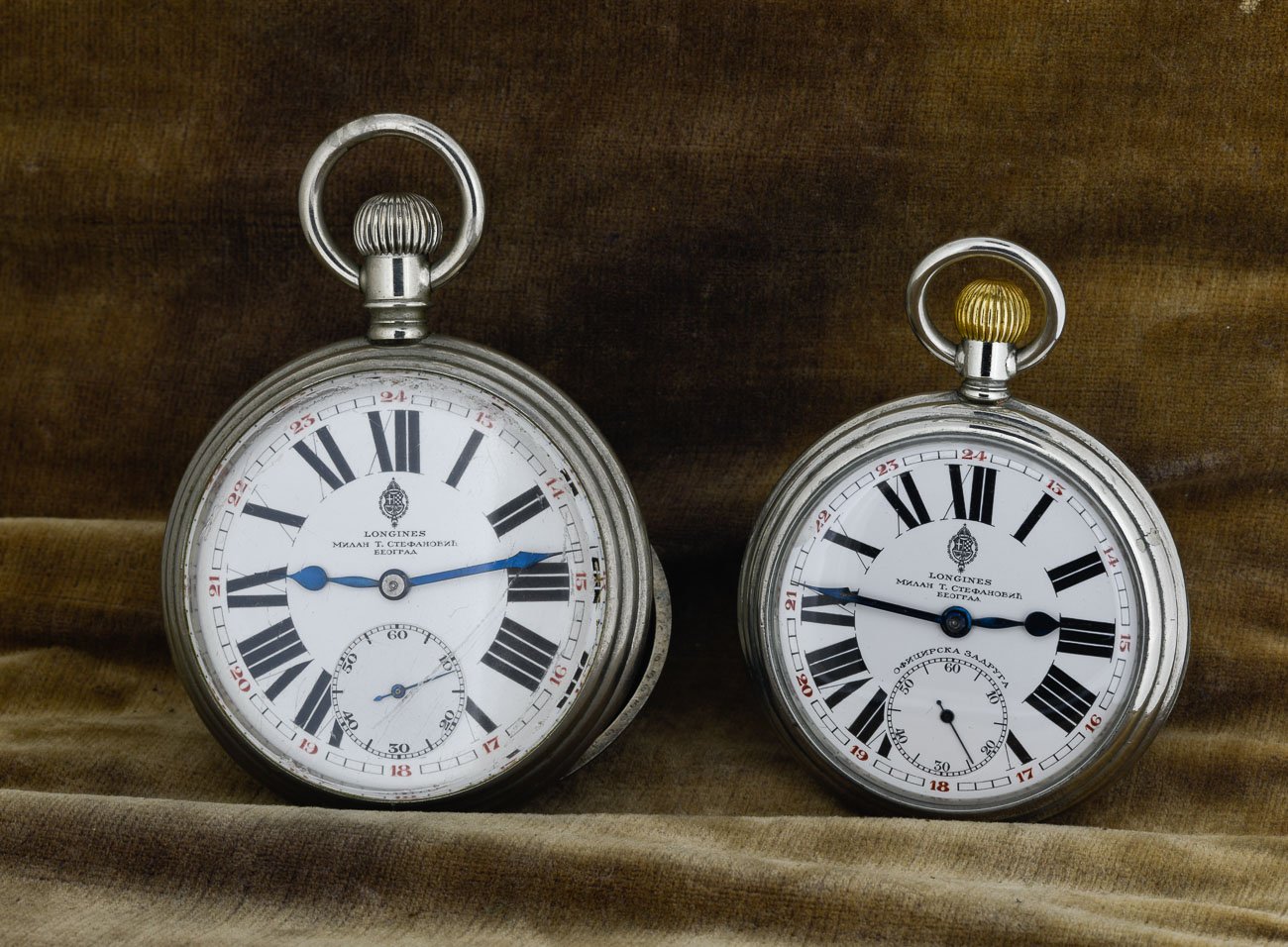
Two very nice Longines railway pocket watches and Longines Serbian wristwatch by a great collector and friend in Cologne Germany.
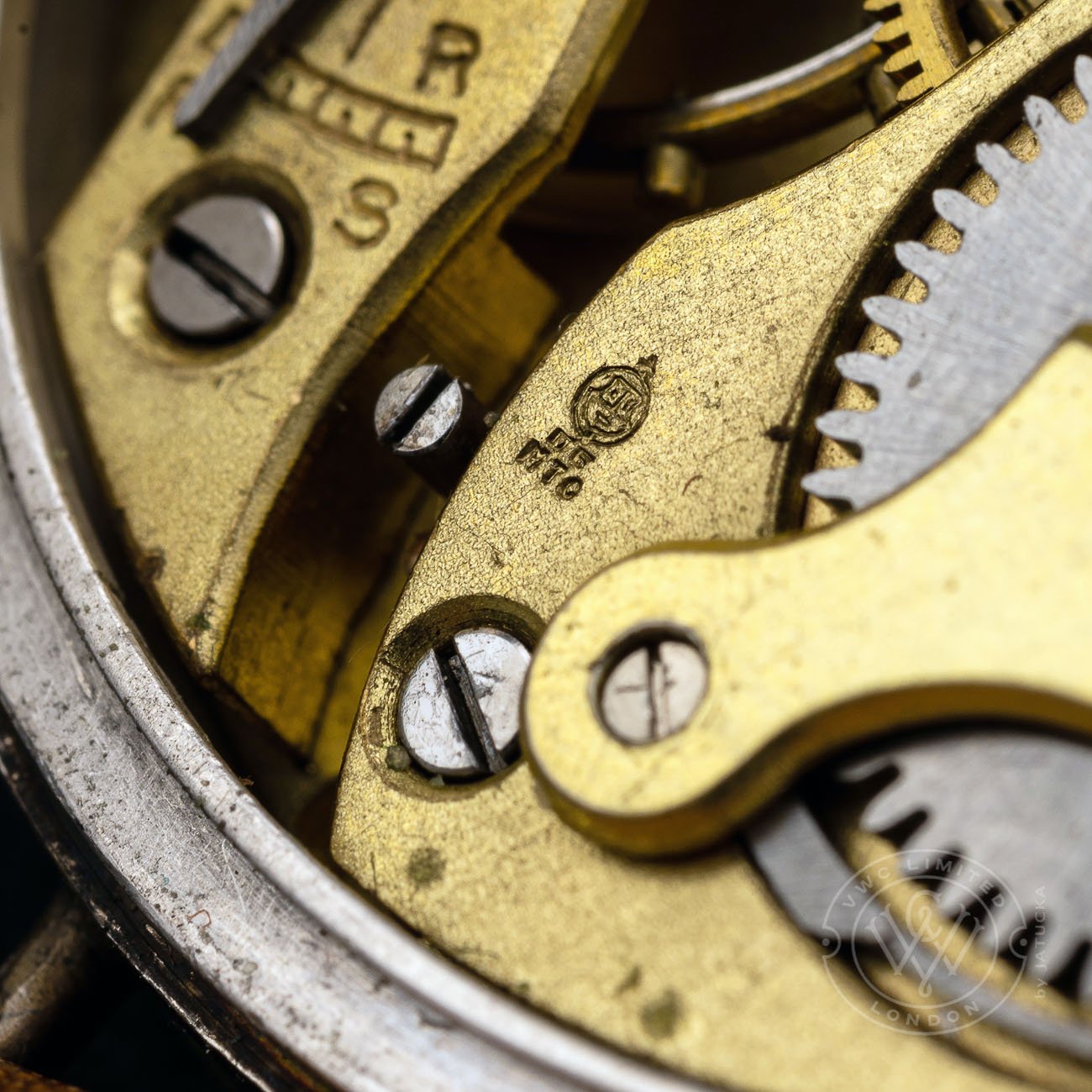
Pavel Bure retailed by Milan T. Stefanovich by VWC Ltd. Also seen below, the coat of arms stamped on the movement.
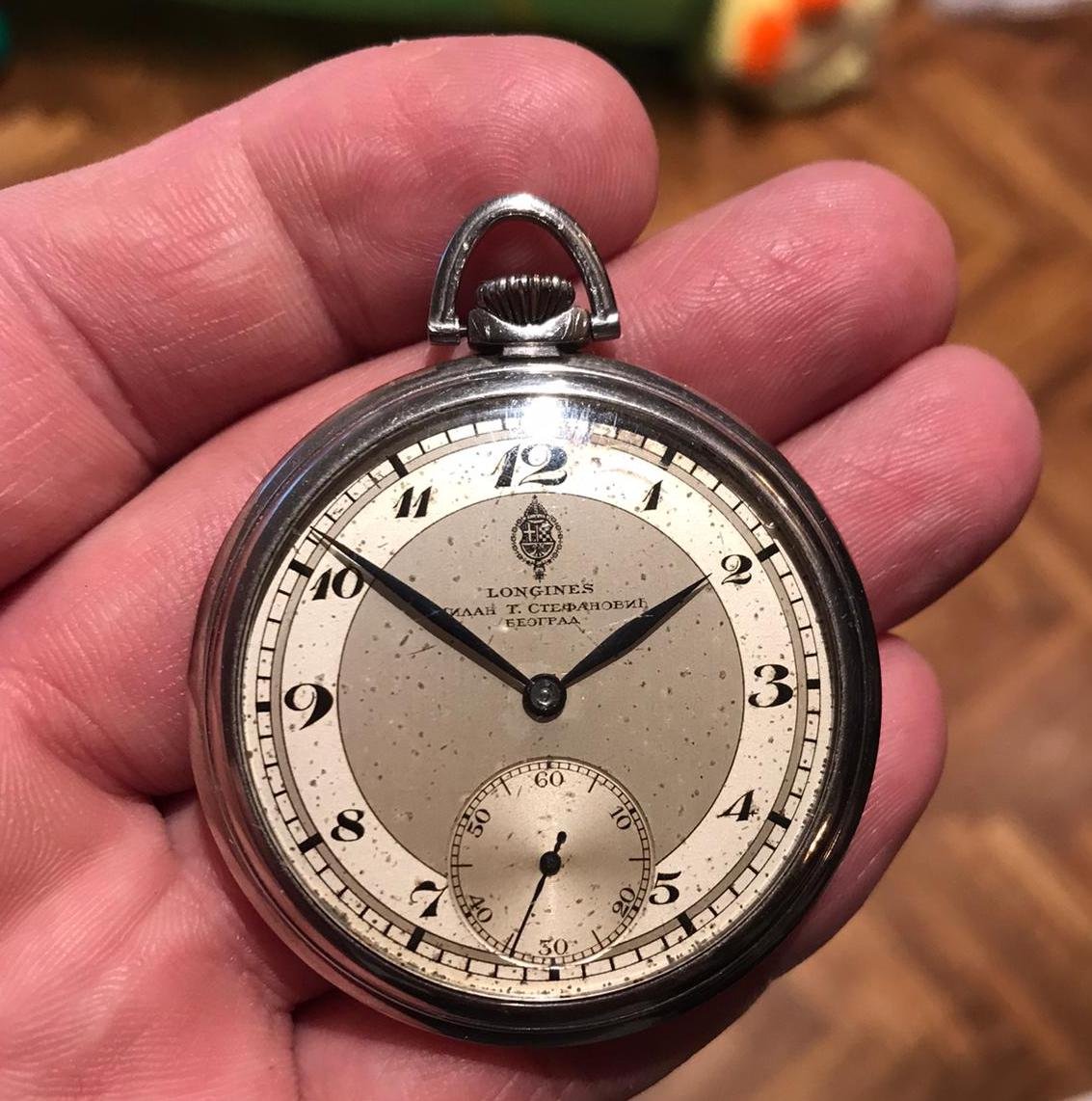
Pocket watch with reference 3450 – Info from Longines says ‘The original serial no 5,329,538 identifies an open face pocket watch in stainless steel, ref 3450. Fitted with the caliber 37.9 and invoiced on 16 April 1936 to the company Stefanovich, which was at that time, our agent in Belgrade. The dial should have the emblem and the name in cyrillic: Milan T Stefanovich Belgrade’.
Historical background
Just for some context (as the info does get somewhat confused on the forums), here is a brief history of the region prior to the existence of these wristwatches. The Kingdom of Serbia went through quite a few changes during the early period of the 20th Century. Most notably, at the end of the WWI (Nov 1918), Serbia united with Vojvodina and the Kingdom of Montenegro. Then a month later Serbia merged with the newly created state of Slovenes and Croats, which in turn eventually became known as the Kingdom of Yugoslavia in 1929 (2).
Fast-forward to 1939 and the arrival of WWII. Yugoslavia was surrounded by countries which had become allies with the Nazis. Prince Paul who was temporary King Regent decided to enter into a non-aggression pact with Germany. This did not bode well with the people of Serbia, (or the future King Peter II). As a result, there were riots, and eventually a coup, supported by the British. Following these events, King Peter II was proclaimed of age, and Prince Paul’s regency was ended. There was a deep sense of pride and national unity in Serbia at the time, but they were forced to surrender April 17 1941.
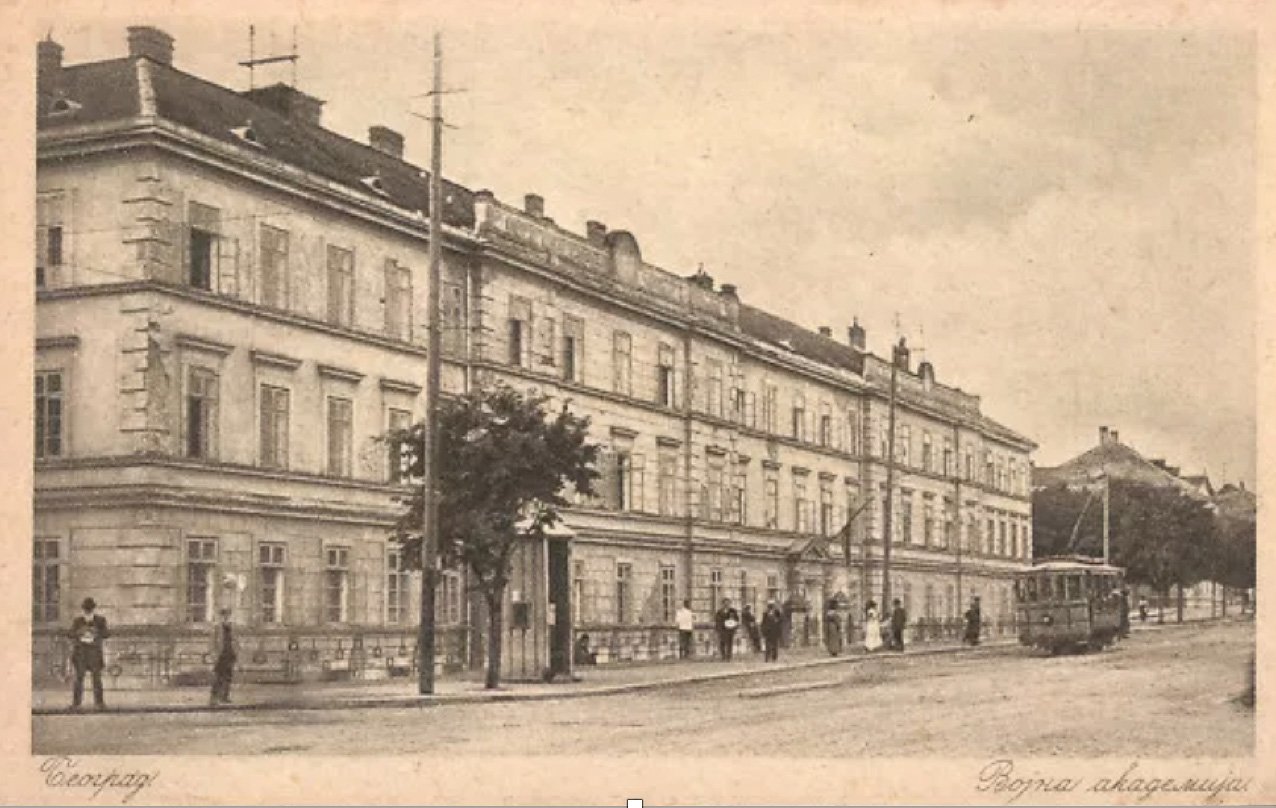
Image of the ‘Vojna Akademija’ (military academy) in Belgrade.
The First and Second batches
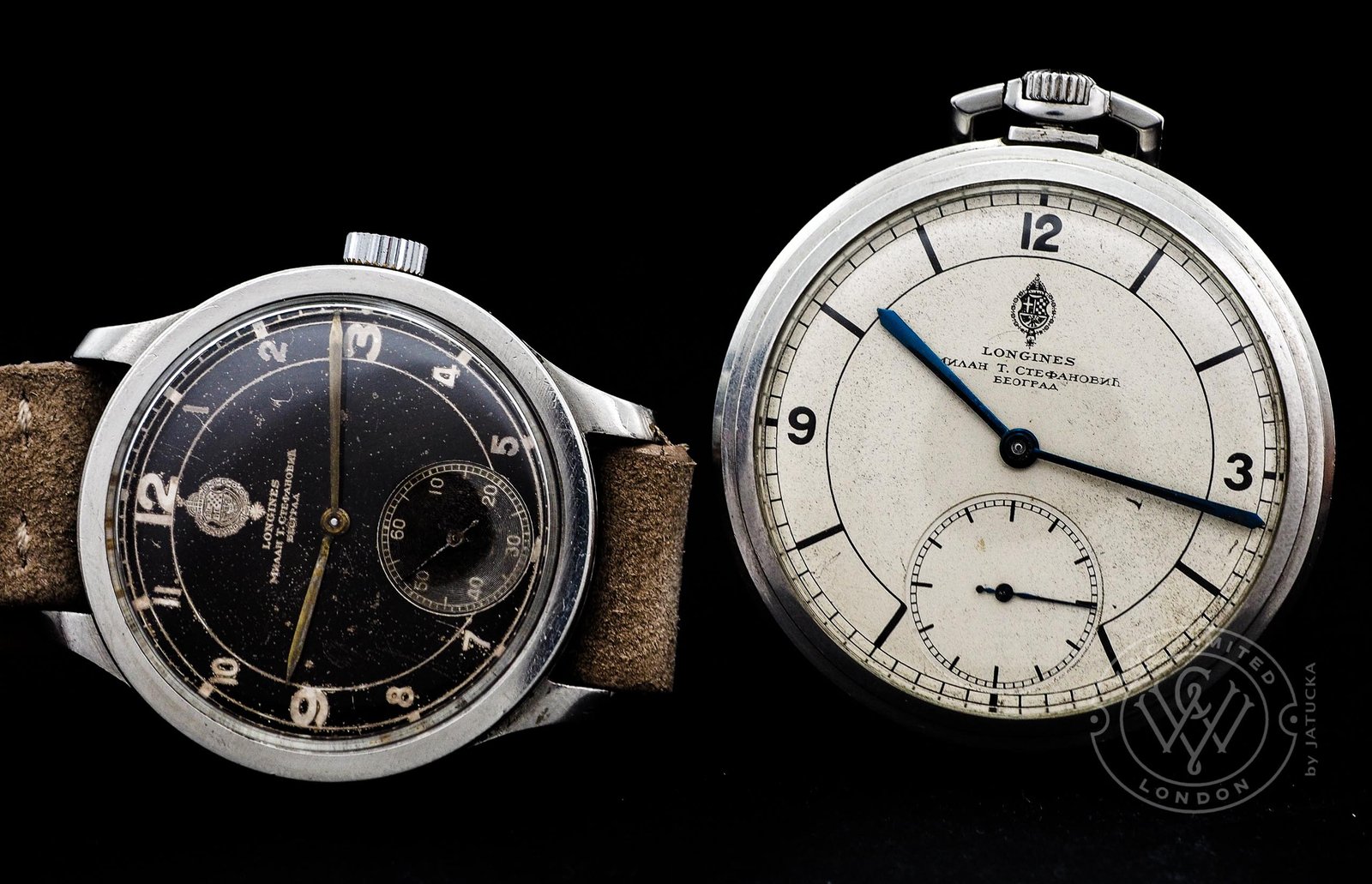
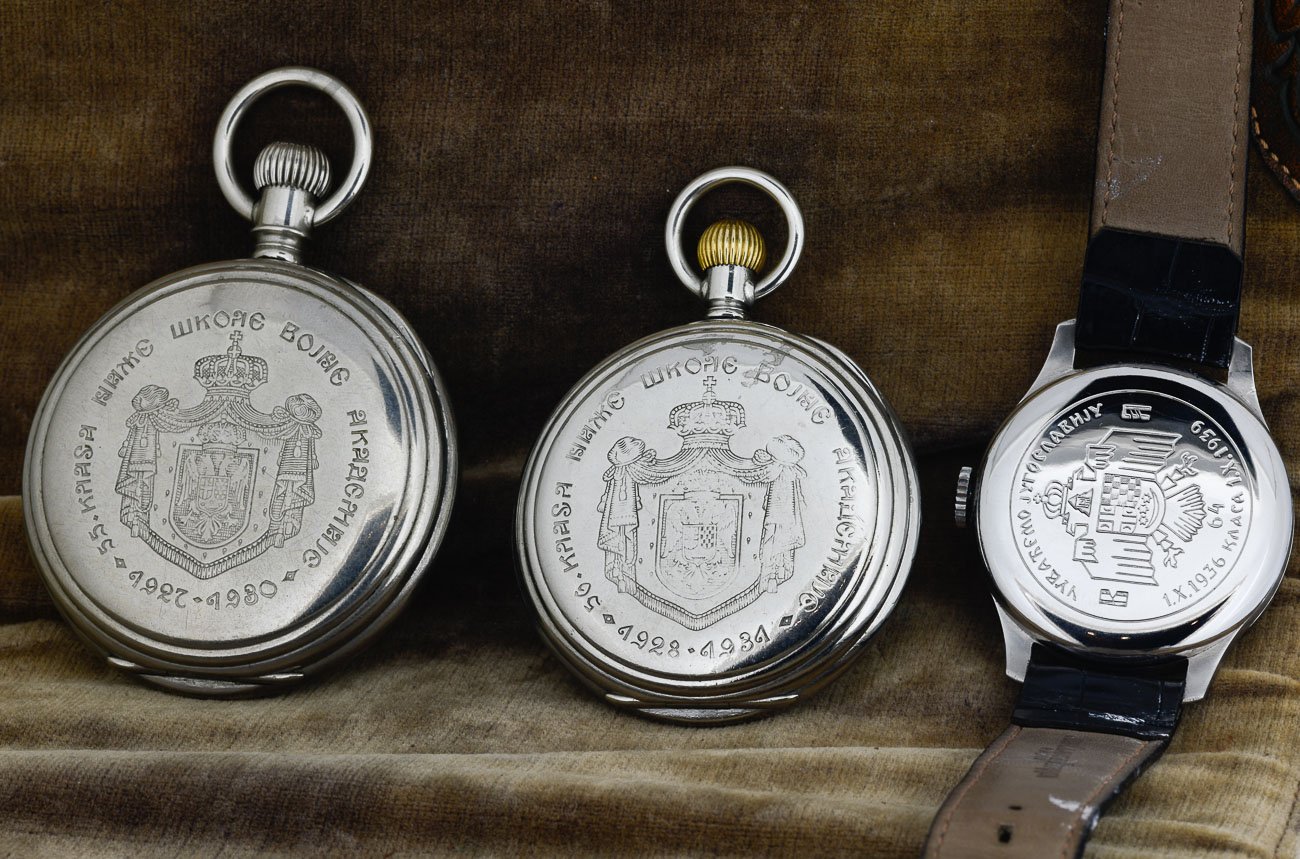
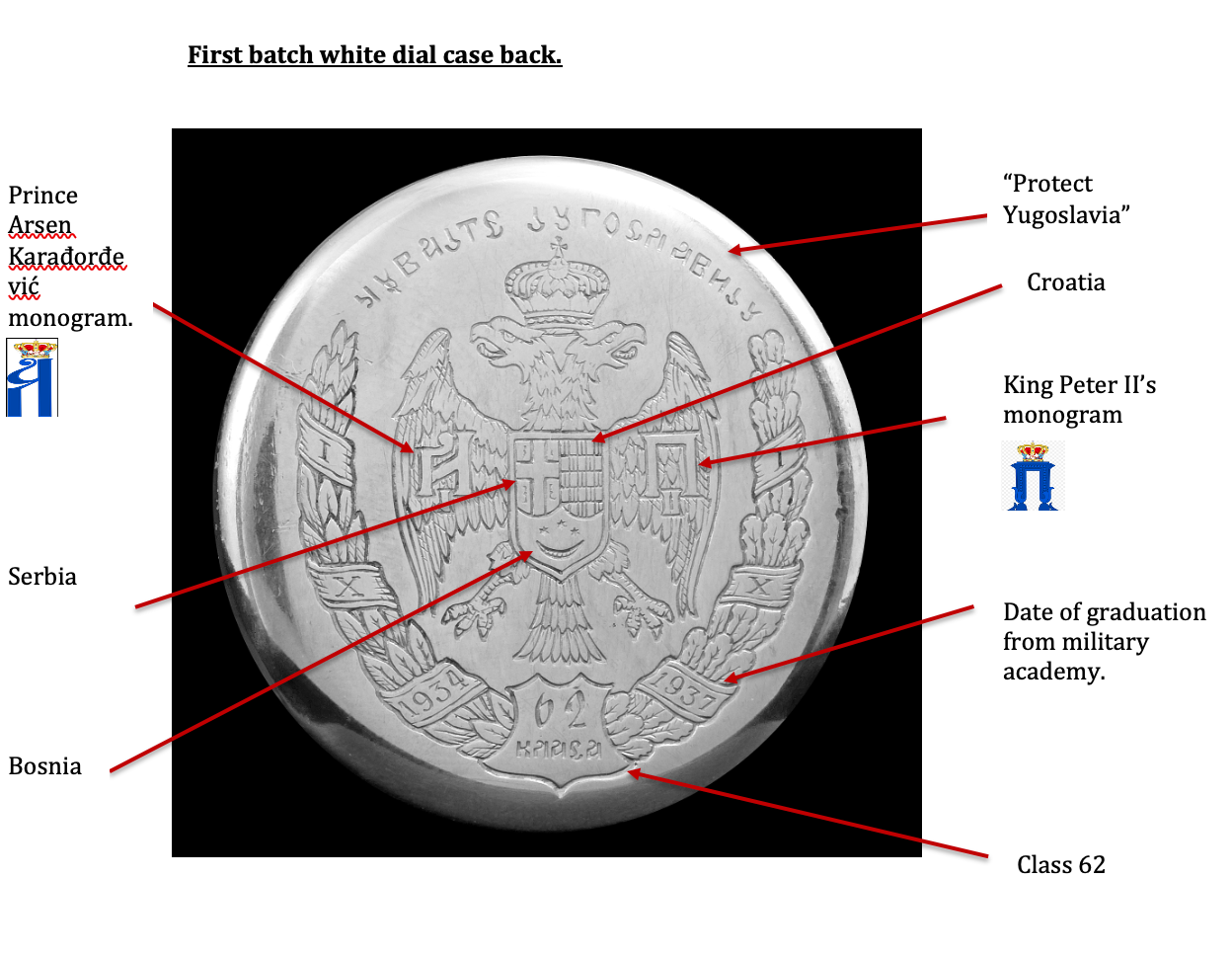
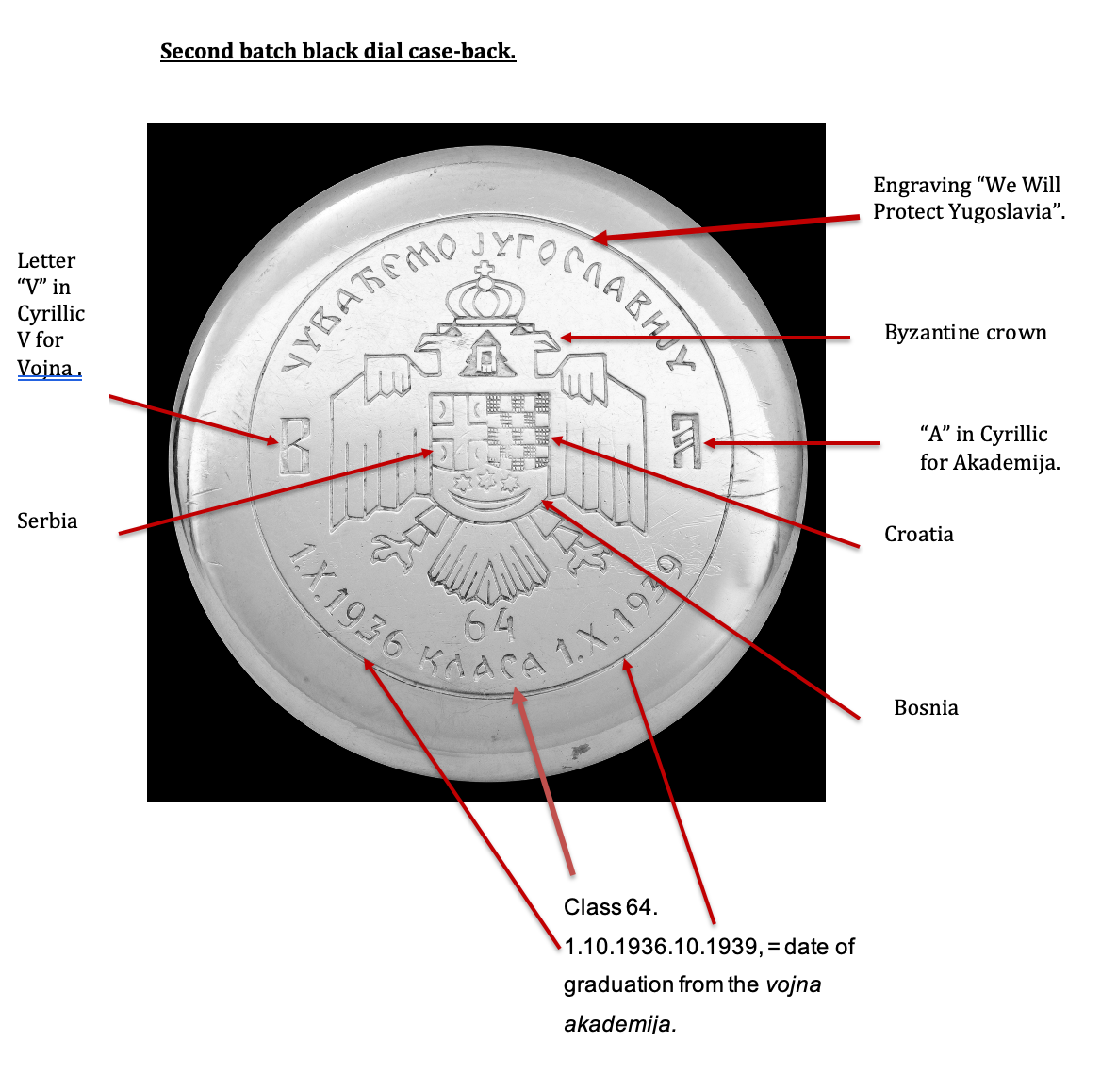
By 1939 both batches were already in circulation, and both versions of these watches were given as gifts from on behalf of the King to the graduates’ officers of the military academy (vojna akademija) and we can assume that they were on special order by Stefanovich to Longines. The first batch (with white dial and a larger engraving on case-back) to the 62nd class of the military academy, all invoiced Sep 1937. The second batch (black dial) with ‘smaller case-back engraving’ to the 64th class all invoiced Sep 1939. Both have snap back, three-part cases.
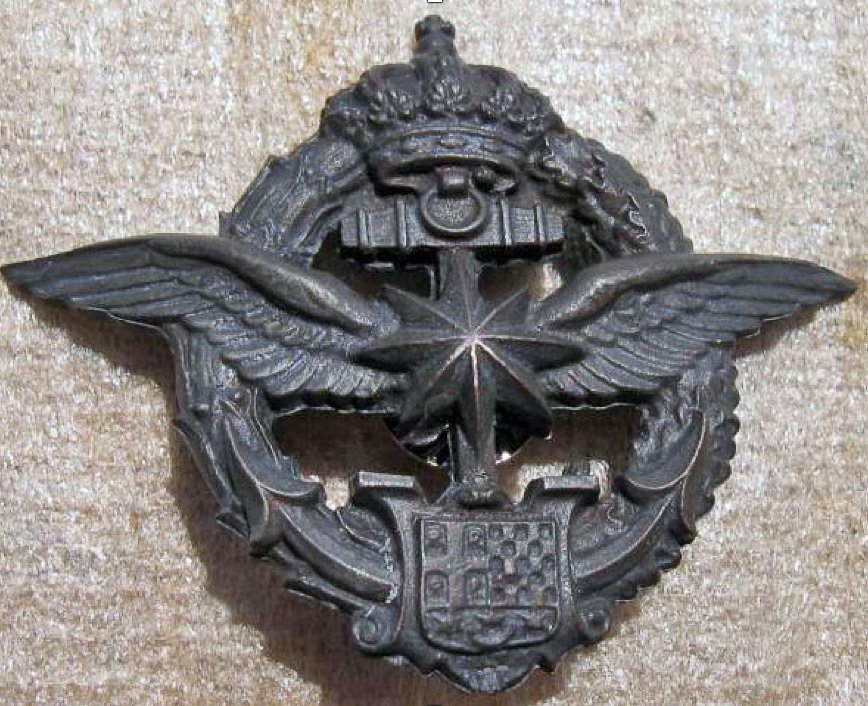
Kraljevska mornarička avijacija.
Above, a first batch Longines Serbian with white dial.
Reference 3494, order number 19477, invoiced 11 September 1937 to Stefanovich. The hands are blued steel ‘Feuille’/leaf hands, the case is a great size at 38mm diameter.
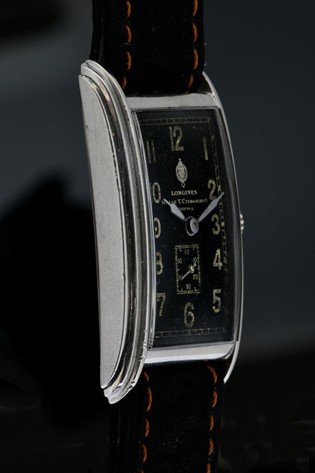
Above another nice example of a second batch reference 2326 order number 20652. The hands on the second batch are also leaf shaped, different in style to those of the first batch, brushed steel almost luminescent. The case is 37.5mm in diameter.
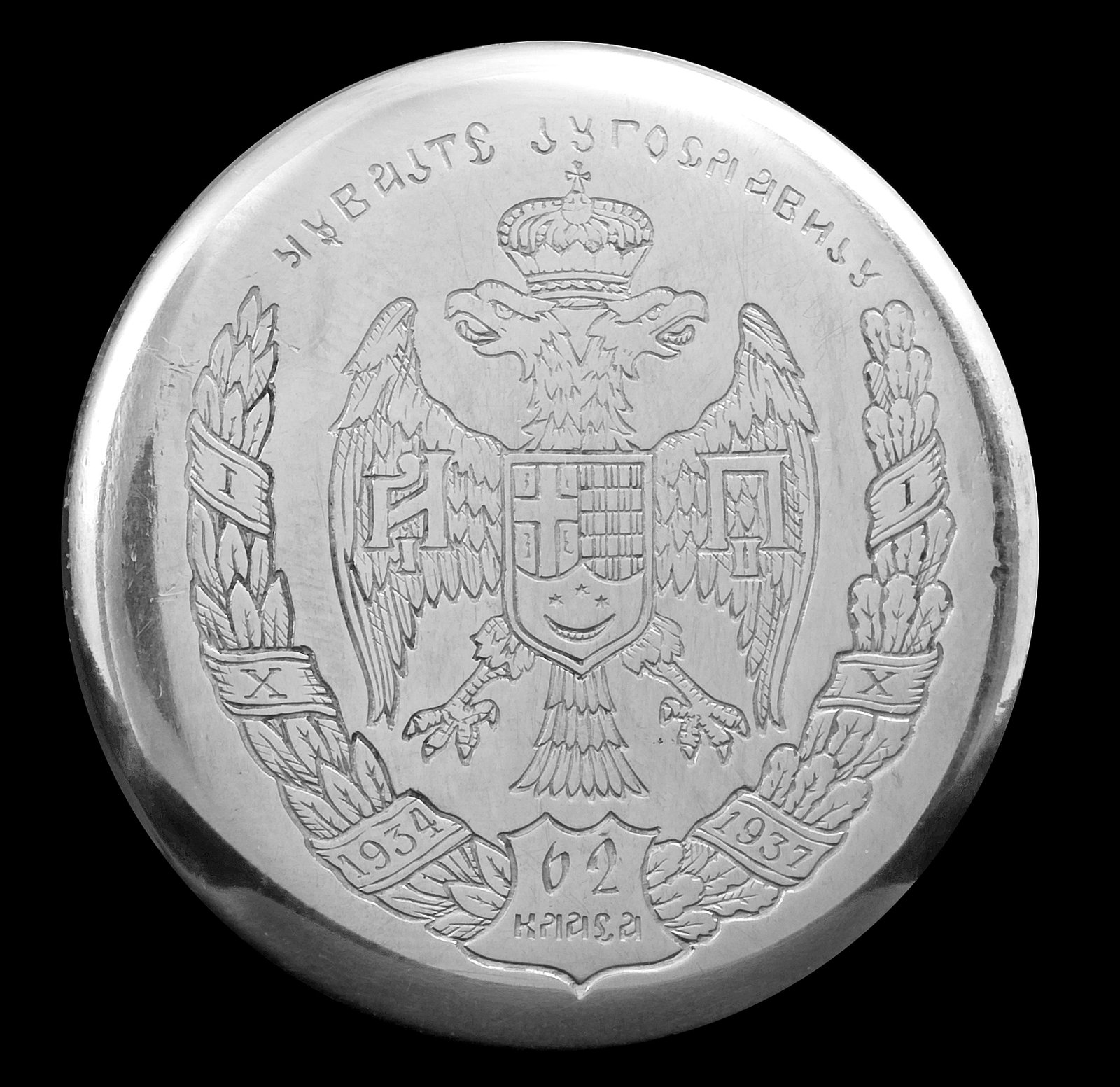
The real difference in the two versions are case-back engravings and the obviously the dials. They naturally have different reference numbers (or cliché numbers as they are known at Longines). The early white versions have the reference 3494, with order number 19477. Also from Longines archives regarding this first batch watch “The case back must be engraved with the Serbian coats of arms for officers, grade and year 1937. The dial must be white with the name Stefanovitch and Belgrade in Cyrillic and the coats of arms.” 1937 would have been the year in which the officer graduated from the academy. At the top it says “Protect Yugoslavia”. At the bottom it says class 62. We now know that the case back engraving was done in house by Longines rather than at the manufacturer Stefanovich. Both versions have fixed bars.
The later black versions have the reference 2326. Longines archives also stated “I can confirm the order number 20652. The name of Stefanovitch and the emblem are on the black dial (in cyrillic). There also is the engraving on the case back of a “military coats of arms”. At the bottom class 64.
As stated, the case back has the symbol of Yugoslavia (coat of arms first used by the Royal House of Karagjordgevic), of which Serbia along with Croatia and Slovenia were part of during the period. Both case backs are very similar both in their purpose and design.
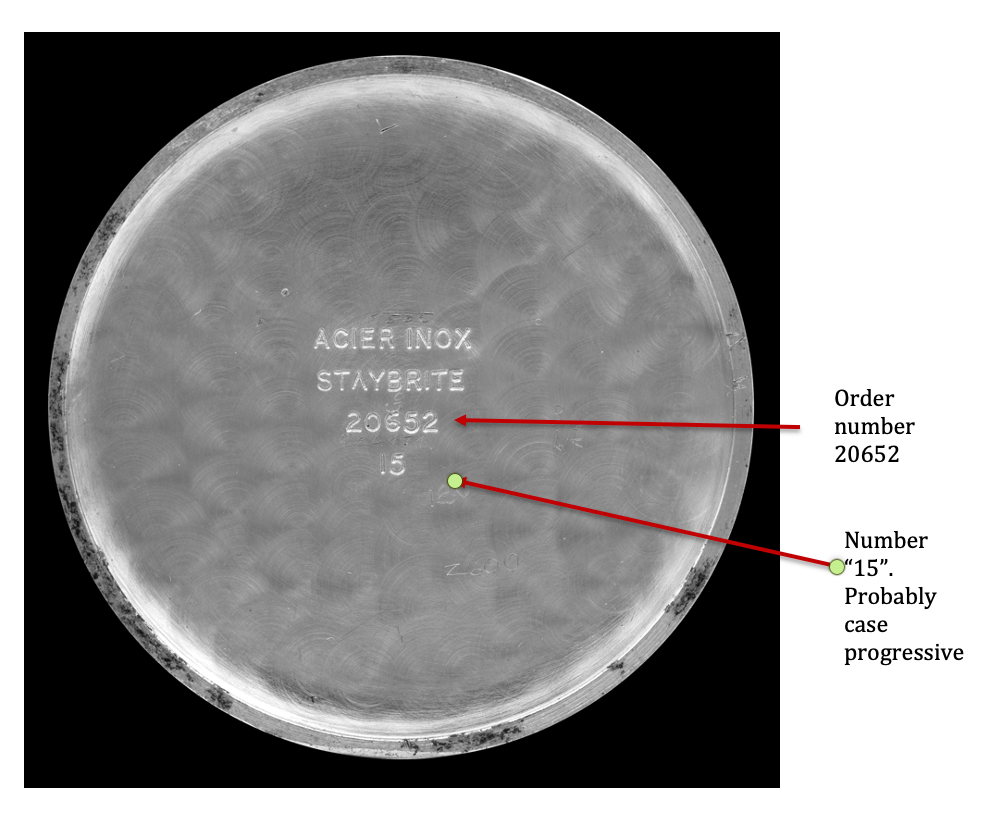
On both versions the inner case backs there is the engraving “Acier Inox Staybrite. Above, the later black batch has the order number engraved ‘20652’ and what we guess might be a progressive number below, but Longines are not able to confirm this.
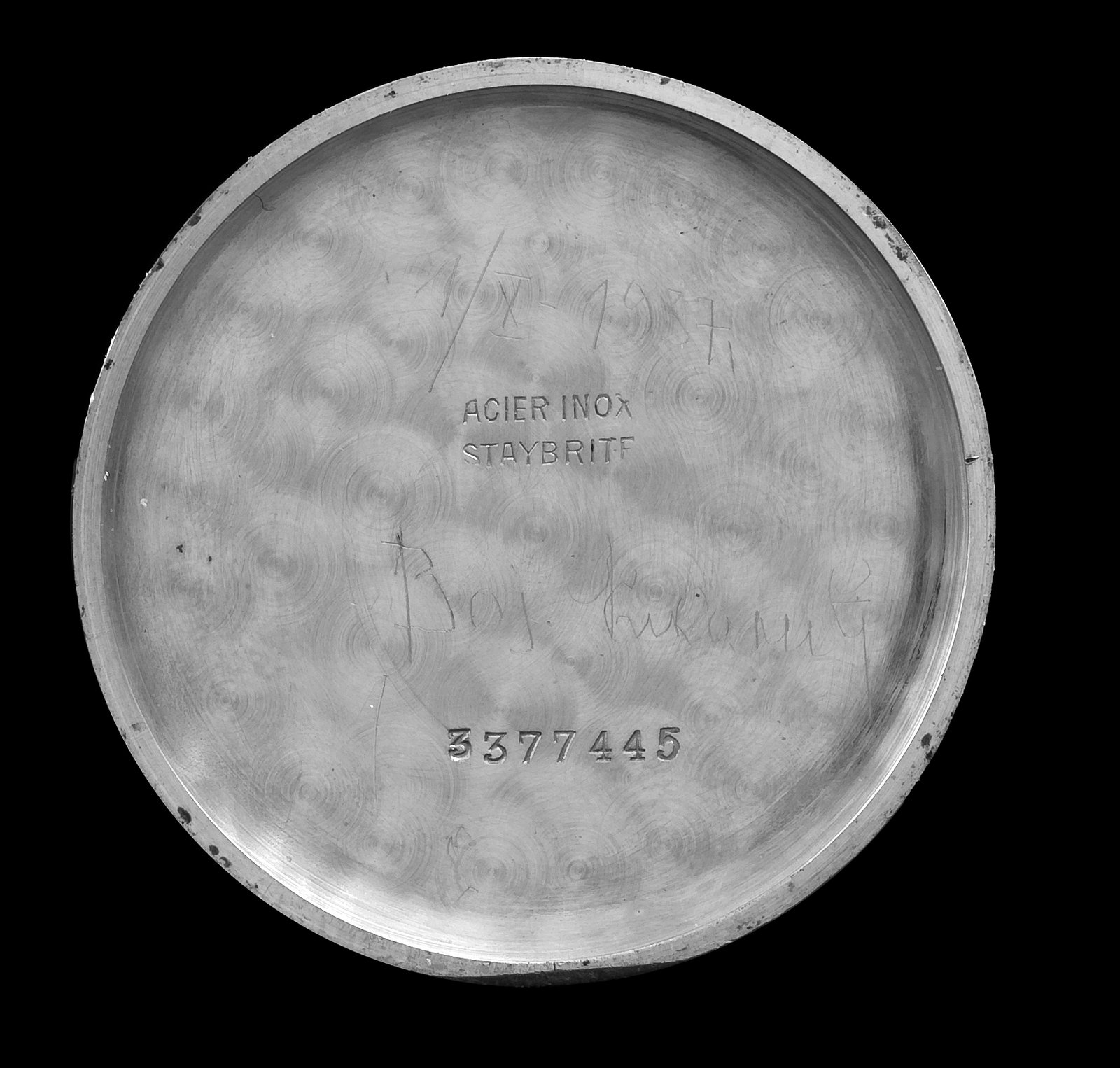
Below, inner and outer case back from the earlier white batch. The serial number also stamped, but with no order number engraved on the inner case.
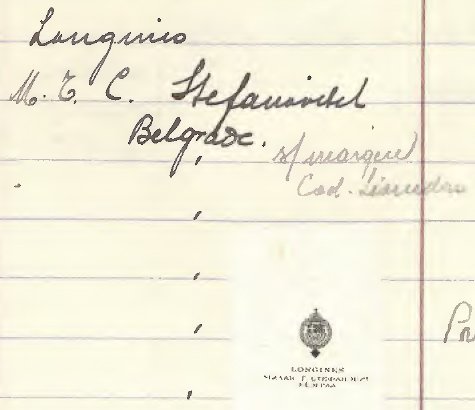
Above, an image from Longines ledger on the left, with text and image showing coats of arms Saint Lazarus emblem, Longines Milan T. Stefanovich).
On the dial, the coat of arms (Saint Lazarus emblem) and retailer signature ‘Milan T. Stefanovich Beograd’ directly under the Longines font in Cyrillic, hence the nickname ‘The Serbian (Serbo). Both the black and white dials made by dial maker Fluckinger & Fils (ZJ. (Zelim Jacot) stamp on the back), who were one of the most prominent dial makers (along with Stern) for Longines, also located in St Imier. This typography on the both the white and black dials are also used in other time only Longines from the period (also with calibre 15.26, they are easily distinguished due to the larger printing of the 12, 3 and 9 index).
As previously stated, these watches were ‘prize watches’ or gifts awarded to the soldiers/lieutenants who finished the military academy top of the class [3]. The second batch with black dial has a serial range, 5,7xx,xxx, with case size 37.5mm. The white version (first batch) has a serial range of, 3,3xx,xxx, with case size 38mm. The white early version also has a faceted bezel opposed to the flat bezel on the later black version.
An Anomaly – The Black Dial First Batch
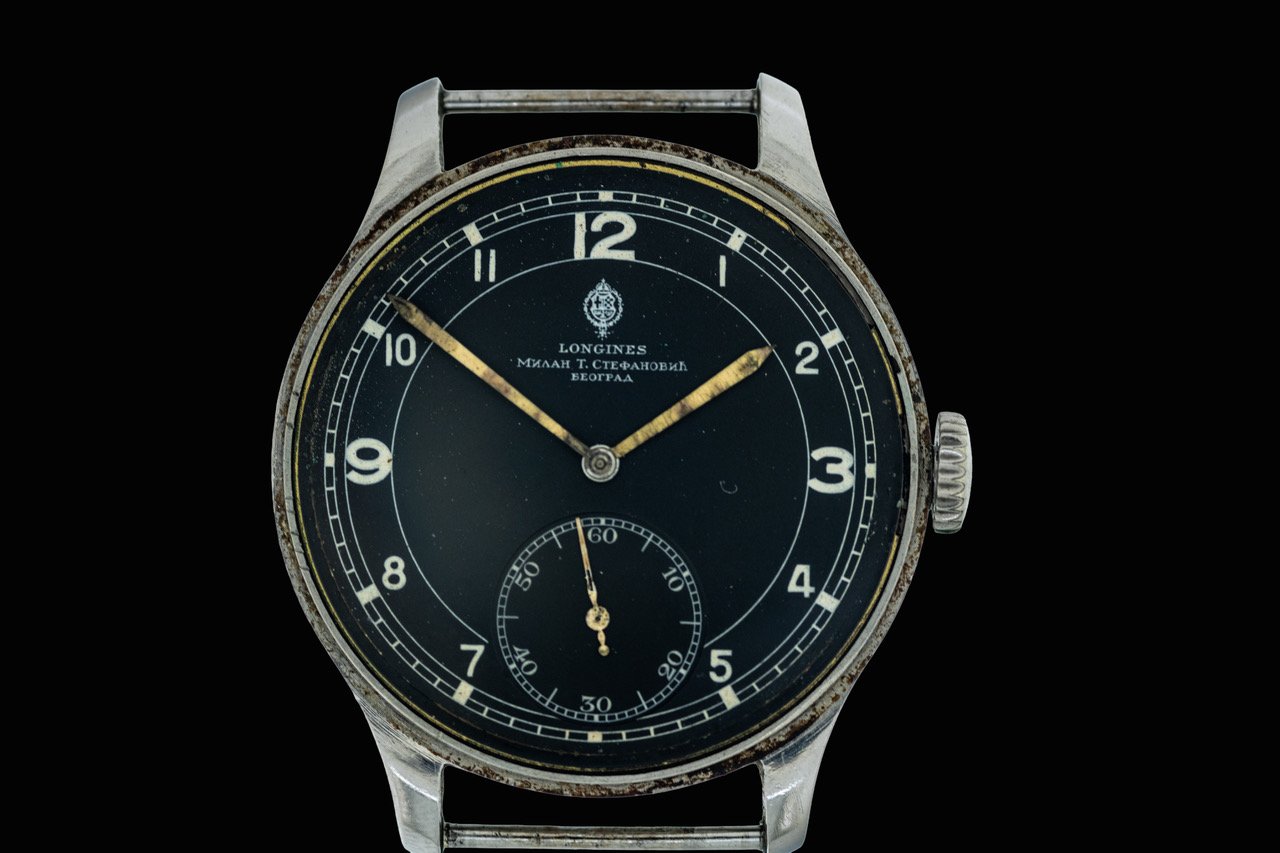
Recently, another example has come to light that challenges the neat categorisation of the two batches. This watch, confirmed by Longines as part of the first series delivery to Stefanovich, carries a black galvanic dial rather than the expected white. The serial number 4,968,409 sits between the two known serial ranges (3,3xx,xxx for the white first batch and 5,7xx,xxx for the black second batch), and like the other first-batch examples, the inner case back bears the “Acier Inox Staybrite” engraving with the serial number stamped but no order number a detail consistent with the earlier ref 3494 pattern rather than the later ref 2326, which had the order number ‘20652’ engraved on the inner case.
Why a black dial was fitted to a first-batch watch remains unclear. It may have been a special request, a variant within the original order, or simply an anomaly in production. What we can say is that Longines have confirmed it as a genuine first-series example. With only around five white-dial first-batch Serbians known to the market, the existence of a black-dial variant within this same delivery makes it arguably the rarest configuration of an already very rare watch. It’s a reminder that even with thorough archival research, these watches still have stories left to tell.
A combination of a large case at 37.5mm, coin edge flat bezel, military connection, a very distinctive dial with the coat of arms and retailer signature, along with the case-back engraving (the retailer signature for sure and likely case-back engraving both done by the manufacturer), in addition to its rarity, makes it a very desirable and interesting watch for collectors. There is a nice size to the crown, also quite flat, usual for Longines from the period with 24 teeth. Interestingly, most of the examples that have appeared seem to have aged in a similar fashion (with a couple of exceptions), most have this almost puffy looking patina, as can be seen in the various pictures of this watch in this article. This is probably in relation to the process in which these galvanised dials where originally made and in turn have aged and, in my view, adds to the charm of the watch.
Movement – Calibre 15.26
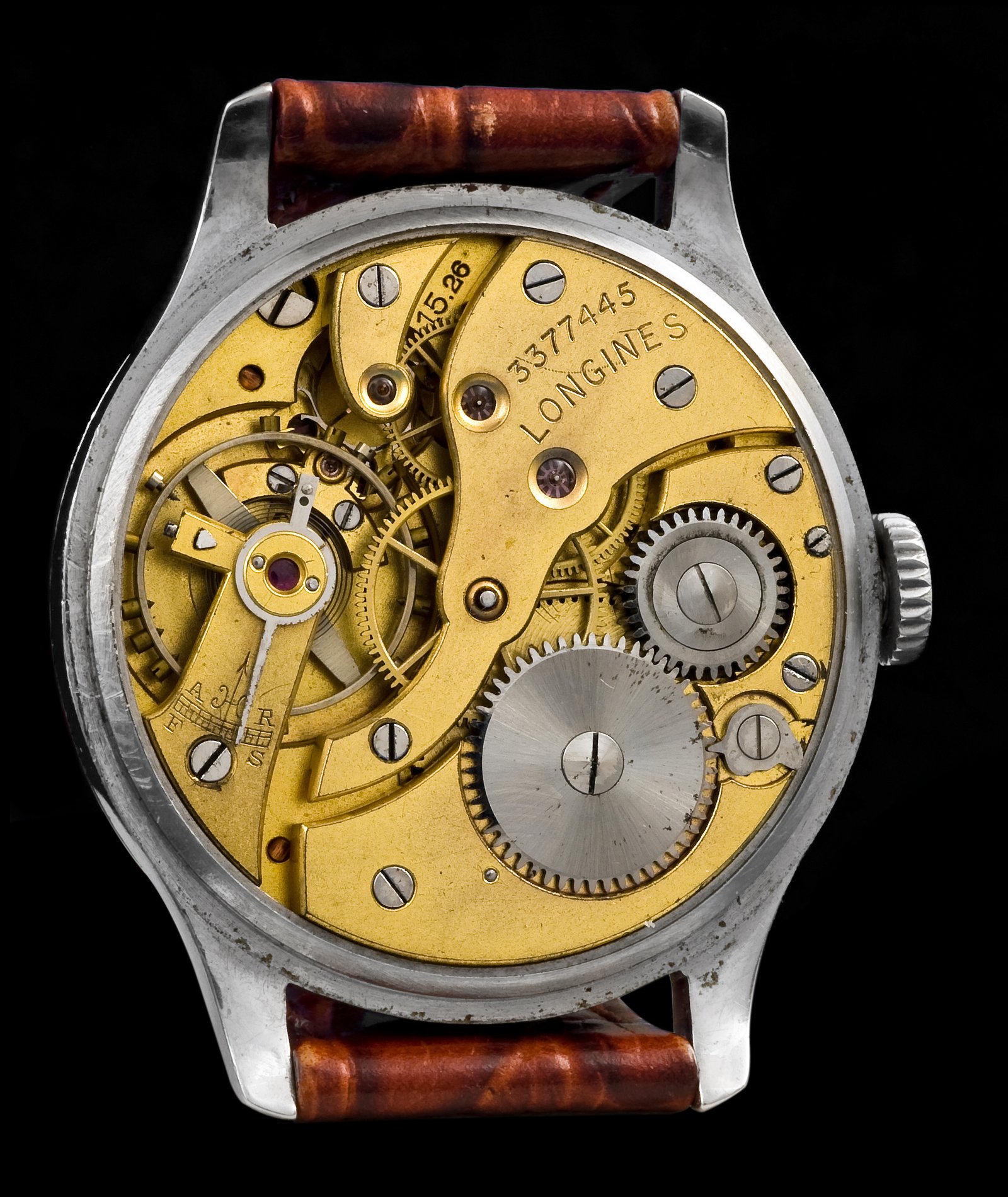
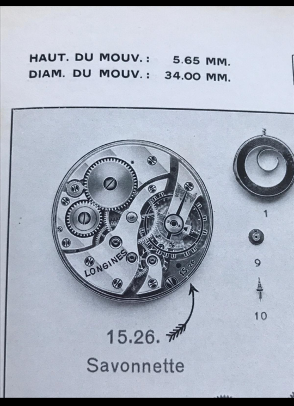
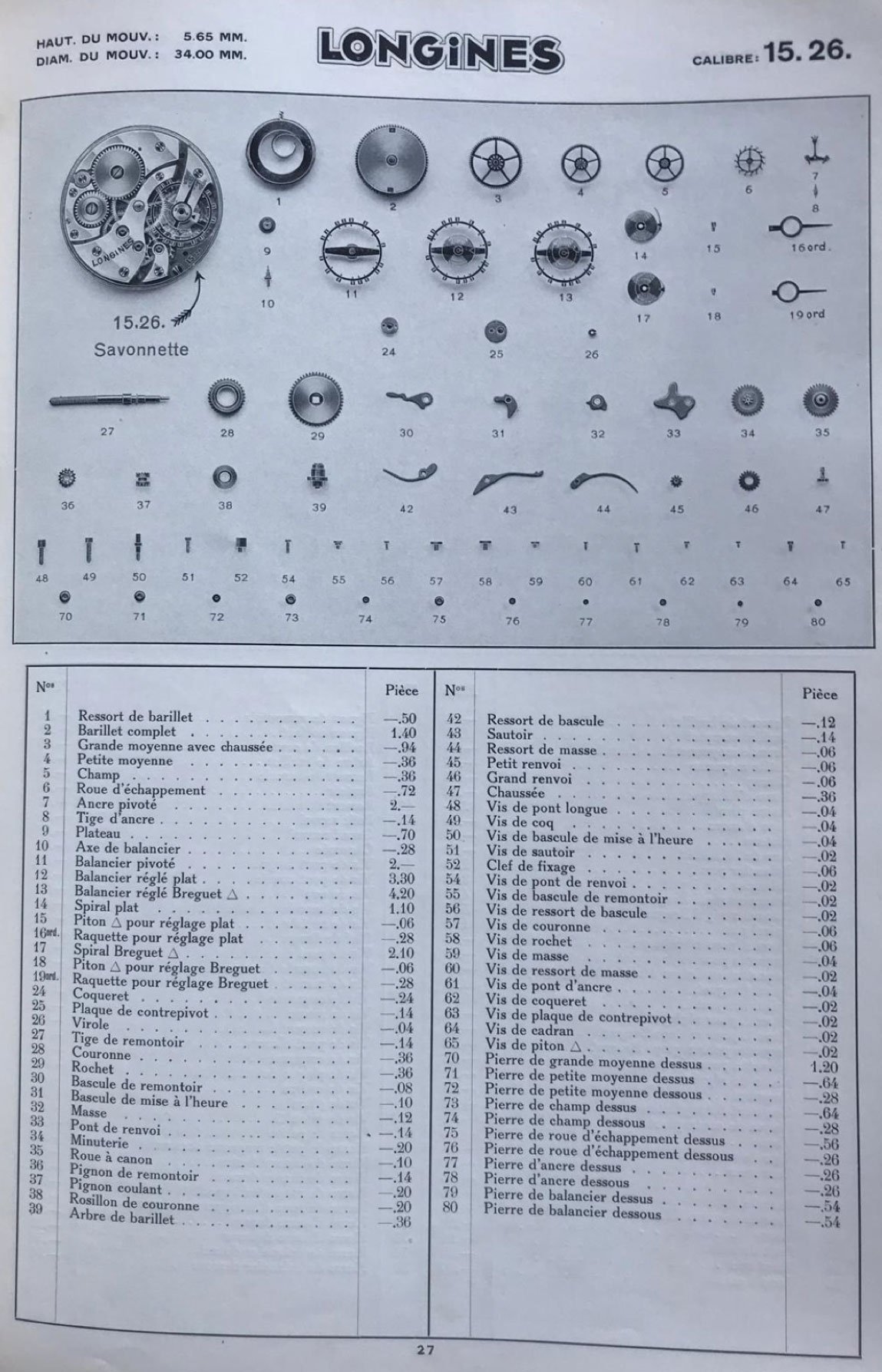
The calibre 15.26 was first produced in 1911, it’s a 15½ line movement “hunter lever winding mechanism”, more or less it used the same ebauche as the calibers 15.25, 14.25, 17.26 and 21.25. Many have suggested that this was in order to retain the production costs [3] and this was a goal regarding production of the movements early 20th century. But it should be emphasised that by 1937 these “old” calibres represented just 10% of production and were generally used mainly for special order watches, as ‘the cost of finishing these movements were higher than that of the new calibres’ [4]. The 15.26 proved to be a sturdy calibre and as a result were used in other military Longines from the period, most notably the ‘Tartargua’ (ref 3582). The movement proved reliable, gilt finished, 34.7mm in diameter and 5.65mm in height, with bimetallic balance and steel Breguet overcoil.
Second batch with black dial, caliber 15.26
First batch white dial, with caliber 15.26
An extremely rare example of a Longines watch retailed by Stefanovich, invoiced 6 October 1938, with the fantastic calibre 25.17, dial by Stern Freres.
Above an image from Longines catalogue spare parts no 8 calibre 15.26 along with dimensions and list of parts.
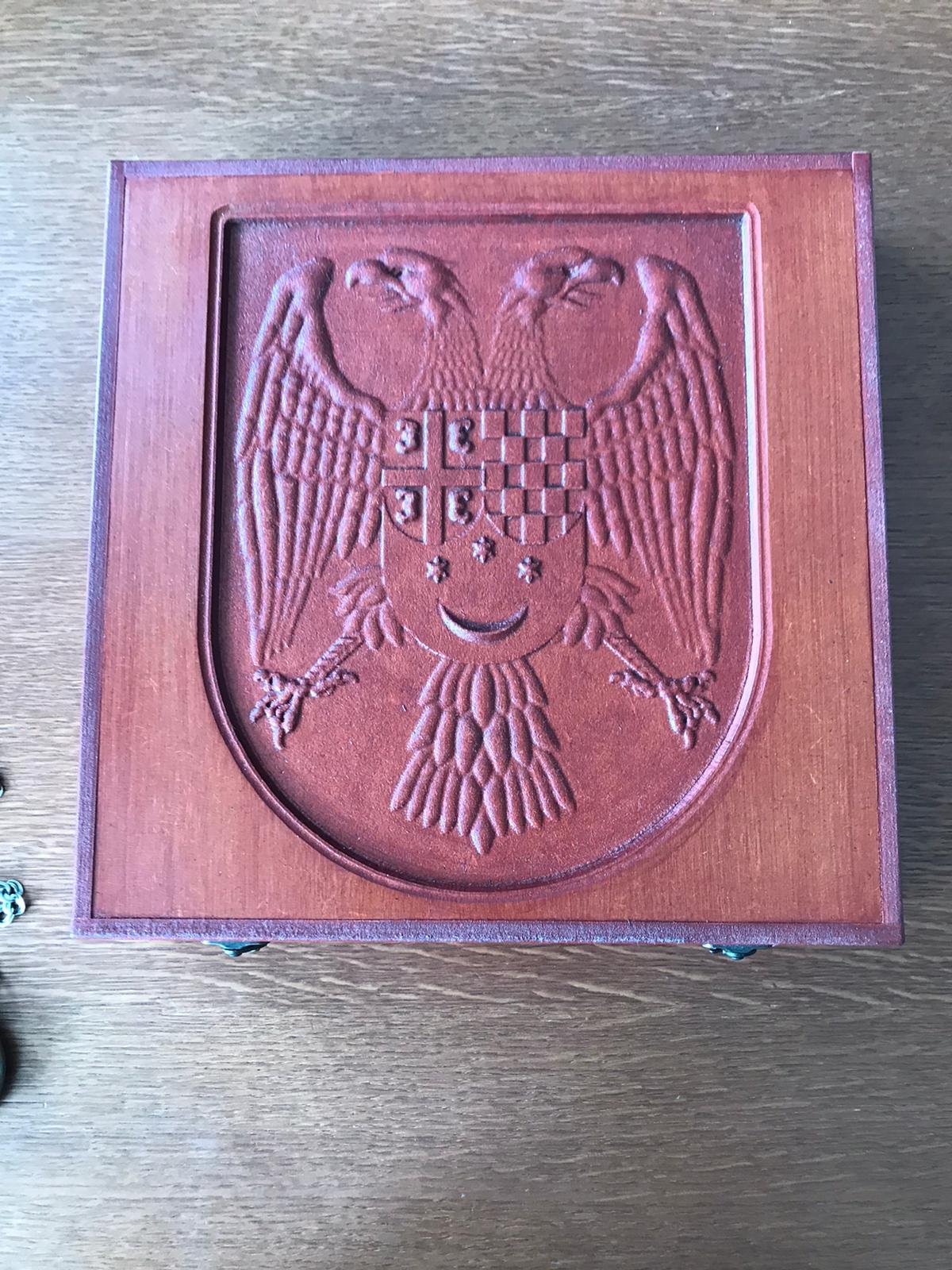
Above, a collage of images all showing coat of arms mostly Stefanovich, also …including Zenith M.R Pektovic and Longines railroad watch Božidar Mišić Pirot, all Serbian.
Info from Longines and References & acknowledgments
Information from Longines archives (LEA Longines Electronic Archives).
My wristwatch, second batch black– The original serial number 5,778,665 identifies a wristwatch in stainless steel bearing the reference 2326 (this is also known as the cliché). It is fitted with a Longines manually wound mechanical movement, caliber 15.26 and was invoiced on 15 Sep 1939 to the company Stefanovich Milan T, which was at that time our agent in Belgrade. Also from the archives ‘ I can confirm the order number 20652. The name of Stefanovitch and the emblem are on the black dial (in cyrillic). There also is the engraving on the case back of a “military coats of arms”.
Serbian white first batch– ‘The original serial number 3’377’445 identifies a wristwatch in stainless steel bearing the reference 3494. It is fitted with a Longines manually wound mechanical movement, caliber 15.26 and was invoiced on 11 September 1937 to the company Stefanovitch, which was at that time our agent in Belgrade.
The order number is 19477. The case back must be engraved with the Serbian coats of arms for officers, grade and year 1937. The dial must be white with the name Stefanovitch and Belgrade in Cyrillic and the coats of arms.’
John Goldberger – Longines Legendary Watches, pp.308-309
Patrick Linder (Editions de Longines) – At the Heart of an Industrial Vocation, Longines watch movements (1832-2009).pp294-295
Patrick Linder (Editions de Longines) – At the Heart of an Industrial Vocation, Longines watch movements (1832-2009) p430.
Longines parts catalogue no 8. Thanks to my friend Tanguy for the image from the catalogue.
Credits and thanks
I would like to thank all of my friends who have helped me with the research for this watch especially,
Jennifer Bochud friend and Longines Museum curator.
Srdjan, friend and top collector and authority on Stefanovich watches based in Belgrade.
Oliver Hartmann friend and great collector of Stefanovich watches, based in Colonge Germany.
Big thanks to my dear friend Roberto Randazzo for supplying the majority of the images.
Image credit – Students At Serbian Military Academy – (Photo by Chusseau-Flaviens/George Eastman Museum/Getty Images). Rights-managed image with licence.
Image credit- Image from Longines ledger showing info on dial.
Longines parts catalogue no.8 from my friend Tanguy.
Image of 62nd Class from the Military academy, 1934-37