People collect watches for all sorts of reasons. For many, they are investments, driven by market trends and resale value. But there is another kind of collector, the quieter kind, drawn by curiosity and a desire to understand context. For us, a watch is never just an object. It belongs to a time, a place, a story. What matters is not what it might fetch at auction, but what it can teach you.
My own journey with Longines started in the mid-1990s, almost by accident. I was visiting Vienna and noticed an old pocket watch in a display case at the Dorotheum, the historic auction house founded in 1707 by Emperor Joseph I. It was a post-sale piece, modestly priced at 100 Deutsche Mark. I bought it on impulse, simply because something about it caught my eye.
Back home in Germany, I went looking for someone who could repair it. That search led me to an experienced watchmaker who became a true mentor. He taught me to focus rather than accumulate, and through his guidance I found myself drawn to specific Longines specialties. More importantly, he showed me that collecting watches goes far beyond the watches themselves.
Around the same time, eBay arrived and changed everything. Suddenly you could research and buy from anywhere. Longines watches were still genuinely affordable back then, which meant you could acquire historically interesting pieces without breaking the bank. This shaped my whole approach: curiosity led the way, not budget or market trends. From that point on, I began collecting and studying Longines watches more systematically, always trying to understand the technical, historical and cultural background.
Along the way, I met some remarkable people. Collectors with extraordinary attention to detail, deep knowledge, and real passion. Many of these encounters turned into lasting friendships. Looking back, this human side of collecting has been one of its greatest rewards. One encounter stays with me. An American paratrooper, well into his eighties, who collected large silk escape maps showing the terrain of his wartime drop zones behind enemy lines. Alongside these maps, carefully preserved, was a gimballed Longines deck chronometer that had been entrusted to him during the Second World War. What mattered to him was not rarity or value, but continuity. Eventually, he placed the chronometer into my care.
When it arrived, the chronometer was still in its original transport box, securely sealed and impossible to open. I shook it gently and heard something rattling inside. When I called the old gentleman to ask about it, his reply was characteristically dry: he had put the key inside the box.
I took the sealed case to a small locksmith near my home and explained the problem. The owner burst out laughing and called his father from the back of the shop, a man roughly the same age as the paratrooper. The moment he saw the box, his eyes lit up. He took a simple paper clip, bent it carefully into shape, felt his way through the lock, and after about thirty minutes handed me a newly fashioned key. He refused any payment. With that key, we finally opened the box.
It was one of those moments that captures what collecting can really be about: not just objects, but people, craft, generosity, and lived experience. The chronometer itself I later donated to the Longines Heritage Museum.
Another encounter was with a psychologist from Zurich who had inherited a Jacquemart figure automaton clock with a repeating mechanism from his father, yet never felt any connection to it. After much deliberation, I decided not to buy it. That decision turned out to be one of the great mistakes of my collecting life. At the time, both my mentor and Raymond Krebs, then the Longines Heritage representative, had serious doubts about the movement’s condition and whether such a clock could really have come from Longines.
The owner and I could not agree on a price. On my advice, he consigned it to a Swiss auction house, where it sold for roughly six times what we had discussed.
In 2016, I revisited the matter with Longines. Working with their Brand Heritage Department, we found the answer in the archives: Longines had indeed produced two Jacquemart automaton clocks, one in silver and one in 18-carat gold. The one I had passed on was the gold version.
That same year, I transferred approximately 350 historical postcards, along with around 150 additional letters and documents from my archive, to the Longines Museum. By 2020, I had also assembled a collection of around 250 Longines watches. From 2018 onward, more than 100 of these were reacquired by Longines for the museum.
That was never the goal, but it confirmed something important: collecting with focus, documentation and context creates value beyond private ownership.
Among those pieces were two pocket watches with the serial numbers 335 and 581, both from the very first year of production in 1867. Today they hold a prominent place in the museum, and one appeared on the cover of the book published for the brand’s 185th anniversary.
Experiences like these taught me that collecting is, at heart, a human exchange. Watches are often just the starting point; what lasts are the conversations, the shared curiosity, the personal histories you discover along the way. It was this perspective that drew me early on to postcards and printed material from the Saint-Imier region. These documents often reveal things about a watch’s world that the object alone cannot.
My mentor taught me to think broadly about what collecting means. I came to see that documents, images and correspondence are not peripheral. They are essential to understanding a brand’s character. This is how my fascination with historical postcards from the Saint-Imier region began. These cards do more than show buildings; they show how a brand saw itself.
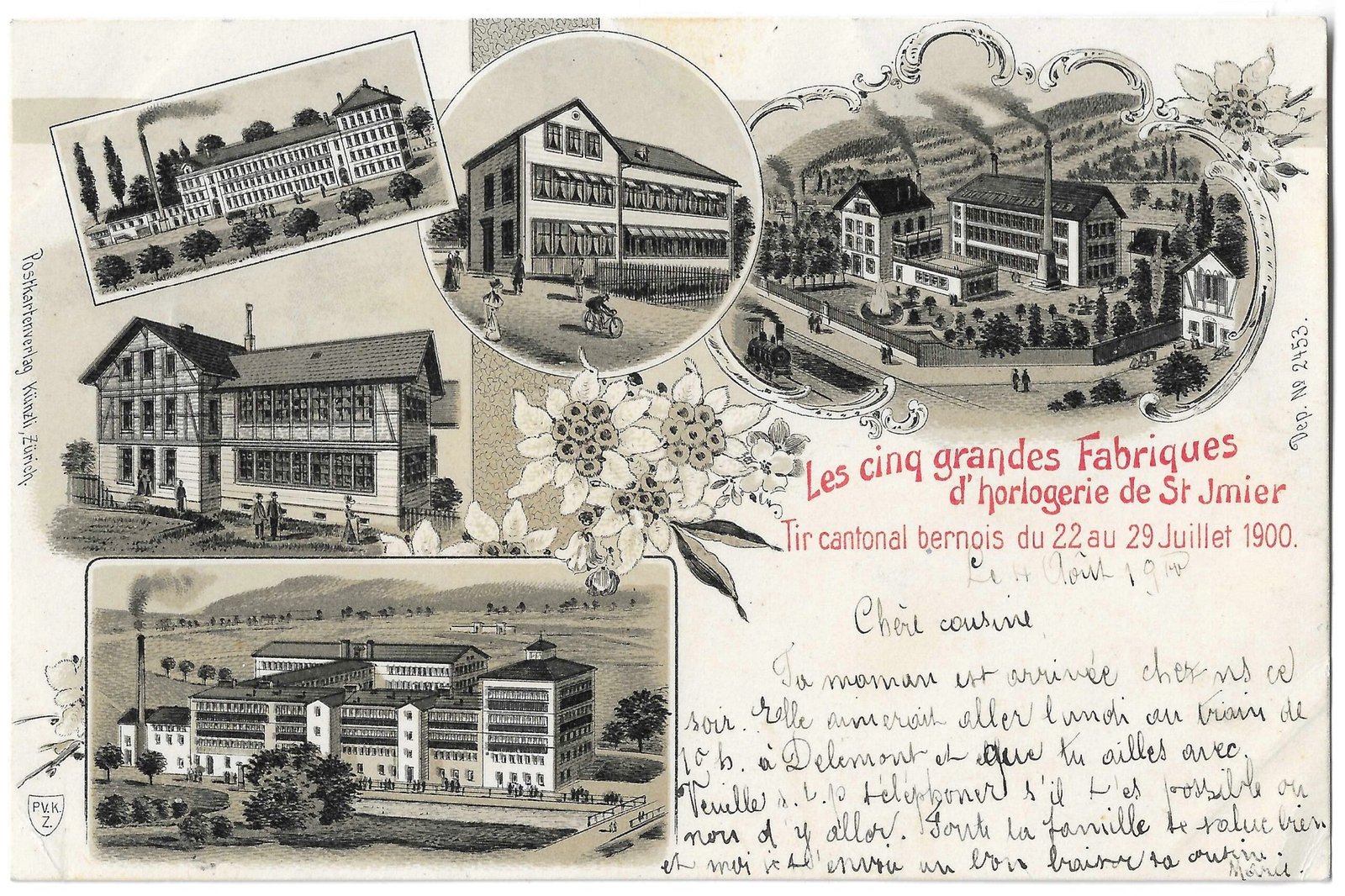
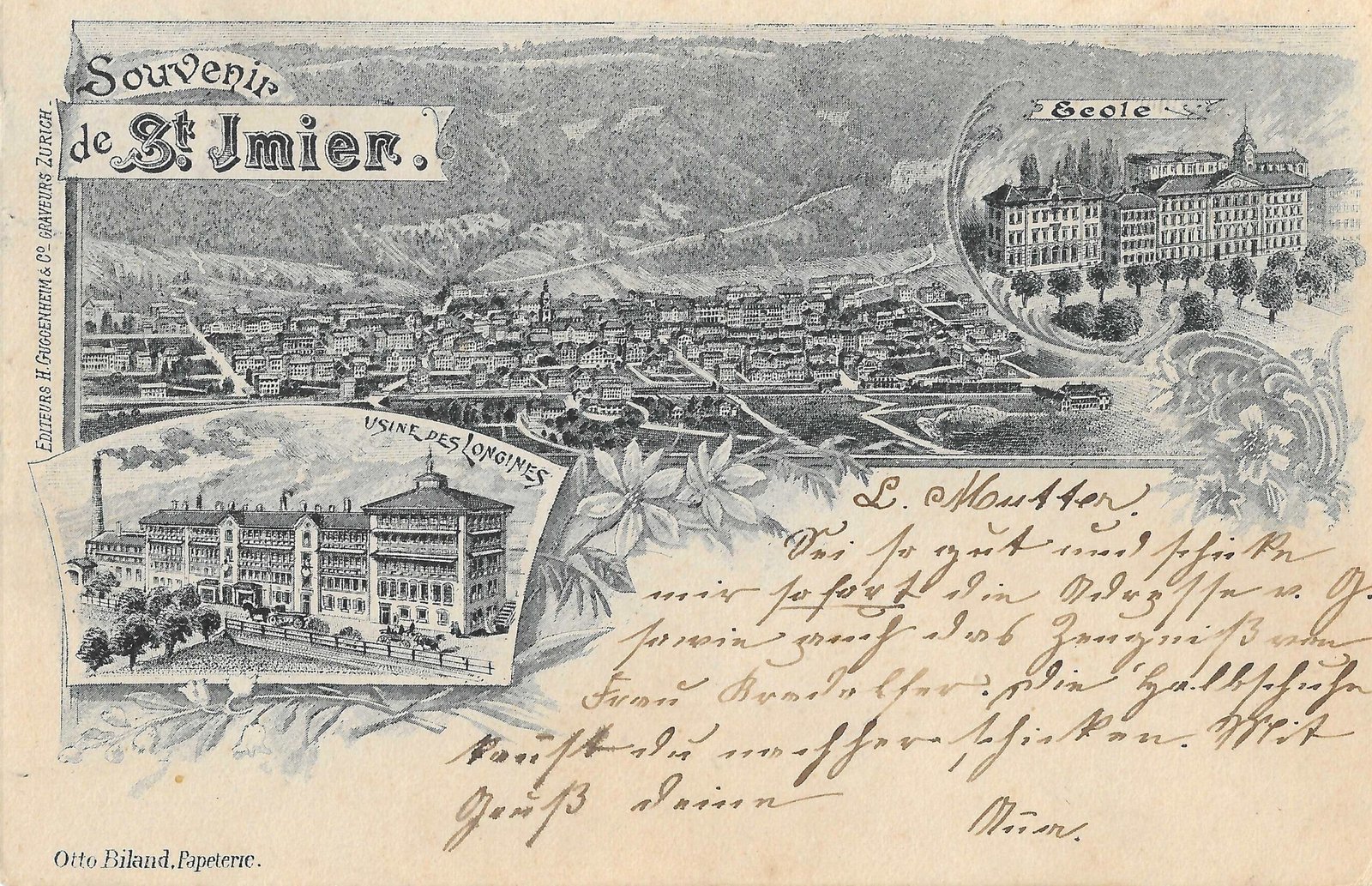
Rather than singling out one brand, this image presents watchmaking as a shared industrial landscape. It helps you understand Longines in its original setting, surrounded by the other major manufactures that shaped Saint-Imier’s economy and identity around 1900
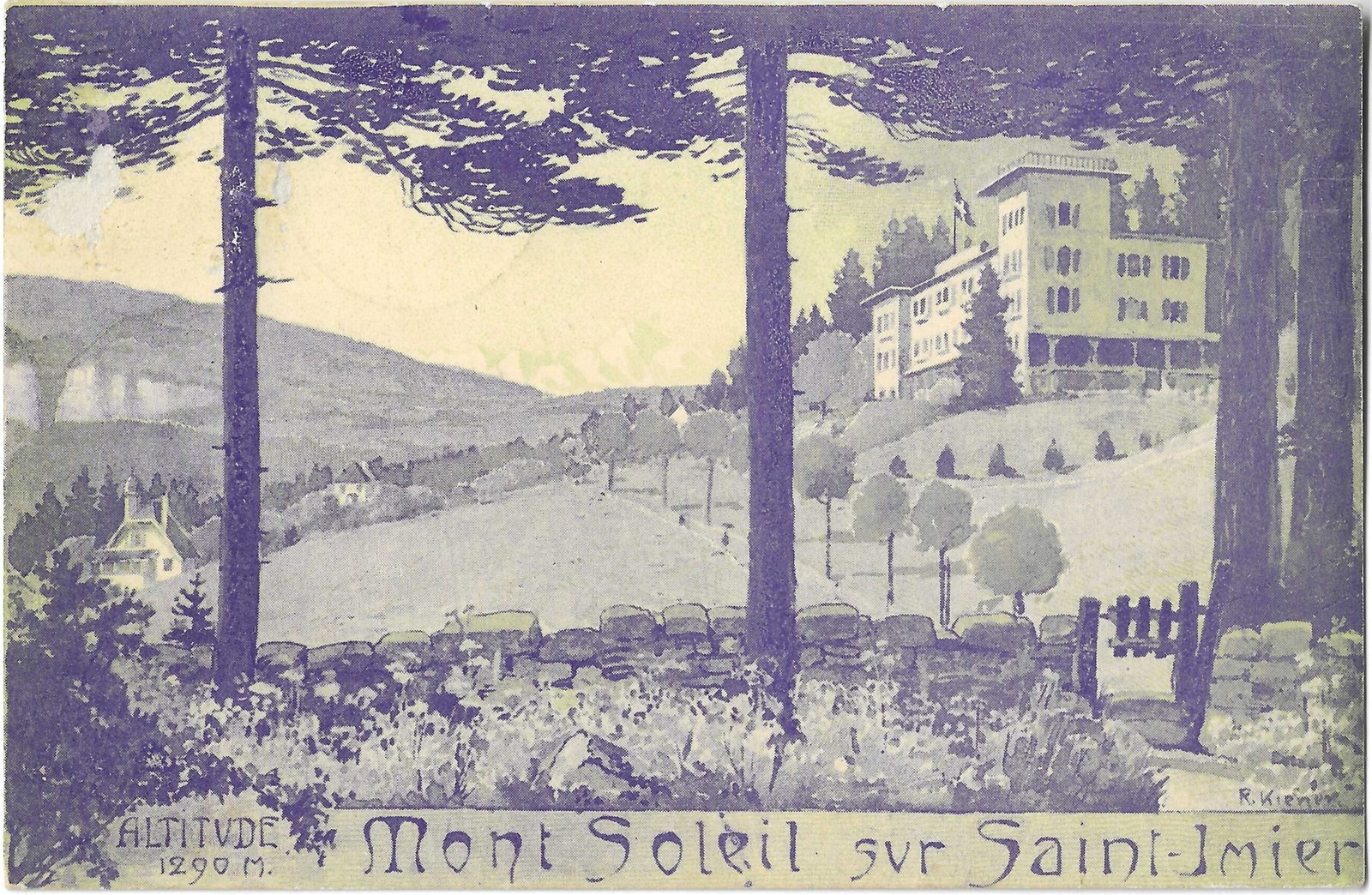
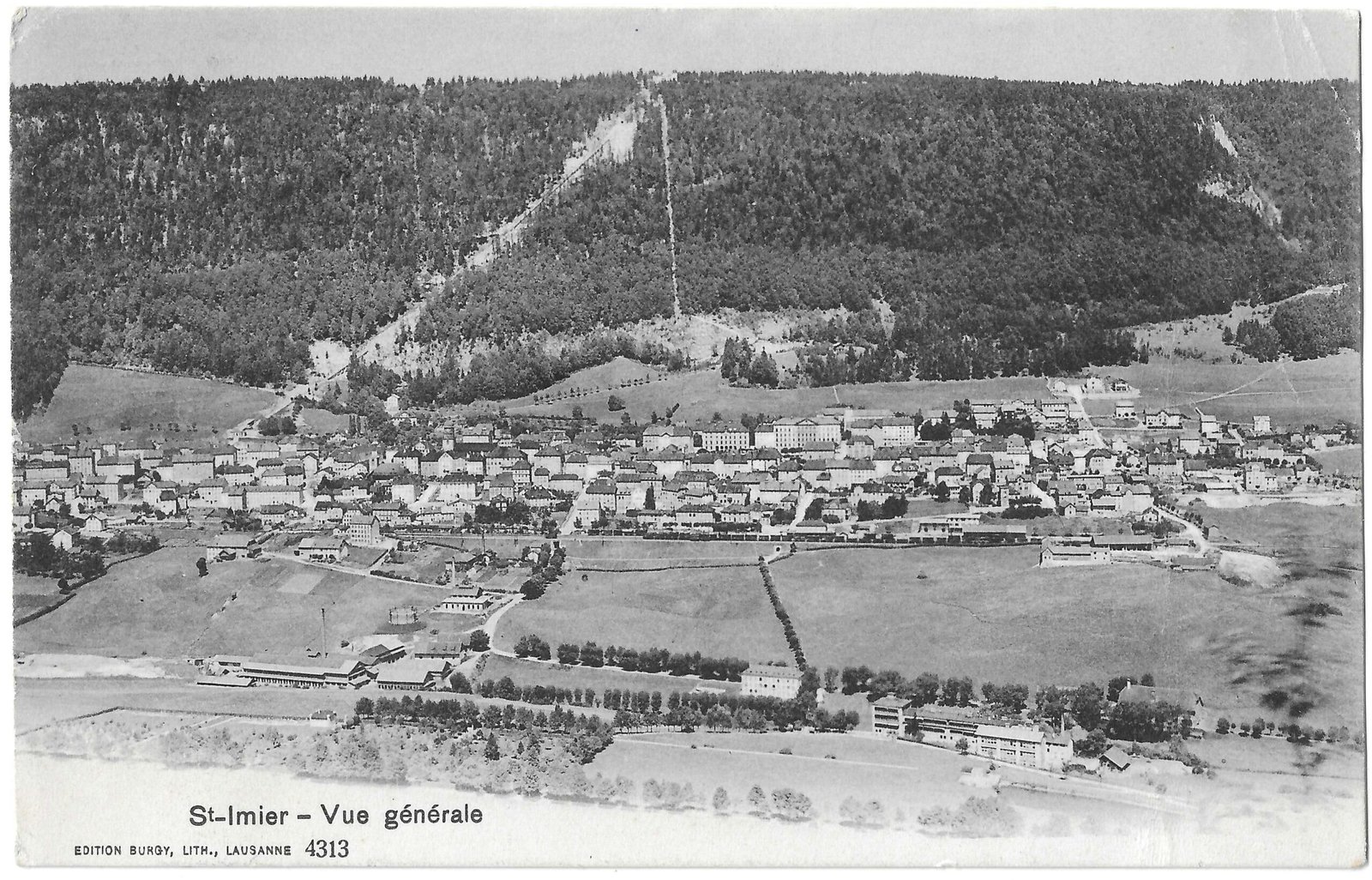
To the north of the town rises Mont-Soleil, which had already been established as an excursion destination in the nineteenth century. In its early phase, the plateau was characterised primarily by hotels and excursion restaurants catering to day visitors and travelers from the Jura region and beyond. Only in later decades did holiday houses and organised holiday or convalescent colonies develop.
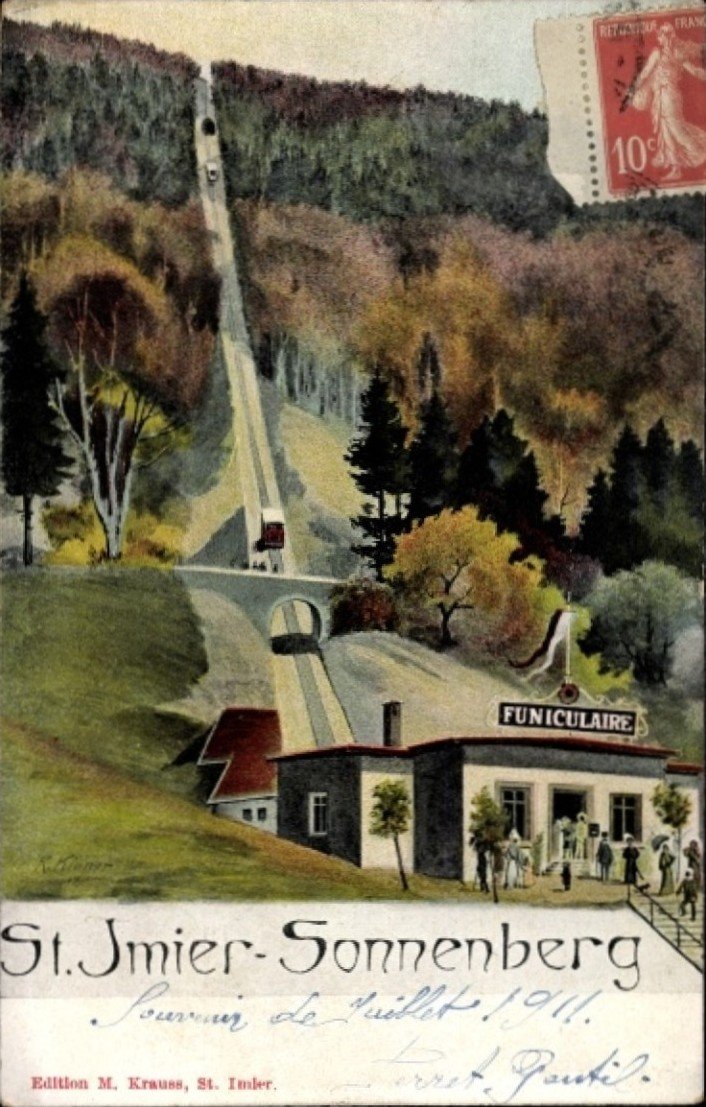
In 1903, a funicular railway connected Mont-Soleil with Saint-Imier—an important infrastructural milestone that was soon reflected in contemporary visual culture.
The building still exists, though it has been in private hands for decades and no longer serves tourists. Its current state is a far cry from the grand function it served when this postcard was made.
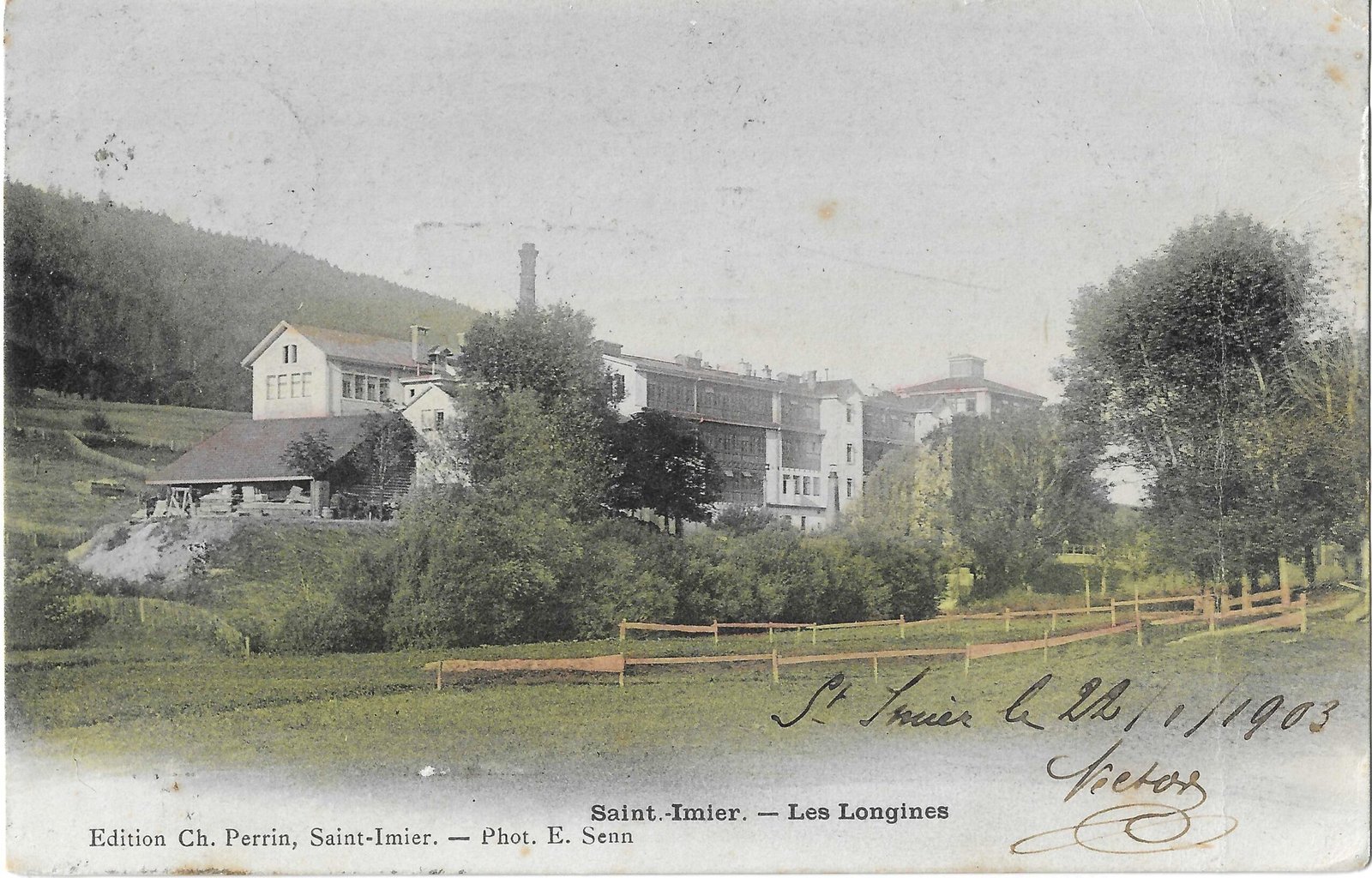
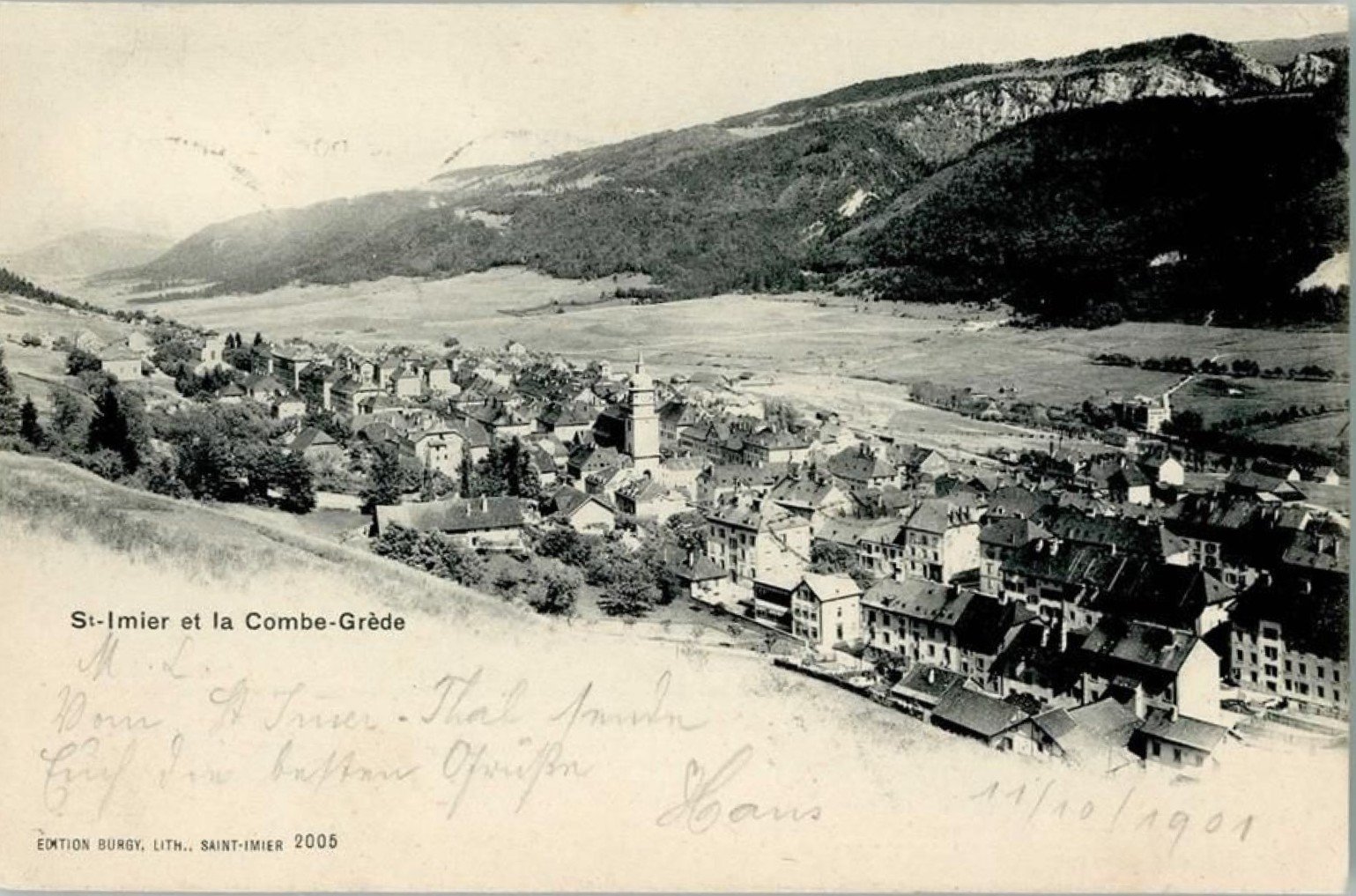
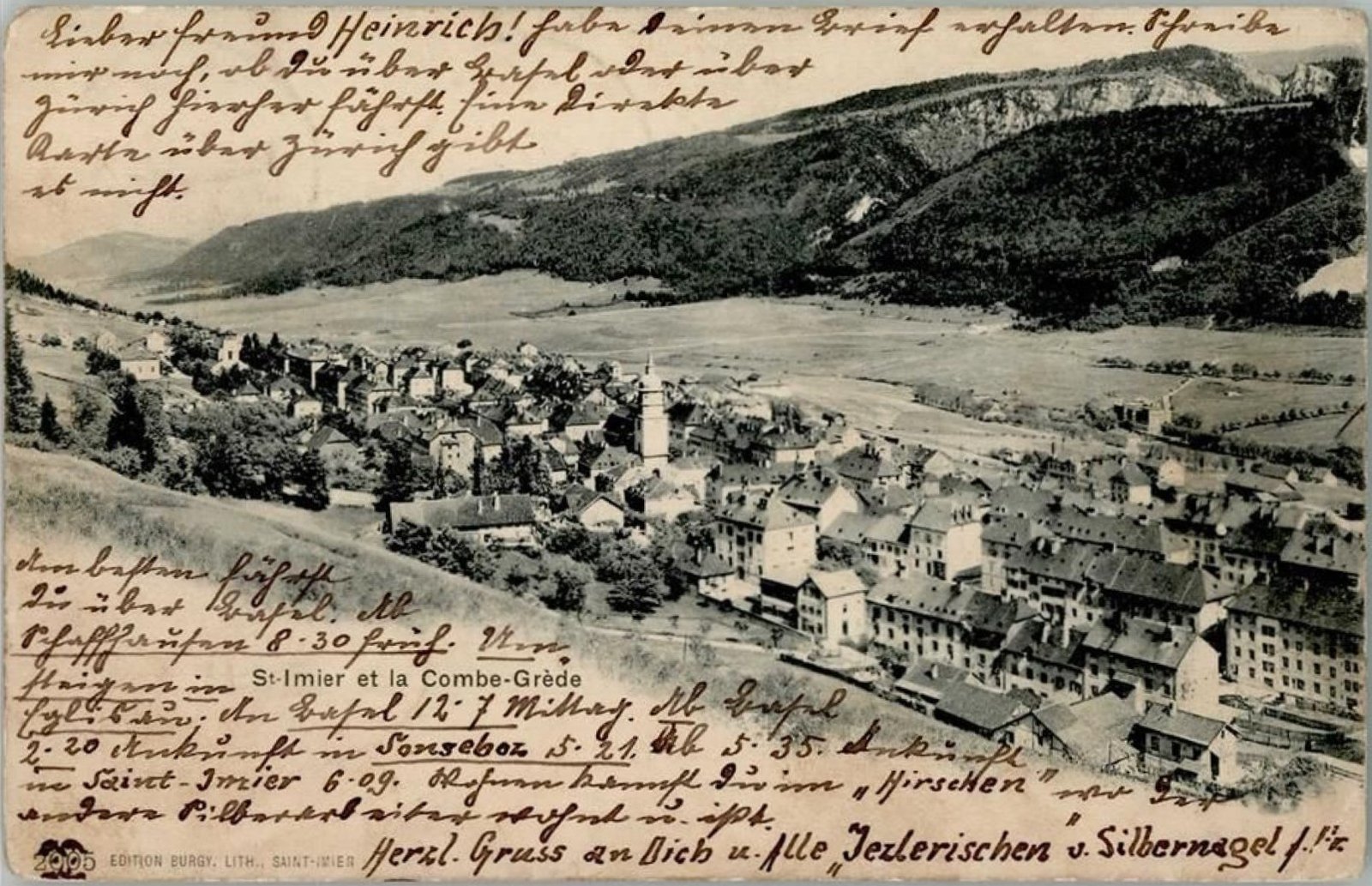
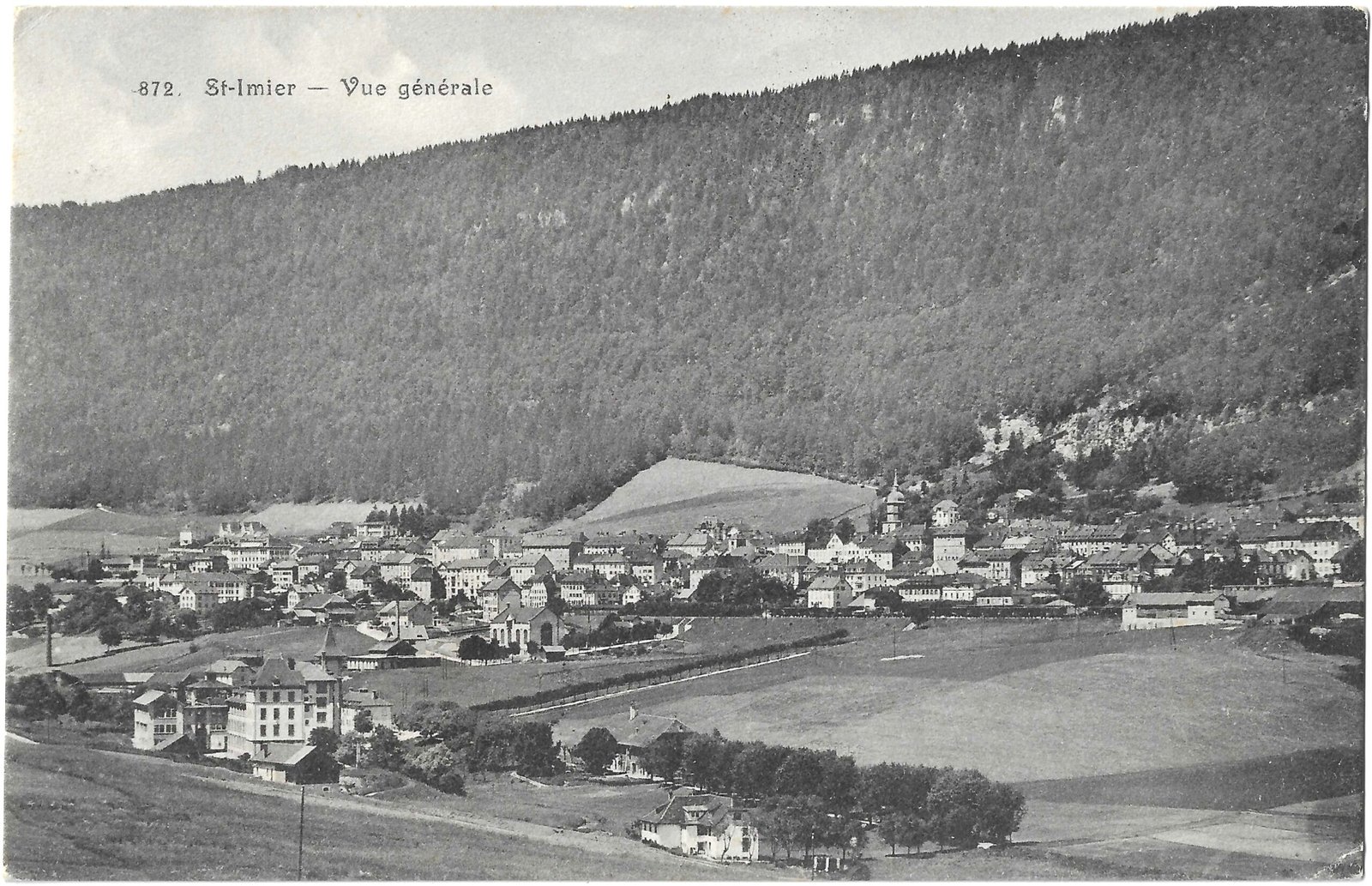
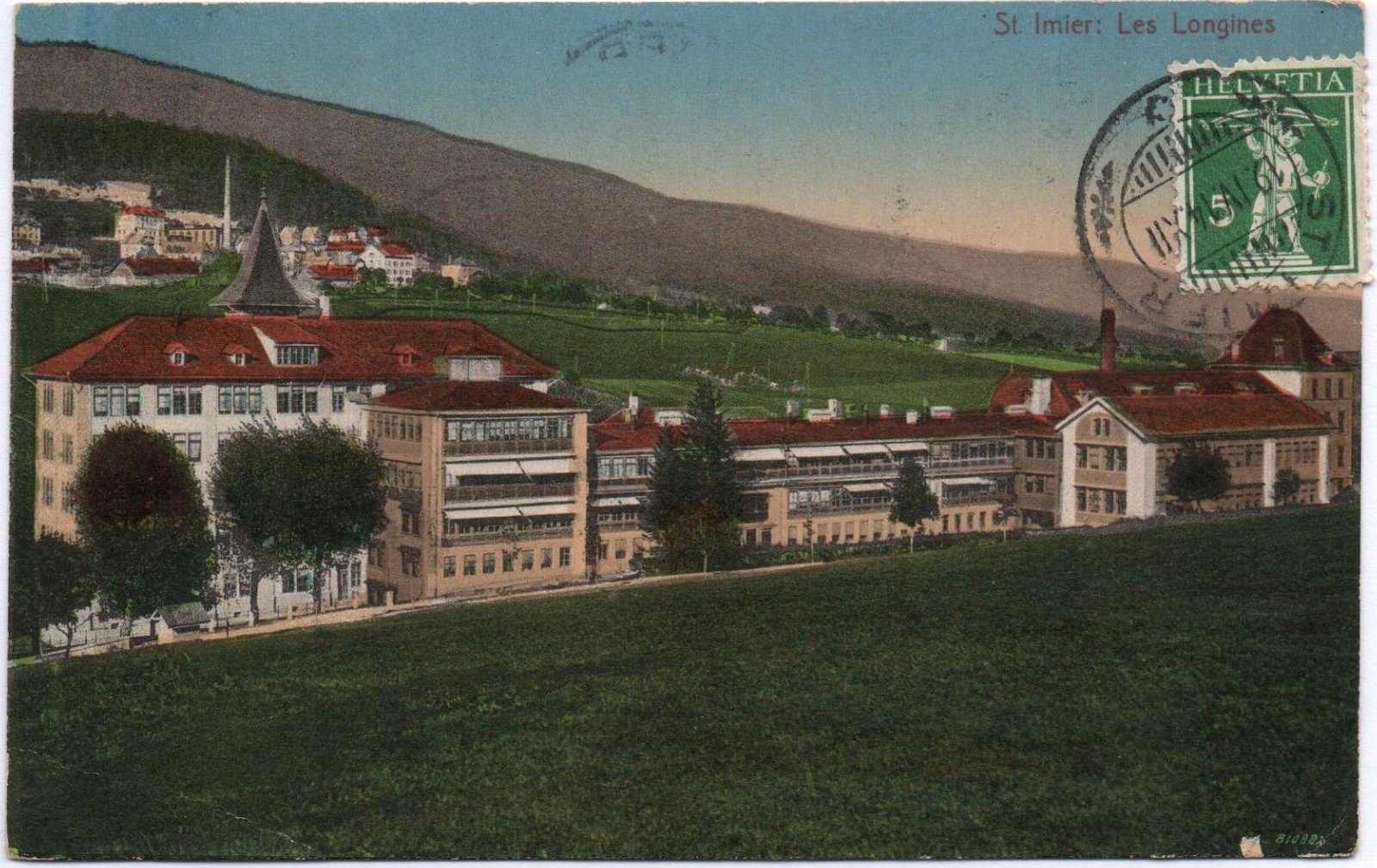
From the Sonnenberg, you look down on the whole valley: the town, the factories, the fields beyond. What strikes you is how ordinary the Longines manufacture looks. It doesn’t stand apart. It’s just one more building among many on the valley floor.
This is the opposite of how companies present themselves today. Modern corporate imagery makes factories look imposing, heroic, set against dramatic skies. These postcards do something subtler. They show Longines as simply part of the town, no more prominent than the church or the railway station.
And that quiet ordinariness turns out to be powerful. It says: we belong here. We’ve always been here. We’re woven into the life of this place.
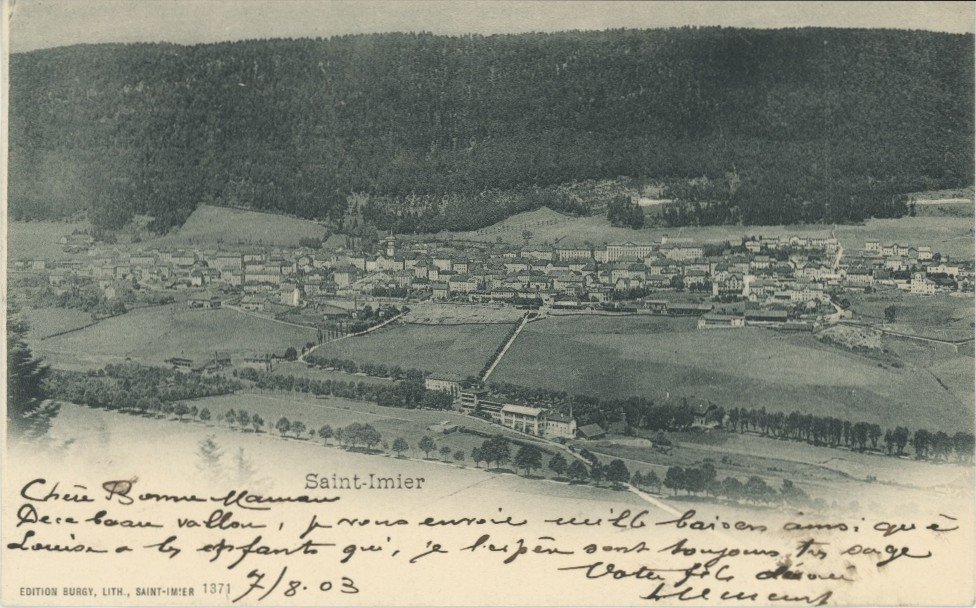
The funicular to the Sonnenberg opened in 1903, but it is not yet visible here. This postcard captures Saint-Imier on the cusp of change, still defined by the topographical relationship between settlement, industry and landscape.
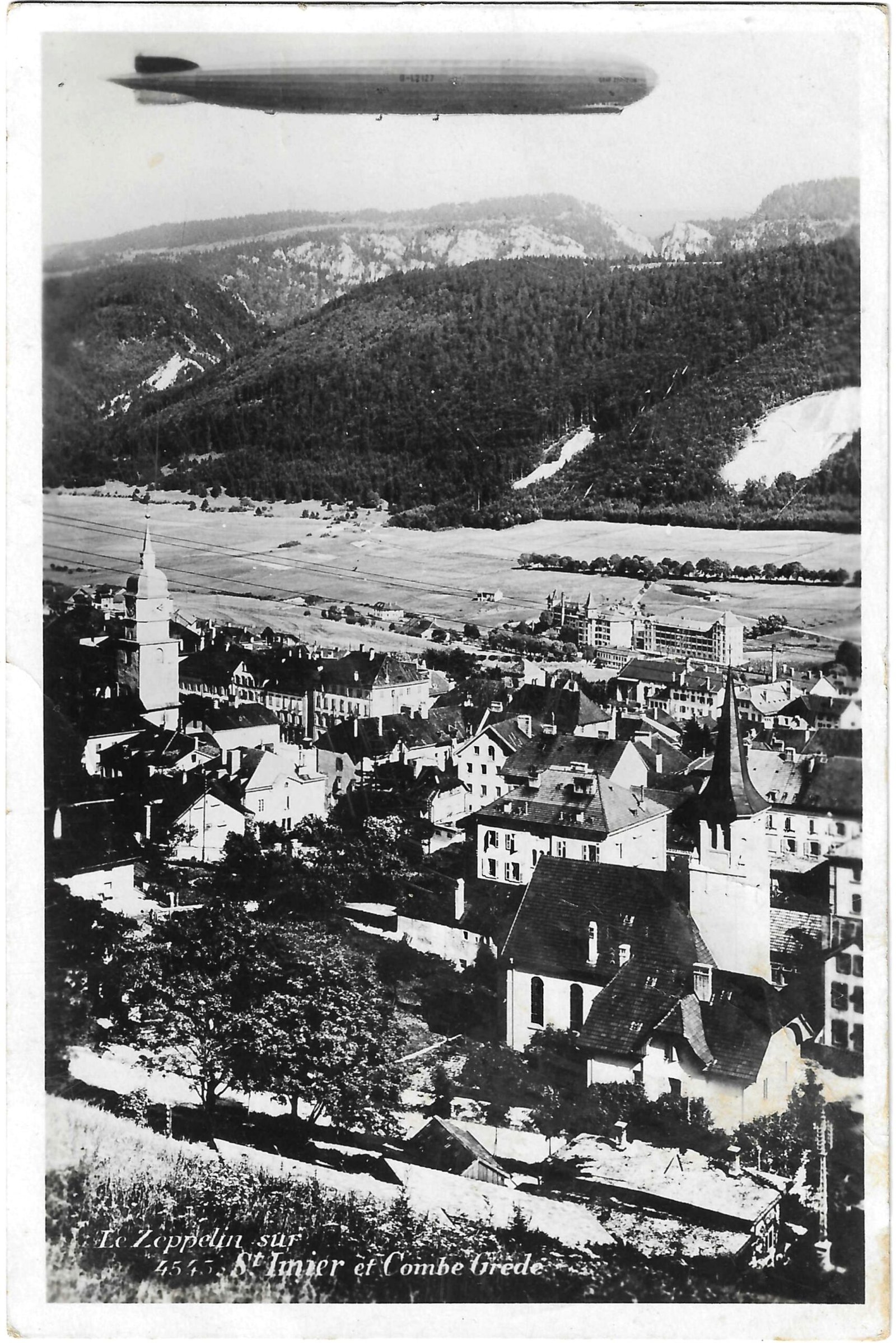
Now the funicular is clearly visible. What had been a purely topographical relationship between town, industry and landscape has become shaped by infrastructure.
Look at these postcards in sequence and you can watch the valley change. The funicular arrives. New roads appear. The landscape becomes busier, more connected. But through all of this, the Longines factory stays exactly where it was, looking exactly as it did. The world modernises around it; the manufacture just carries on.
Here’s what makes these postcards so interesting: Longines didn’t commission them. They were produced by local publishers, sold to tourists and visitors, sent to friends and family across Europe. They were souvenirs, not advertisements.
Yet they did the work of advertising anyway. Card after card shows the factory sitting comfortably in its valley, surrounded by the town that grew up alongside it. No slogans, no boasting, just a place that looks like it belongs. That kind of image is worth more than any campaign.
Something else becomes clear when you compare these postcards with the town today. Many of the buildings shown, including large parts of the Longines complex, remain largely unchanged and easily recognisable even now. This architectural continuity reinforces what the postcards themselves suggest: stability, permanence, a manufacture rooted in its place over generations.
Beyond place and architecture, the same visual logic continues in images that put people at the centre.
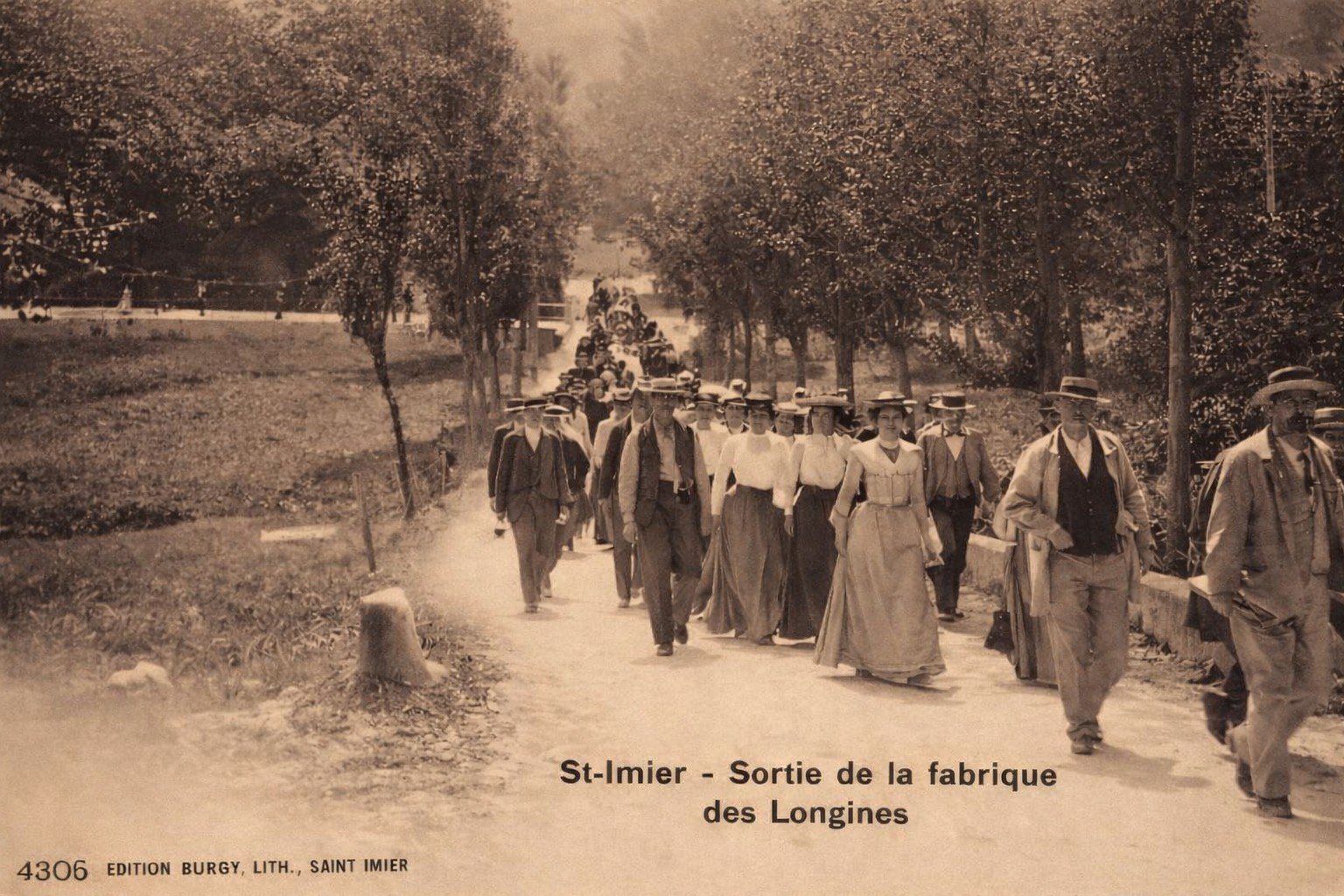
Some postcards show people: workers streaming out of the factory gates, walking home along tree-lined paths, gathered in groups outside the buildings. These images do something different from the landscape views. They shift the focus from the factory as a building to the factory as an employer, a gathering point, a part of daily life.
Look closely and you notice something odd. Everyone is dressed in their Sunday best. These are not candid photographs of the end of a working day. They are staged.
That staging is itself revealing. It shows us how Saint-Imier wanted to be seen: orderly, dignified, a place where workers and employers belonged to the same community. No grime, no exhaustion, no hint of the labour disputes that troubled factories across Europe in this period. What comes through instead is stability, regularity, mutual dependence.
None of this makes the postcards less valuable as historical sources. If anything, staged images tell us more about how people wanted to be perceived than candid ones ever could.
Worth remembering, too, that Longines was not the only watchmaker in town. Several major manufacturers operated here, and these images speak to a shared industrial culture across the valley. The factory in the photograph might be Longines, but the story it tells is about a whole community built around watchmaking, a shared rhythm of work and life.
Where the landscape postcards anchor Longines in a place, these images anchor it in something harder to photograph: the social fabric of the town itself.
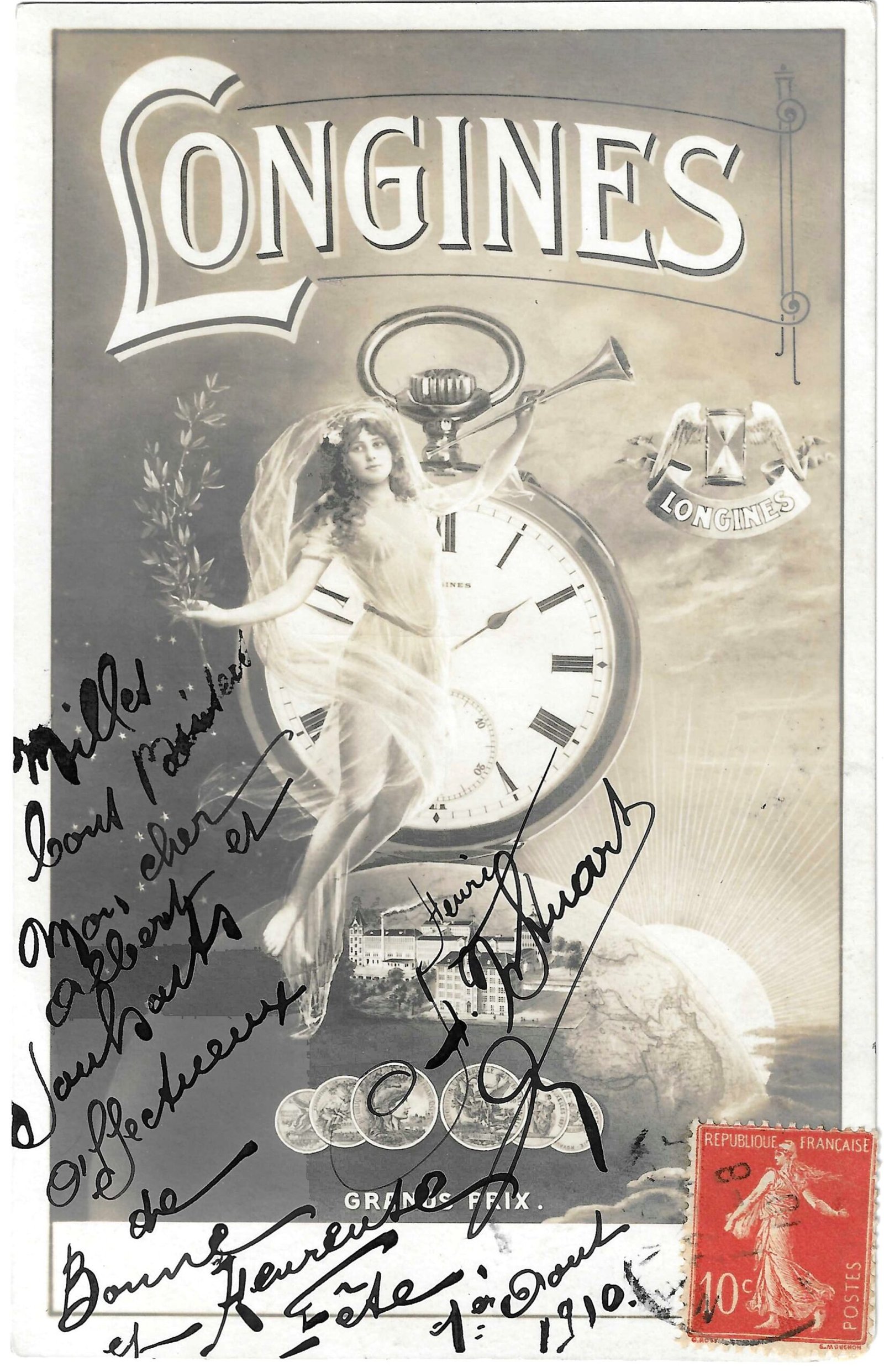
This postcard marks a turning point. You can still see the factory in Saint-Imier, still see references to the international awards Longines had won. But something new has entered the picture: allegory.
The earlier postcards showed real things. Buildings, landscapes, workers going home. These later cards move into the realm of symbolism. Classical female figures appear, draped in flowing robes, holding pocket watches aloft. They represent ideas: time, progress, elegance, precision. The watch is no longer just a product. It has become an emblem.
The Longines winged hourglass, registered as a trademark in the nineteenth century, starts to take centre stage. So do references to Grand Prix distinctions and awards from world’s fairs and chronometer competitions. The message is clear: this is not just a watch; it is a prize-winning watch. Time is not abstract; it is measurable, and Longines measures it better than anyone.
What makes these images effective is that they do not appear out of nowhere. They build on everything the earlier postcards established. We have already seen the factory in its valley, the workers at its gates, the town that grew around it. The allegory does not replace that reality. It elevates it.
I still smile when I remember my wife’s comment at the time: “Another old piece of paper in the mail. What on earth are you going to do with all this?”
This card is different. No factory, no winged hourglass, no prize medals. Just a butterfly. It reminds you that not everything around 1900 was about industry and progress. There was also room for sentiment, for beauty, for the kind of image you might send to someone you cared about simply because it was lovely.
When I transferred my first paper collection to Longines in 2016, it contained around 350 postcards and another 150 documents. Looked at individually, they are curiosities. Looked at together, they tell a story. You can trace Longines learning how to present itself to the world, card by card, year by year. This was the moment when photography and print were becoming powerful tools for shaping public perception, and Longines, whether by instinct or design, understood that early.
They position Longines and express the ambition of a brand at a moment when photography and print media were becoming powerful tools of public image-making.
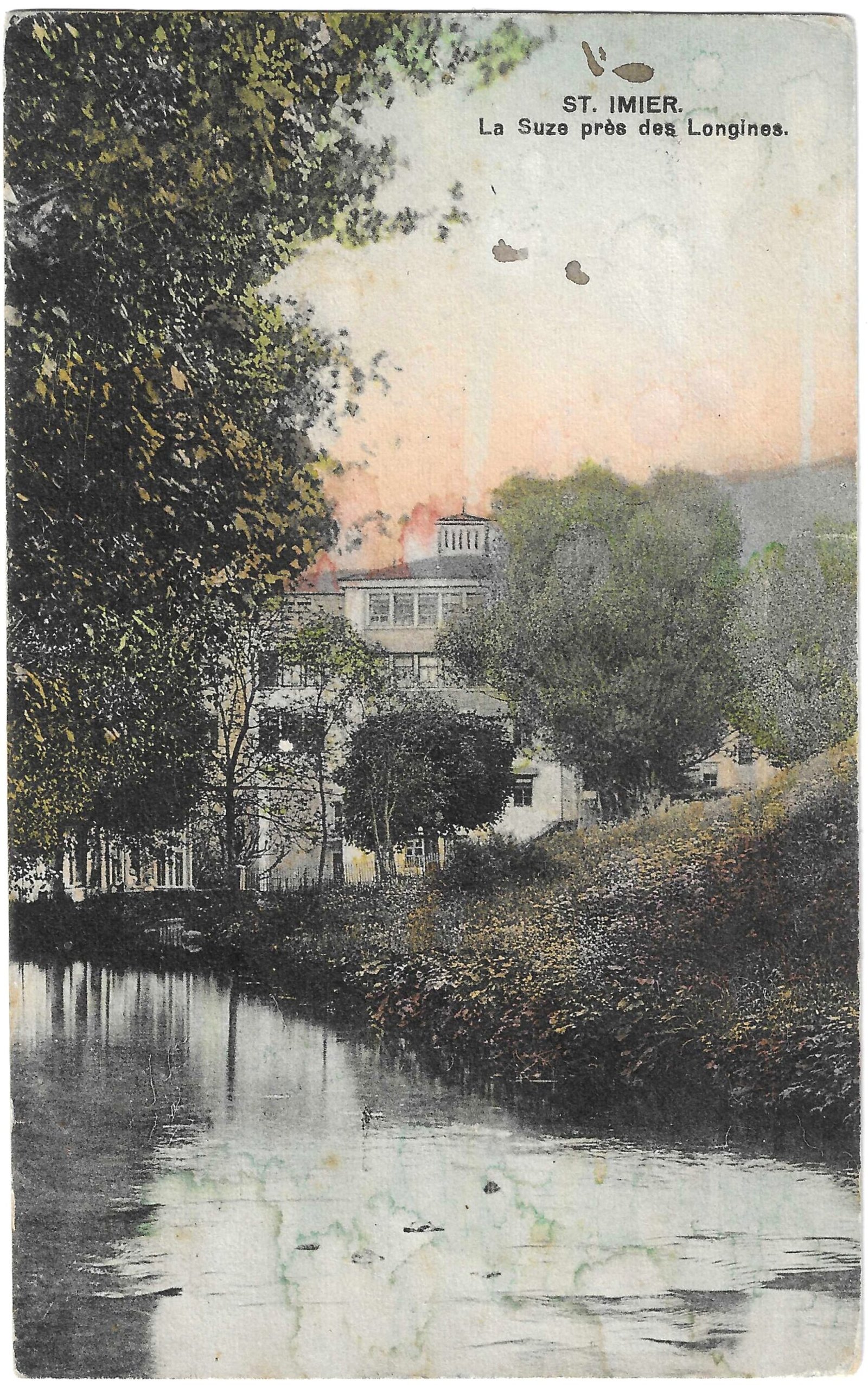
The river Suze was more than just a scenic element of the landscape; its hydropower was the decisive factor for Ernest Francillon when he chose the site ‘Les Longines’ (meaning ‘the long meadows’) in 1866 to centralize his watchmaking activities. The river literally powered the brand’s transition into a modern industrial manufacture.
After the height of allegorical brand imagery, the factory reappears as a concrete place — embedded in landscape, town and everyday reality.
The manufacture appears unchanged in form and scale, yet situated within a markedly altered historical context. Continuity here is not staged, but simply observed.
Collecting watches, done properly, is really a way of studying history. The objects lead you to the people who made them, the times they lived through, the ideas they believed in. What these postcards show is that Longines grasped something important very early: precision is not enough. You also have to look the part. A watch can keep perfect time, but if nobody knows it, what is the point? By 1900, Longines had already developed a visual language, a way of presenting itself to the world, that most companies would not discover for another fifty years.
These cards are not just collectibles. They are evidence of a brand thinking carefully about its own image at a time when that idea barely existed. And for anyone interested in how Longines became Longines, they are essential.
Each is a window into an era when craftsmanship, vision and aesthetics came together in rare harmony.
Seen this way, the postcards trace a journey from a local manufacture to a symbol of modernity, firmly rooted in place, yet already looking far beyond the valley.
The word comes from the Greek ephemeros, meaning “lasting only a day”. It refers to printed material originally meant for short-term use: tickets, brochures, postcards. For collectors and museums, these items are now invaluable primary sources. They often capture the spirit of an era and a brand’s self-image more authentically than official histories. The 1903 inauguration of the funicular railway to Mont-Soleil, for instance, was not just a tourist attraction; it was a symbol of the technological awakening of the entire Saint-Imier region.