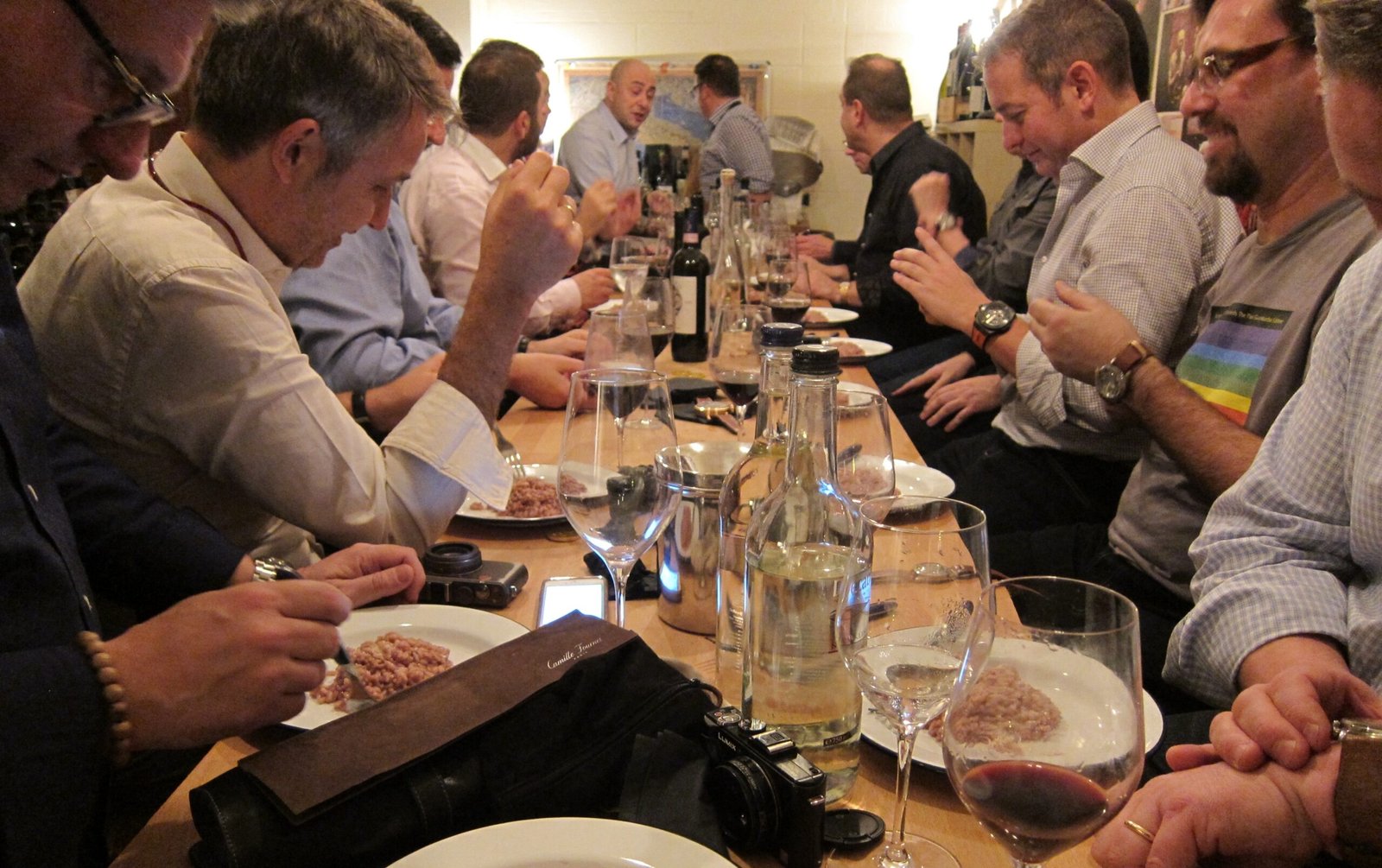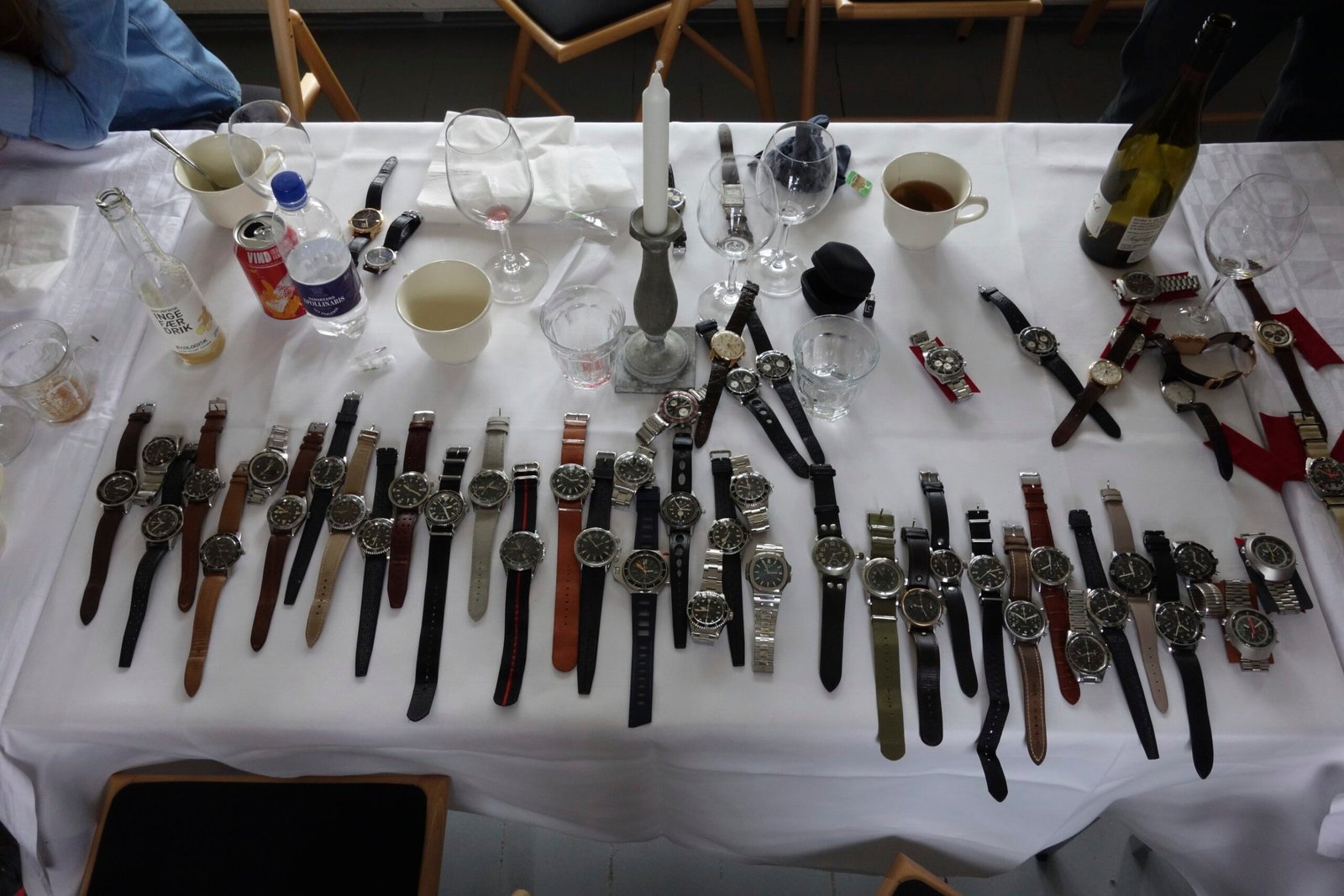

“What watches do you collect?”, is invariably the second question I’m asked after I tell someone at a party or dinner that I collect vintage watches. The first question is usually, “how many watches do you have?”
The answer to the first is, less than I would like, the answer to the second is more complicated. Like many collectors who have watches across different genres and brands the journey of what you collect is a living thing, it develops and refines as you focus and appreciate different things.
Usually, I give the broad answer of professional watches, the term tool watches is often used, but I never really liked that description.
Professional watches, in my opinion, are ones that were used to tell or measure time for a particular pursuit or activity. It’s a blanket title that encompasses a wide-ranging type of watch: military watches, diver’s watches, pilots’ watches, chronographs and others in that field.
Another question I’m often asked is “what brands do you collect?”. Although a lot of different brands made professional watches over the years, for simplicity, I reply that I started collecting Breitling and then Longines.
When I first ventured into Portobello market in London’s Notting Hill in the Nineties there were over thirty stalls selling every type of vintage watch and style you can imagine.
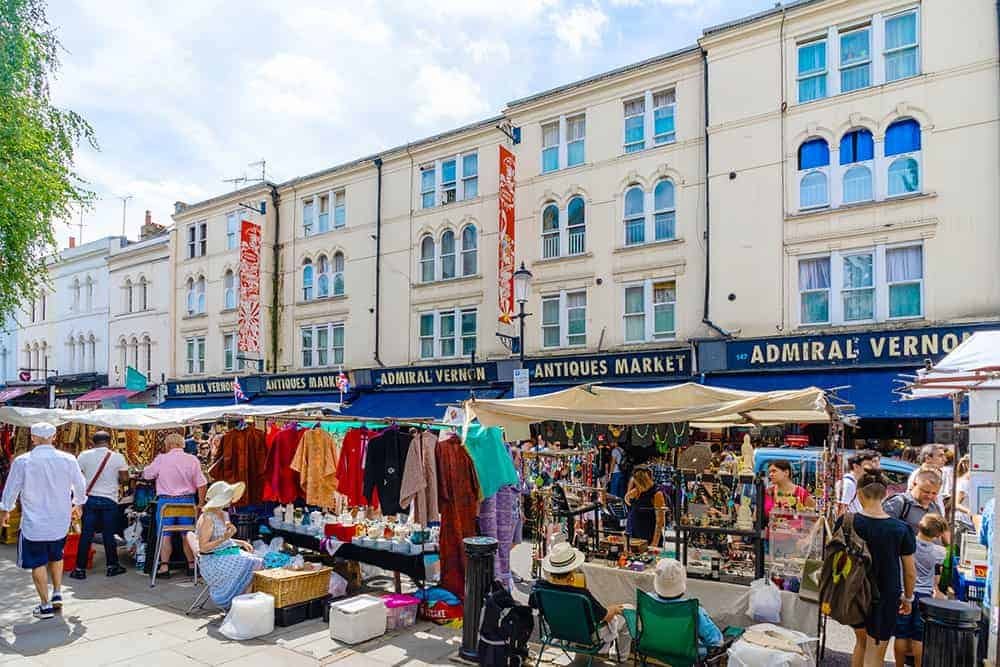
Dealers back then told stories of arriving at seven in the morning and buying and selling twenty watches by nine am. Portobello is now a shadow of its former self, with nearly no stallholders left, but is still a vibrant market where dealers drink coffee and mill around the stalls and streets privately doing deals and bemoaning their bad beats. Nearly everyone I met had been offered the Rolex Split Second at least ten years before it sold at auction.
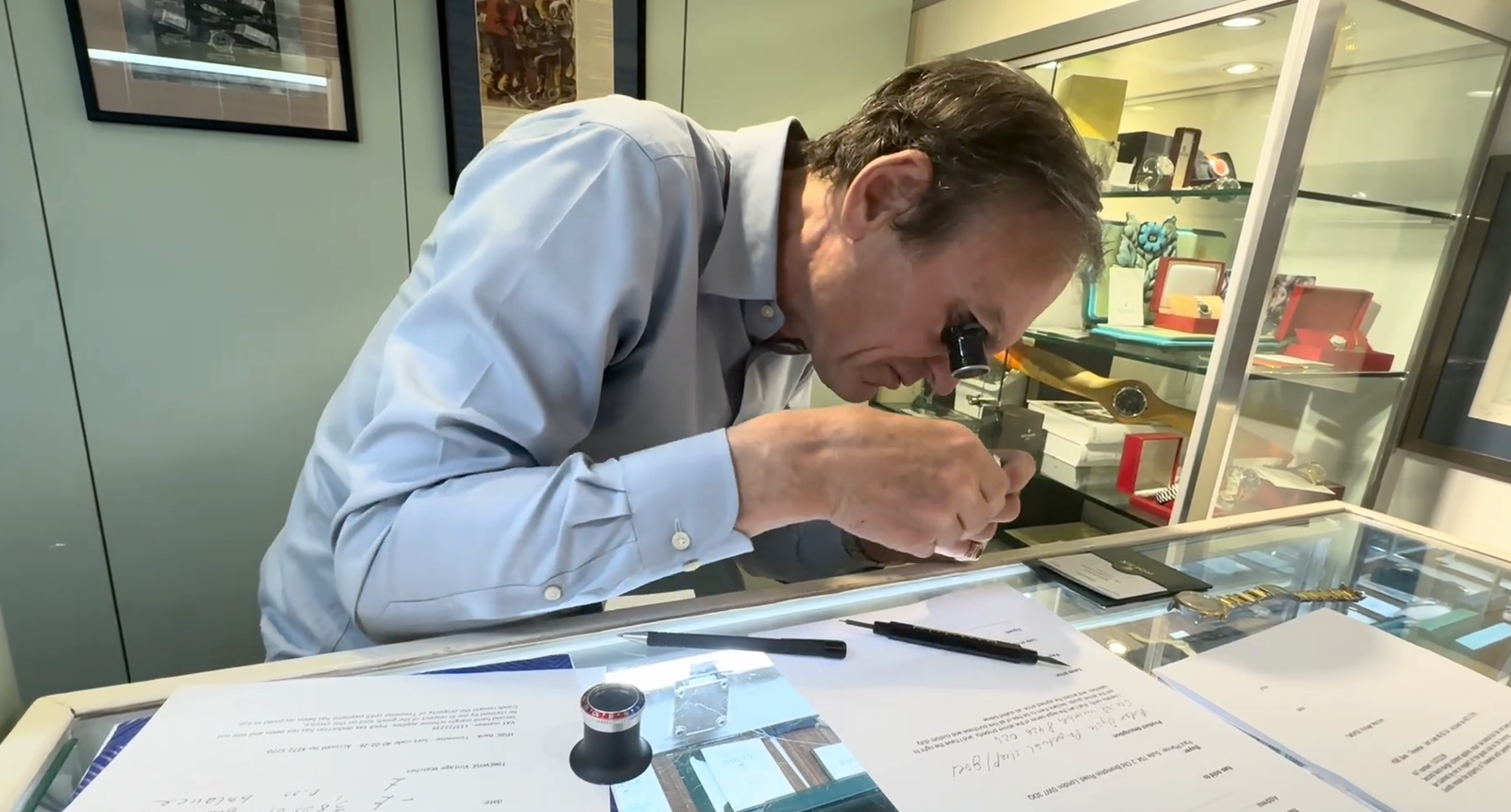
When I started sifting my way through the watches on the different stalls, I was able to try them on, examine and open them before I bought them. It was a wonderful time and one I miss. As my taste matured, I found that certain watches “spoke” to me and one brand quickly stood out, Breitling.
I found their “tool” watches, okay it’s hard not to use the term, like the Co-Pilot and SuperOcean, large, wearable and beautifully designed with great “wrist presence”. I was struck by the sheer depth of the styles and designs they had spanning over seventy years of production and innovation. In my opinion they had more depth and variety of design than nearly any other brand.
While I started actively collecting Breitling, I was refining my taste to other professional watches and the brands that produced them. I hunted the Benrus Type 1 and 2, the Lemania 5012 for the South African Army, the Blancpain Fifty Fathoms and others. Slowly, and naturally Longines watches came into my collection, the Majetyk, the WWW and then to my amazement a Lindbergh. These were all bought to deepen my professional watch collection.
When I stopped and took stock of my watches, I realised that I had accidentally become a Longines collector. At some point I realised that Longines, which I knew little about except for the pieces that I had bought already, were a brand that had one of the strongest reputations in the early 20th Century and I felt they complemented well my Breitling’s. Longines being a superlative maker of professional watches with a strong aviation history from the twenties through to the Fifties, dovetailing with Breitling who were also a major aviation designer and who really found their voice from the Fifties through to the Seventies.
Over the years I noticed many collectors initially started collecting watches produced from the 1960s onwards and most stopped there, while a minority (guilty as charged) found that this period was a gateway drug that opened up watches from earlier and earlier decades.
Watches from the Sixties onwards are in many ways often easier to collect, generally they are larger and are mechanically robust with over fifty years of development behind them. They are easier to service and (at least when I started) there were more spare parts available to restore them with. There was more written and compiled about them and a greater knowledge base allowed you to buy them with more confidence, if you’d studied and knew what you were looking at.
Once you delved past this into earlier periods it became harder the older you got. Breitling did not mark their movements or even dials until the late Thirties, you were often looking at a watch from this period that effectively appeared anonymous with little to no distinctive markings that would let you know with confidence that Breitling had made it. Movements relied more on bespoke hand finishing, meaning a missing part for a watch would not always work from a donor movement of the same calibre without refinement, something that was not the case with later industrial, machine-made movements.
Longines however had many great advantages to collecting their earlier watches. Uppermost was their extensive archive, having survived the Seventies melt down of many competitors, they still had many of their order ledgers intact stretching all the way from their inception.
Compared to almost all other brands, with perhaps the exception at the time of Patek Philippe, they were able to give you basic but authoritative information about the watch you had. Until recently this was a free service. I would send them an email with the movement number and they would send me back the date the watch was made, where it was sent, the case material and the movement calibre as well as the model number. It meant I could buy a watch from 1920 and feel relatively confident that what I had was original.
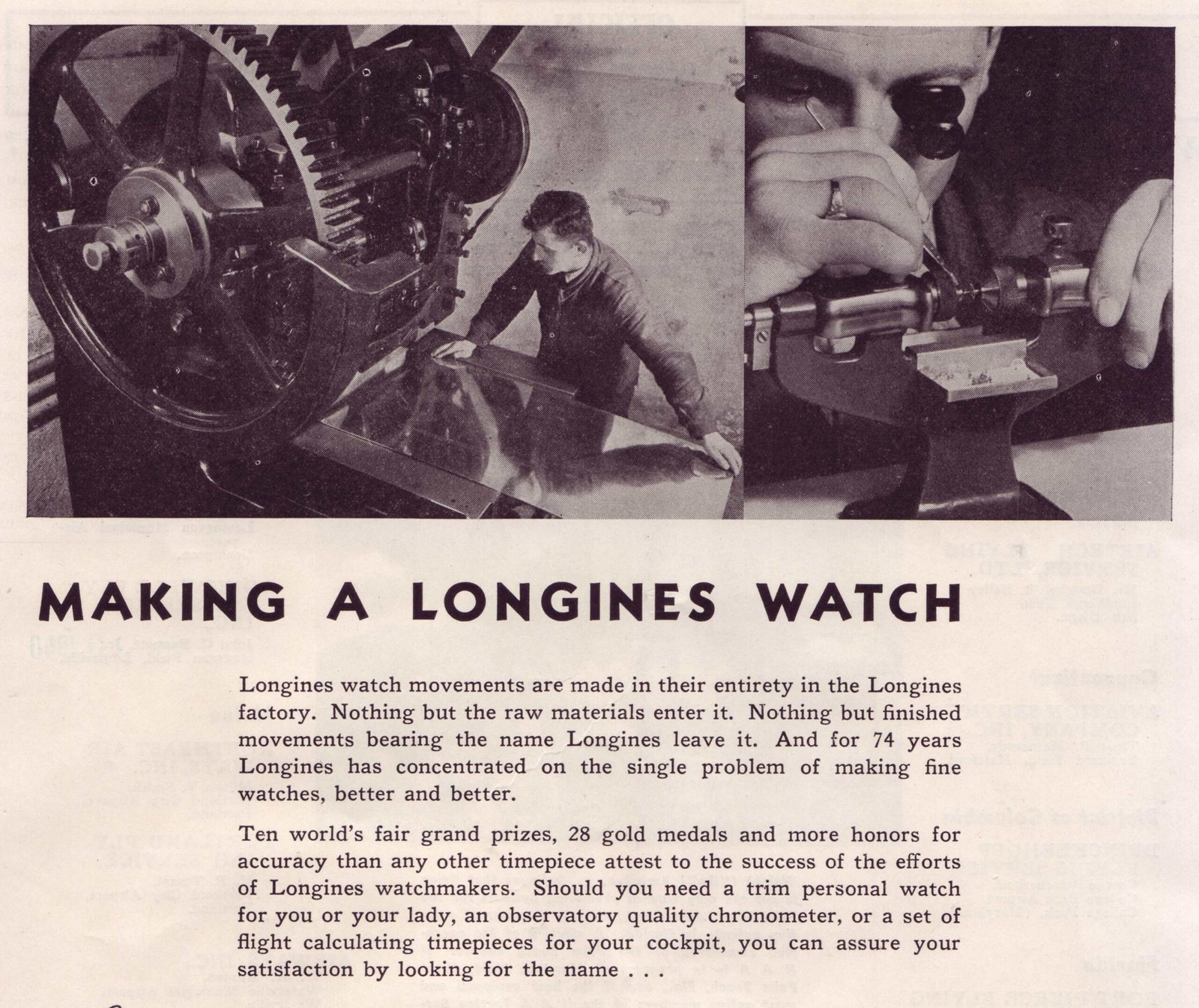
Longines was one of the few brands from that period that were what we now call vertically integrated. They made the vast majority of their watches inhouse and did not act as a third-party supplier for other brands. There are a few anomalies, but on the whole the key components, the movement and case were designed and produced by Longines in their factory, dials were not but then no brand during this period made their own dials.
When it came to the chronographs, a company like Breitling would use a third-party supplier like Landeron or Venus to supply their movements. They could have a design relationship with those companies, like Omega and Lemania, and big brands would have reserved calibres, which means that they had exclusivity on certain movements, but it would outsourced. The same is true for chronographs for even what some consider the most prestigious marks of the period, Patek Philippe used Valjoux movements as did Rolex. Neither of those companies had in-house production of chronograph movements.
Longines, however, primarily only used their own chronograph calibres for their watches. Moreover, they would largely only use one calibre per period, the 13.33z up until the early Thirties, the 13zn for around the next decade and the 30ch after that. Compared to other manufacturers it meant that you could be confident that the movement was correct for the watch and not a Frankenwatch.
While my attraction to Longines was down to their unique historical legacy as a foremost producer of professional timepieces and the beauty of their watches, all of these factors contributed greatly to my desire and pleasure in collecting them.