
The Longines Tasti ‘Ombrello’ or Mushroom Pusher Longines 13ZN

A detailed look at the extremely rare examples of Longines’ early waterproof chronographs with mushroom - shaped push - pieces.
13ZN
/
14/02/2022
/
George Pakkos
In this article

When I first started collecting vintage watches, I was immediately drawn to vintage Longines. They were at the time in my view (and in many cases still are) unquestionably some of the best value that you could find in vintage watch collecting.  That aside the 20’s, 30’s and 40’s are widely considered by many as a golden age for watches (many world firsts). The advancement in production techniques used during the period, the handmade cases, extremely high-quality dials, and in-house movements with calibres finished to an excellent standard to name a few…  Longines from the period finish first in class across all categories.

In 1913, a poll commissioned by the New York Times asked the American public which brand of luxury watch they would like to own if price were no object.  Of that poll, a staggering 92% replied that under those circumstances, they would own a Longines.  Up until the mid 1940’s, a Longines watch was more prestigious and better in quality than both its Omega and Rolex counterparts, second probably only to Patek Philippe (who coincidentally did not use in-house movements). They were one of the few completely vertically integrated companies at the time and therefore are highly sought after. Very few people realise Longines were the superlative chronograph manufacture of the time…

Now under the umbrella of the Swatch Group, the modern-day company Longines are still very much invested in their history, producing many faithful re-edition watches, they also have a really fantastic heritage department, one that is unlike any other in the watch world.  Anyone can send them images and the serial number of their watch and they can and will confirm the case, movement and (sometimes) the dial, along with information as to where the watch was originally sold, all for free.

All these factors combined, made and make collecting vintage Longines an extremely interesting and desirable proposition.

(Brief background on 13zn)

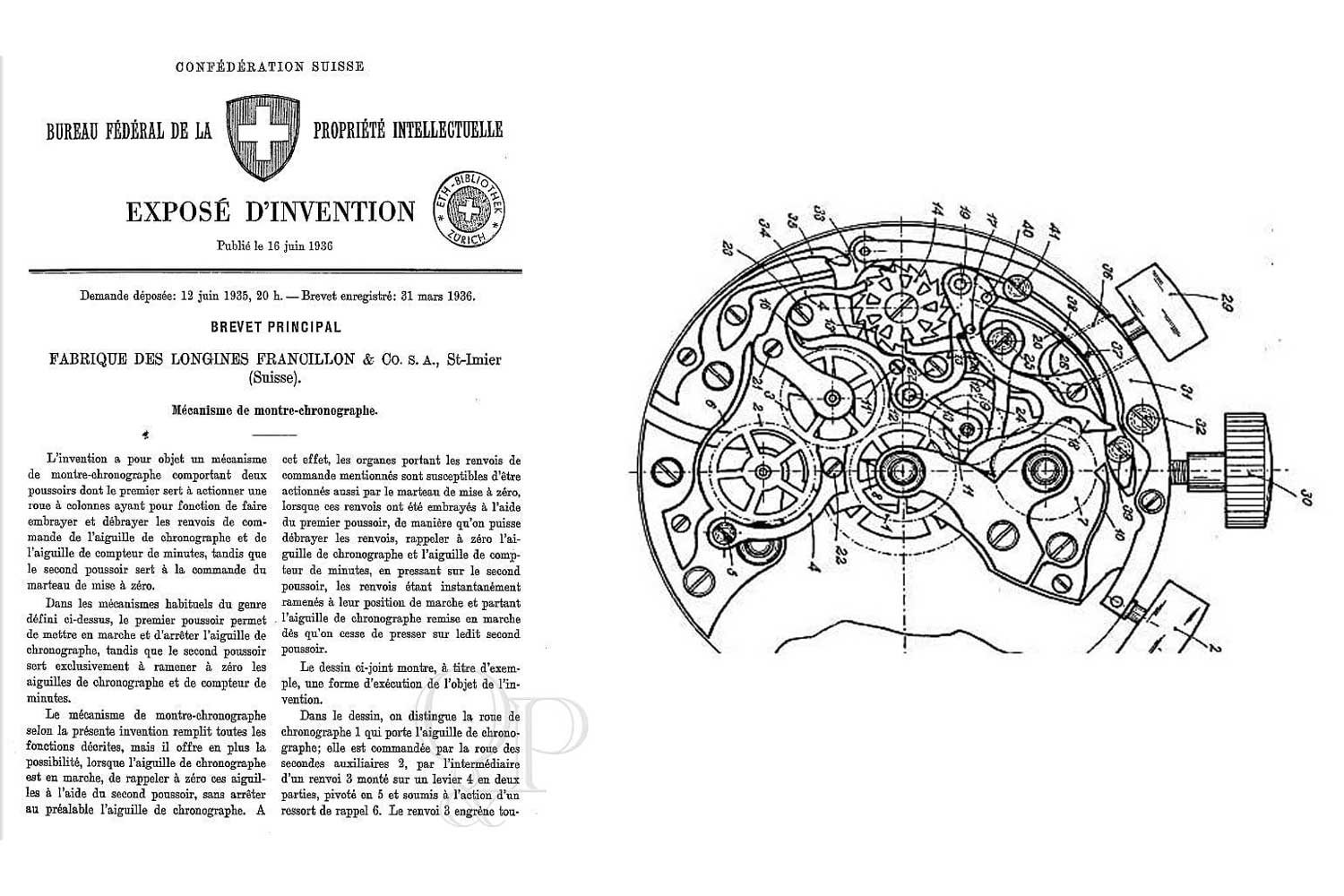
Of all the many interesting references and calibres, those with the calibre 13ZN are some of the most sought after.  Produced and commercialised from 1936 to 1951, the successor to the smaller calibre 13.33Z, the 13ZN has become a cult classic and must have for collectors of vintage chronographs from the 30’s and 40’s.  Although the flyback function was used by Longines watchmakers a couple of years prior on very few examples of 13.33Z, the 13ZN was the first calibre in which the patent was filed (and widely used) for flyback (also known as Retour-en-vol or Taylor system).  Filed on the 12 June 1935 and registered on 16 June 1936.  Used in a variety of cases, with semi-instantaneous counter, flyback, without flyback, mono-pusher, and centre minutes, Longines had all the tools needed to make all the steel parts ‘in house’ by the mid 30’s.  This was during a period where chronographs were in high demand and very few companies had their own in house produced movement.

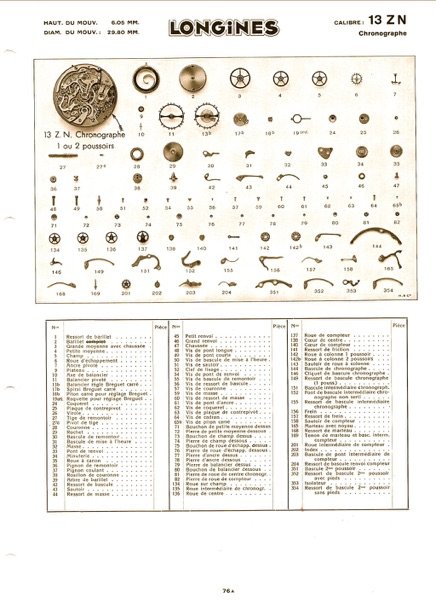
longines13zn parts no8
Longines spare parts catalogue no 8 in French

This was the period in which chronographs had become very popular, and the issue of waterproofing or water-tightness was one of the main issues of the time.  Therefore the race was on to find effective solutions in regards to waterproofing.  Rolex had previously introduced the Oyster case in 1926 (a regular time only watch) and Universal Geneve claimed the first waterproof chronograph in 1933 with the Colonial, but this watch still had square pushers, and it was not clear how the pushers were watertight.  As a result, a truly waterproof chronograph would only work after a solution was to be found in making the pushers waterproof.  A few companies were making waterproof chronograph cases around this same period, i.e. most notably, the Gallet clamshell, the Mido Multichrono (Oct 1937), and Omega with the 33.3 in 1938 to name a few.  Many brands applied for various patents to combat the issue of waterproofing the pushers.  However, the issue across the board seemed to be that whilst the pushers were in their “resting position” they were effectively water tight, however when used or pushed down, water might penetrate the case.

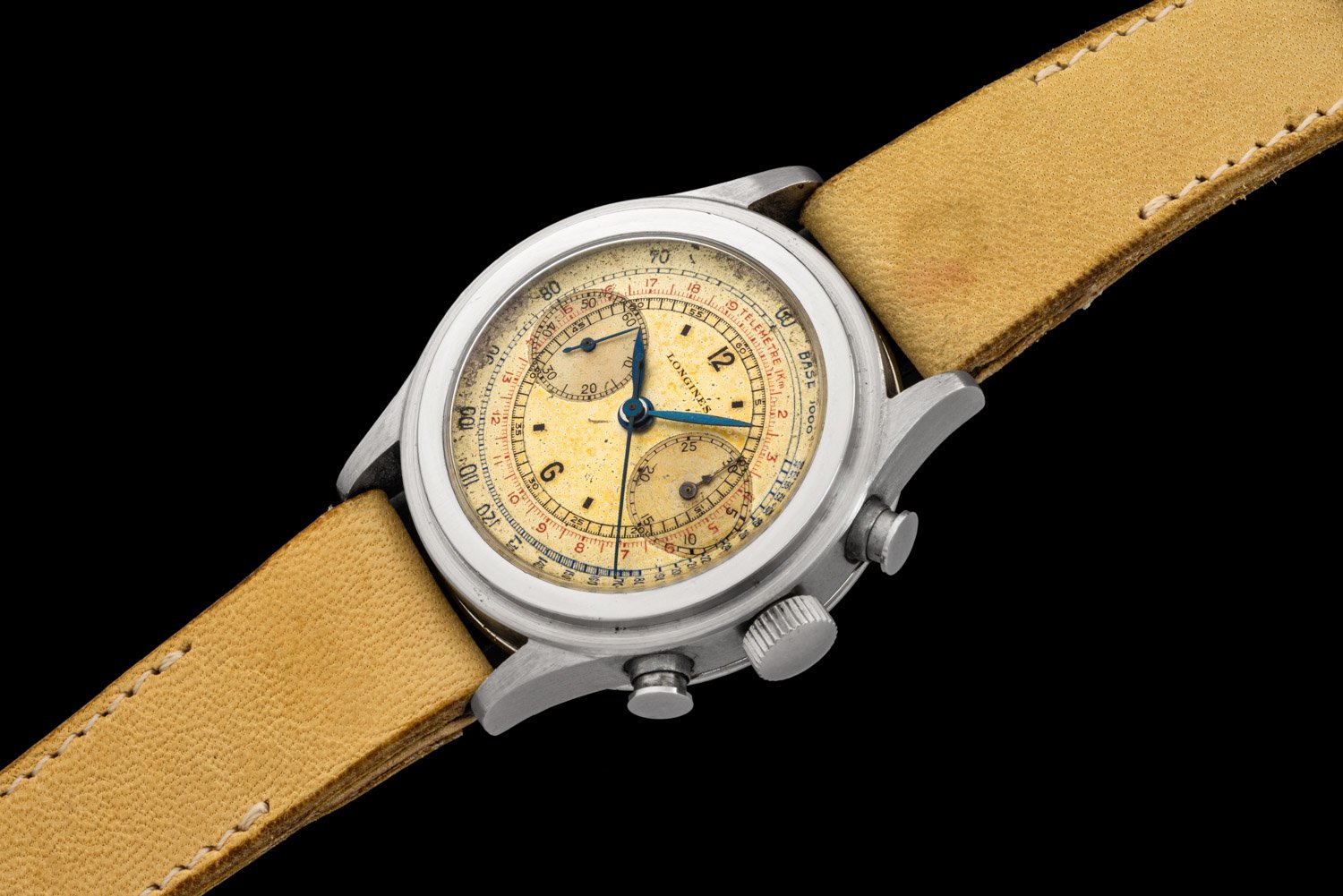
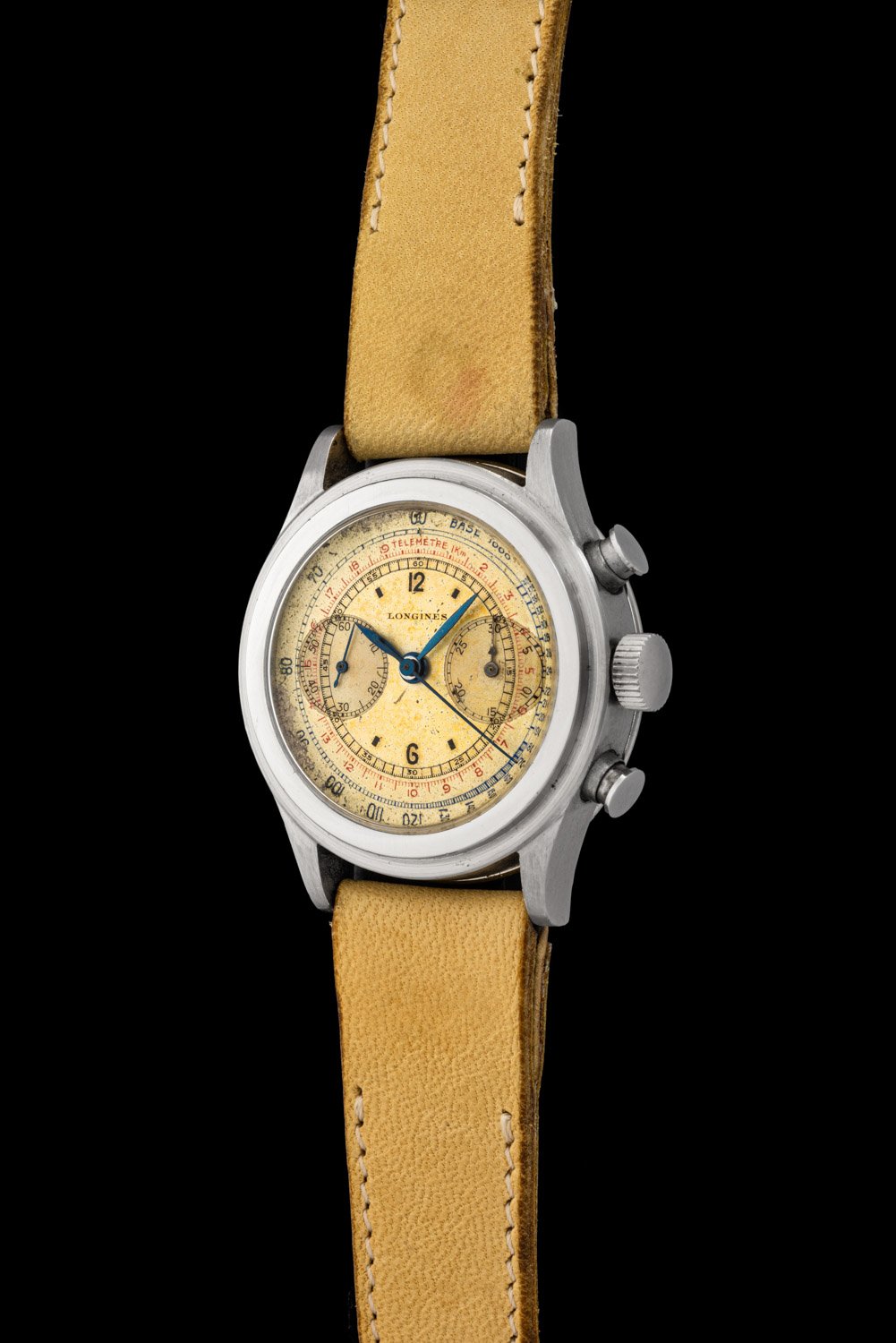
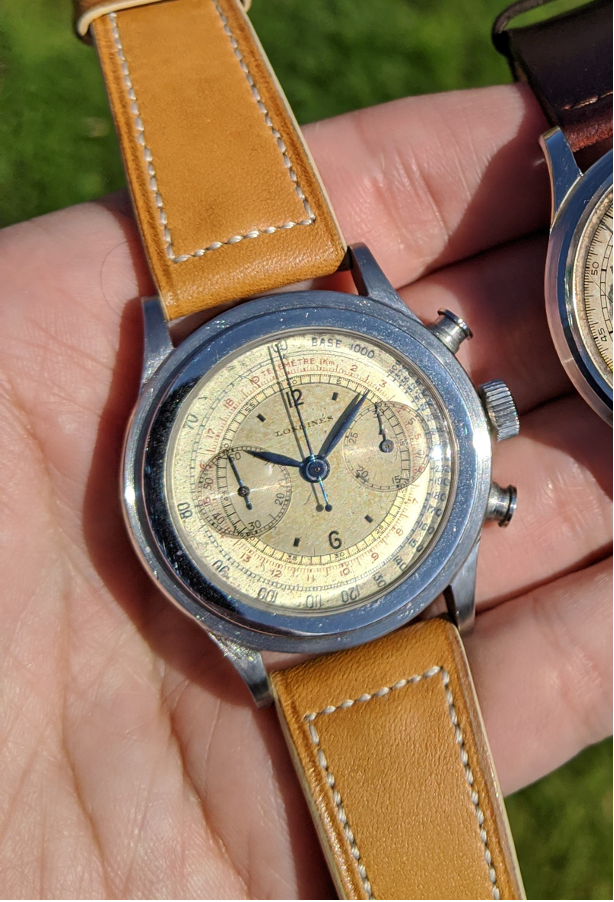
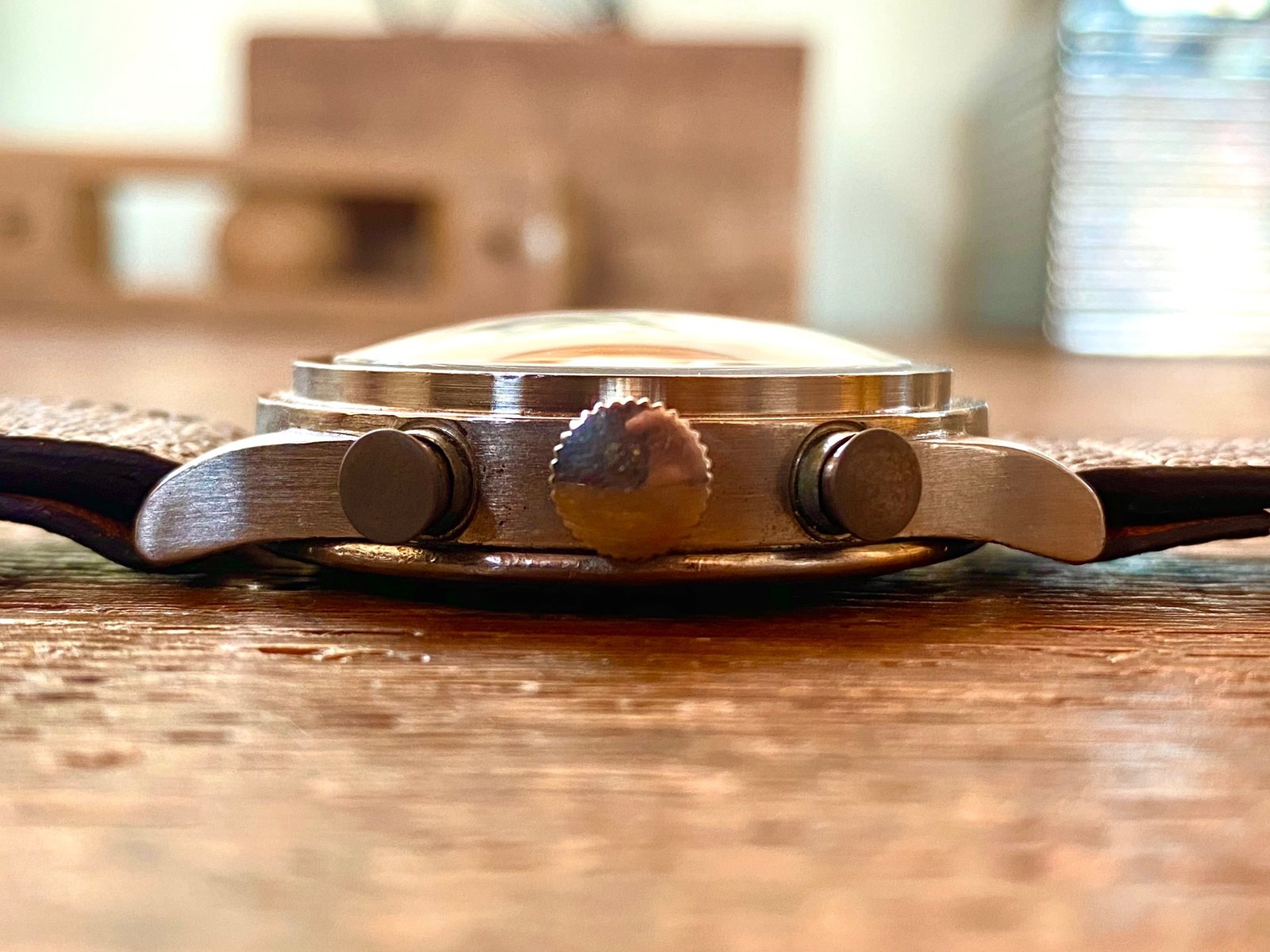
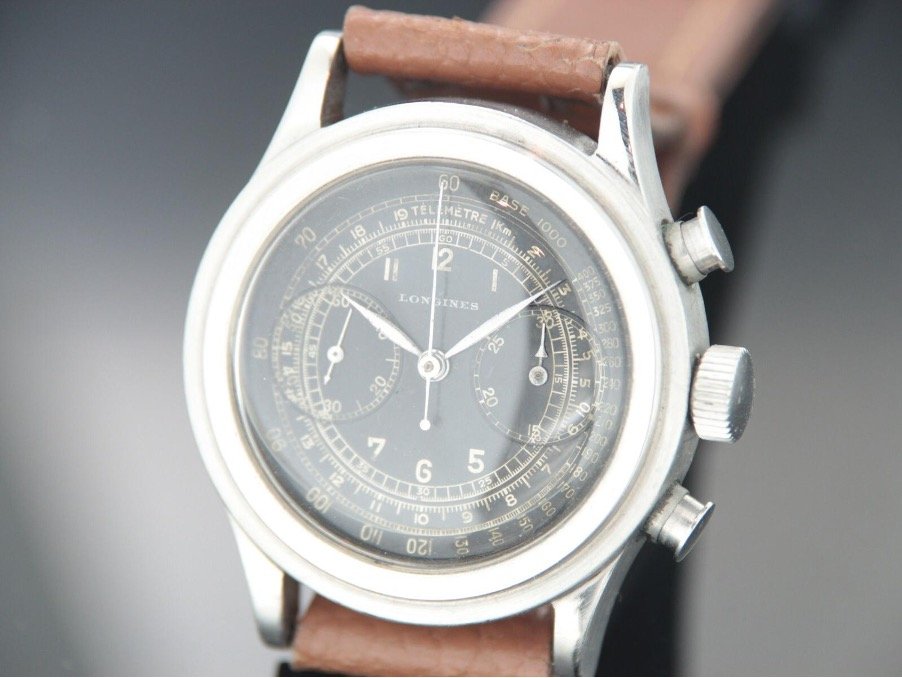
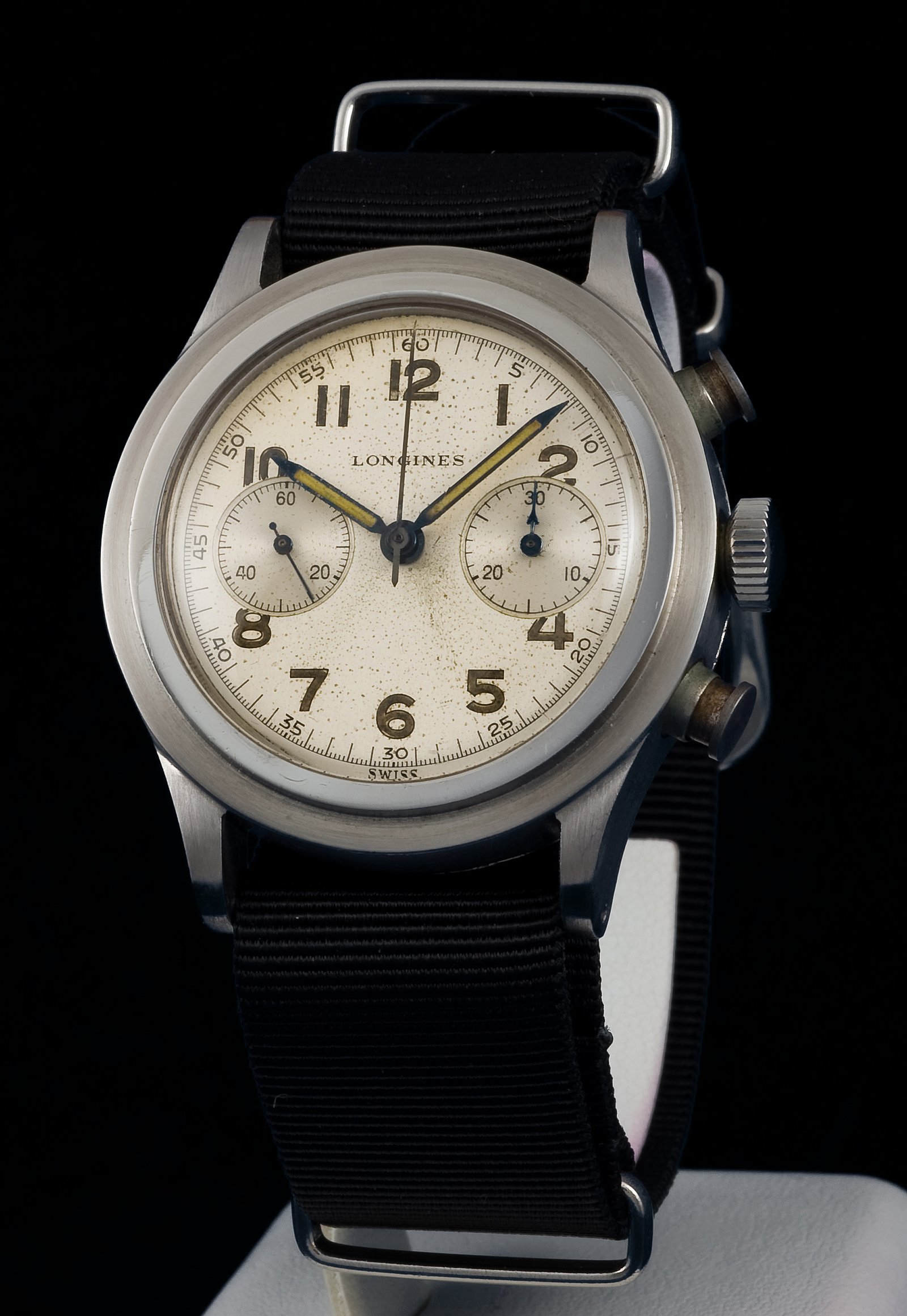
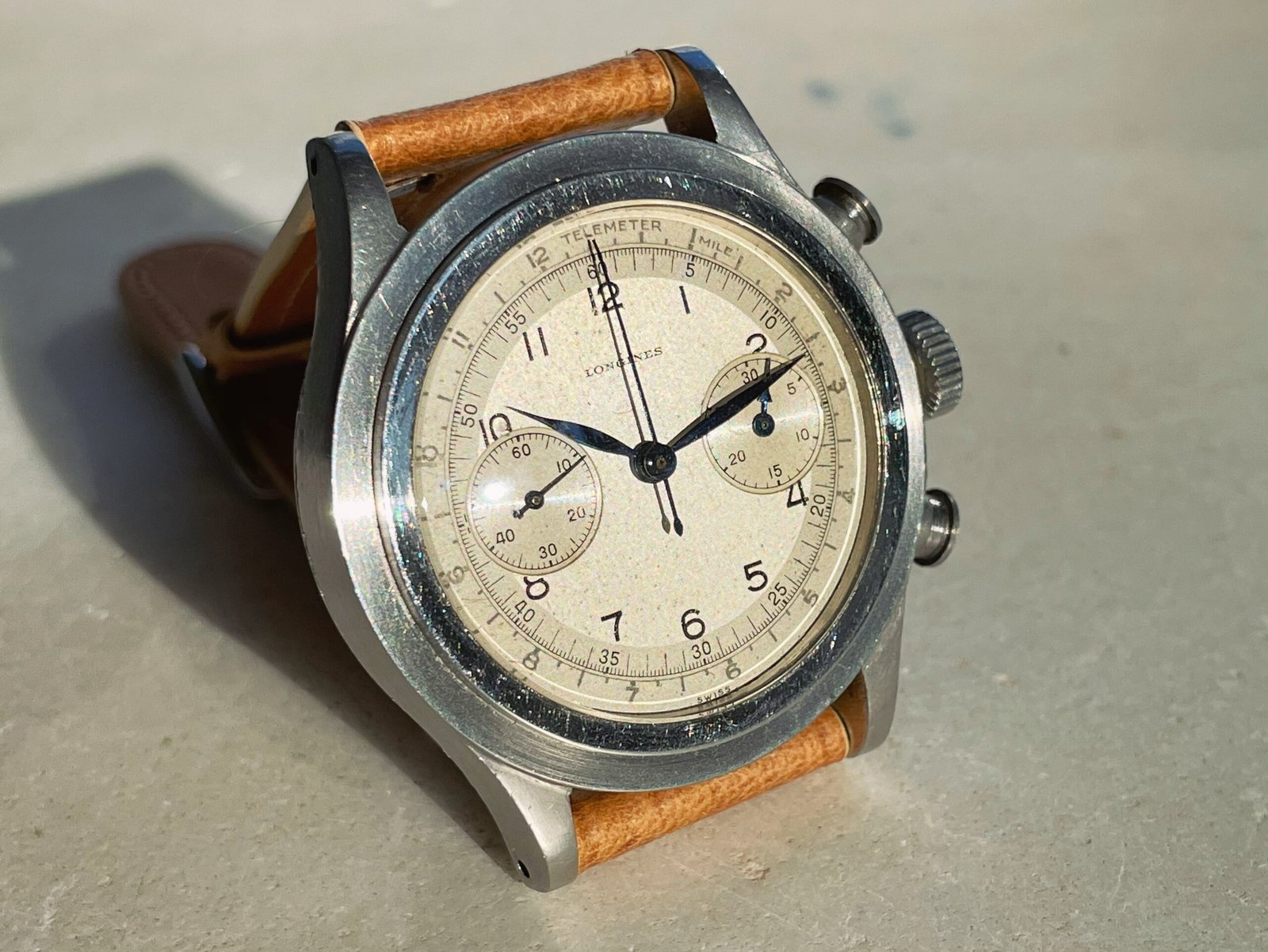
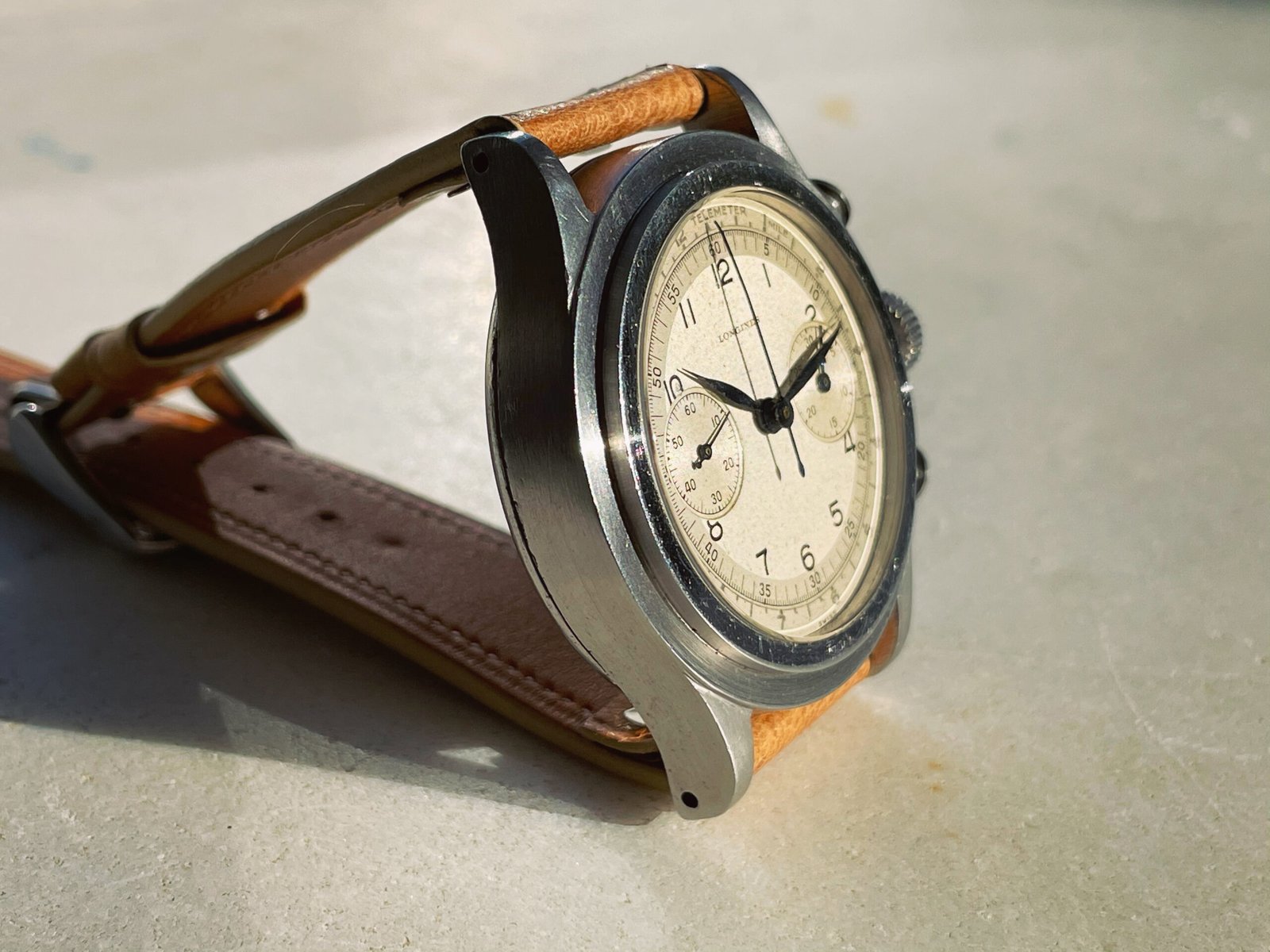
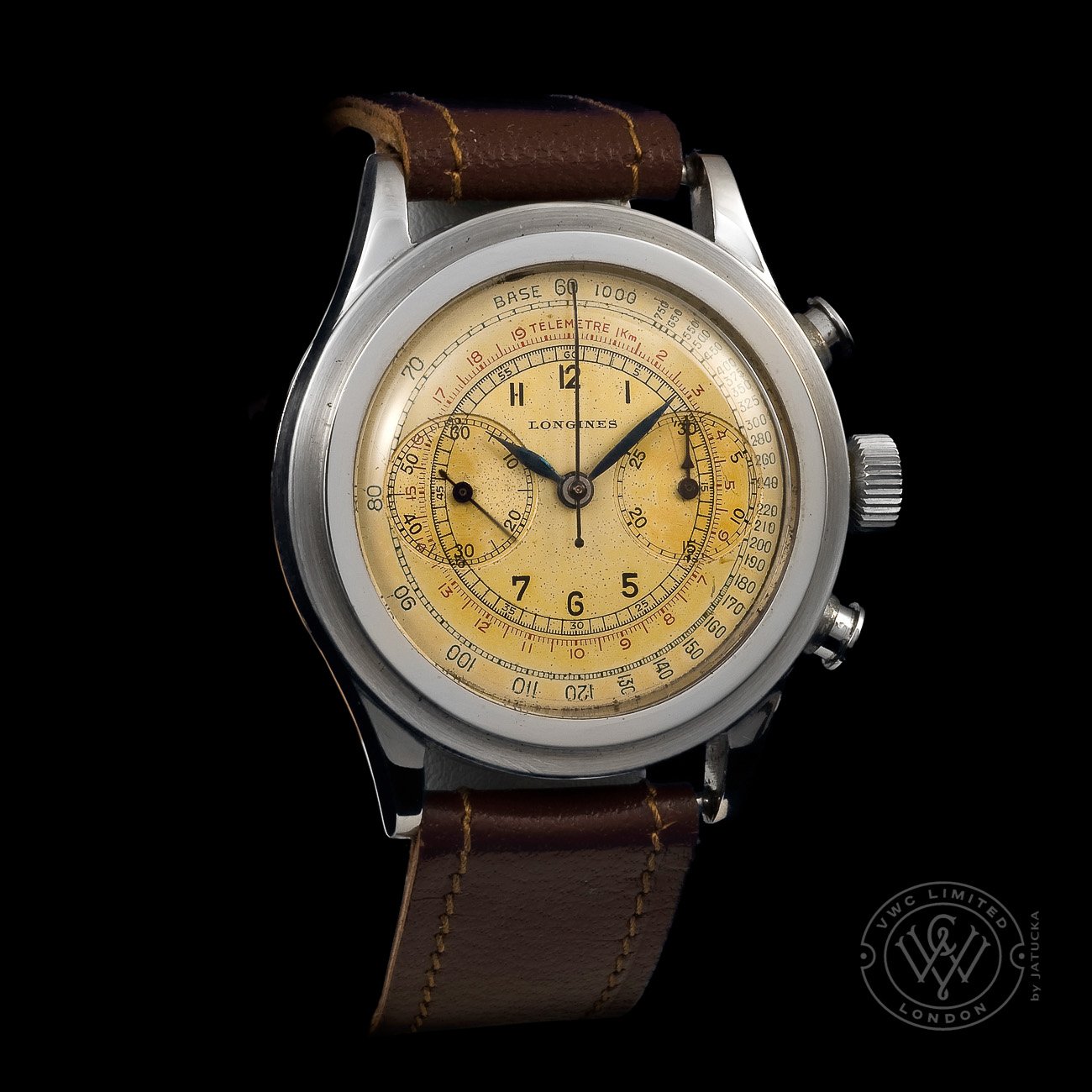
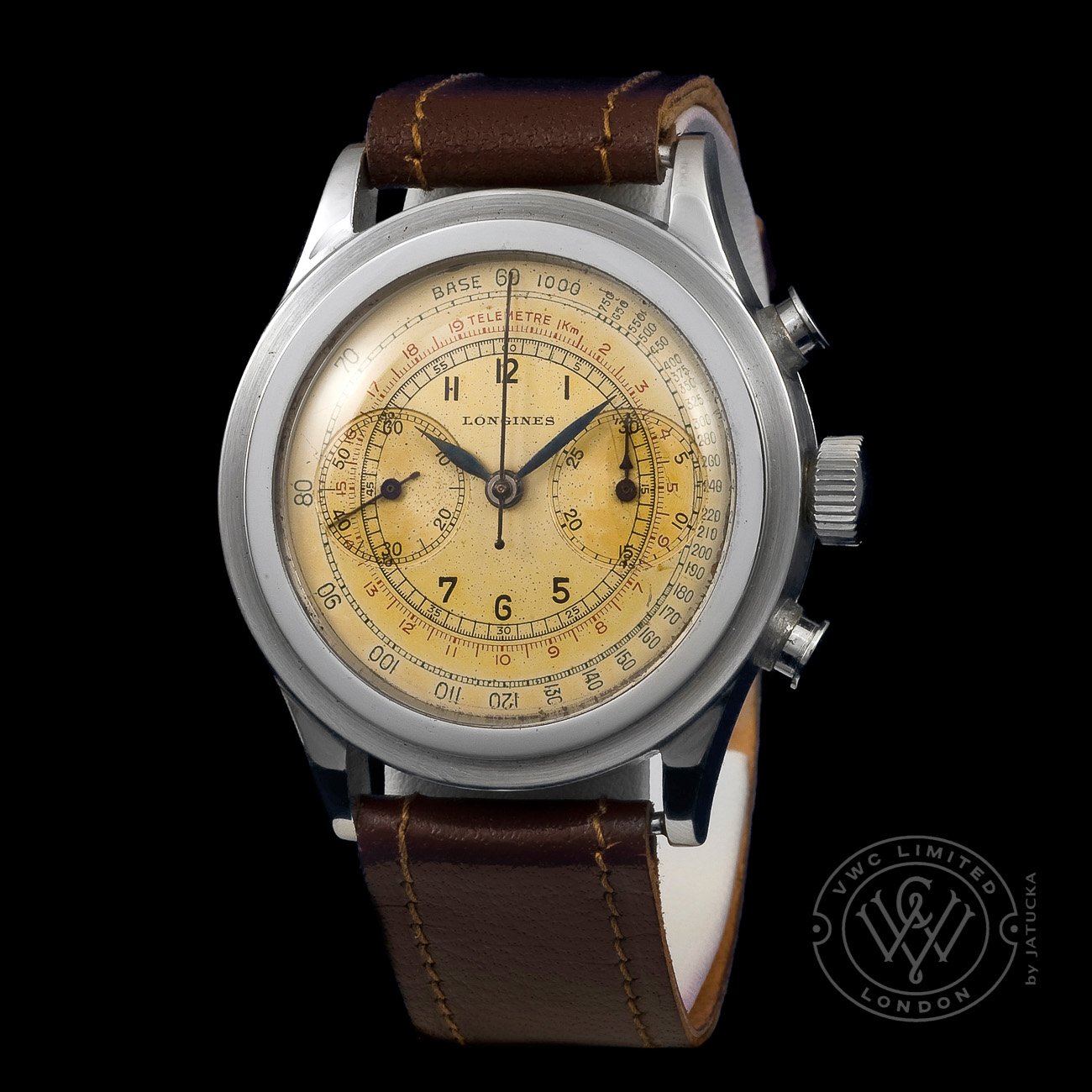
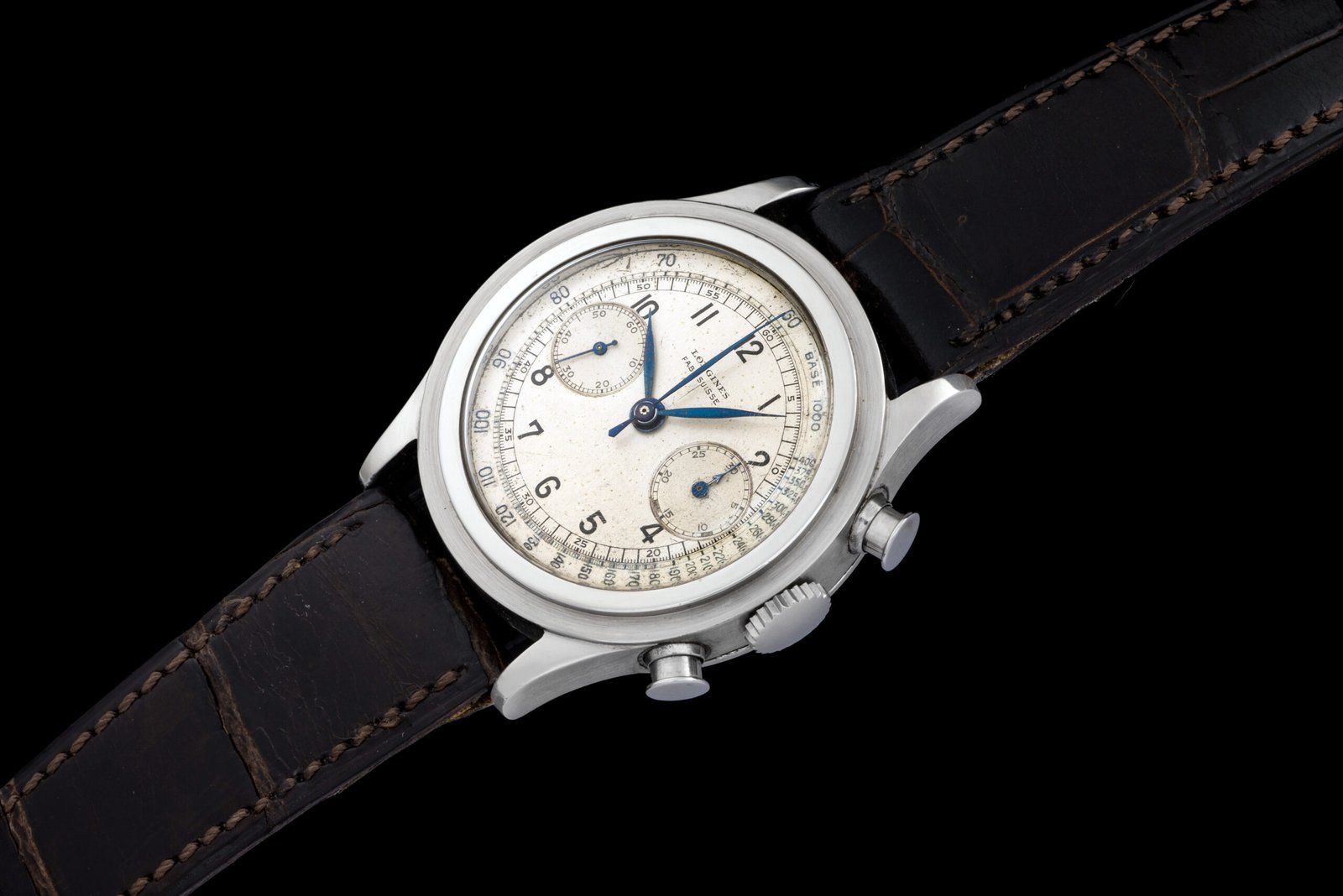
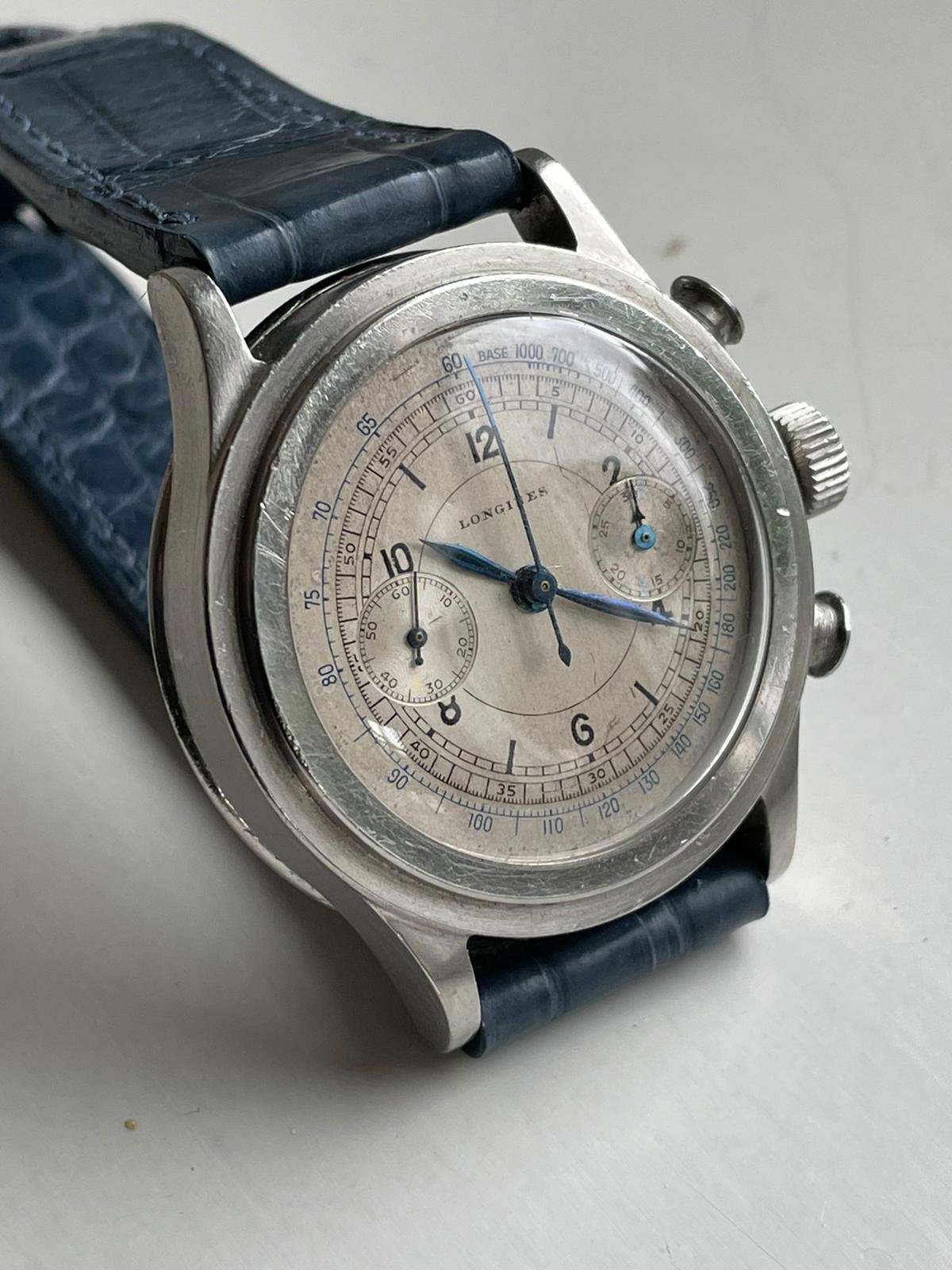
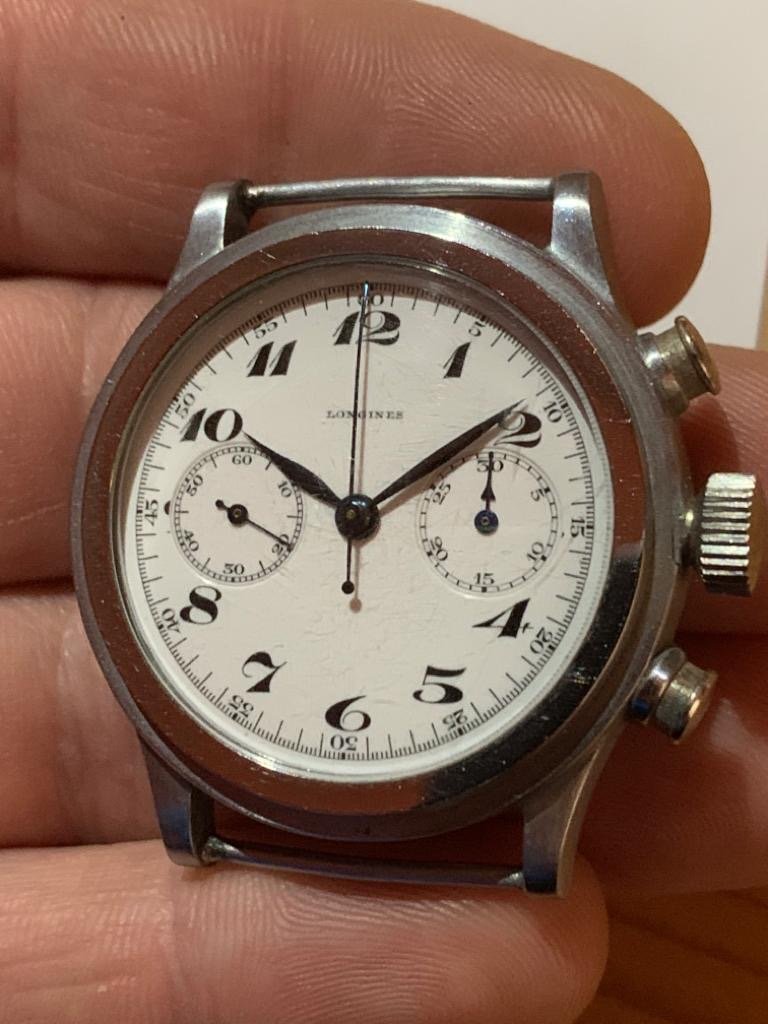
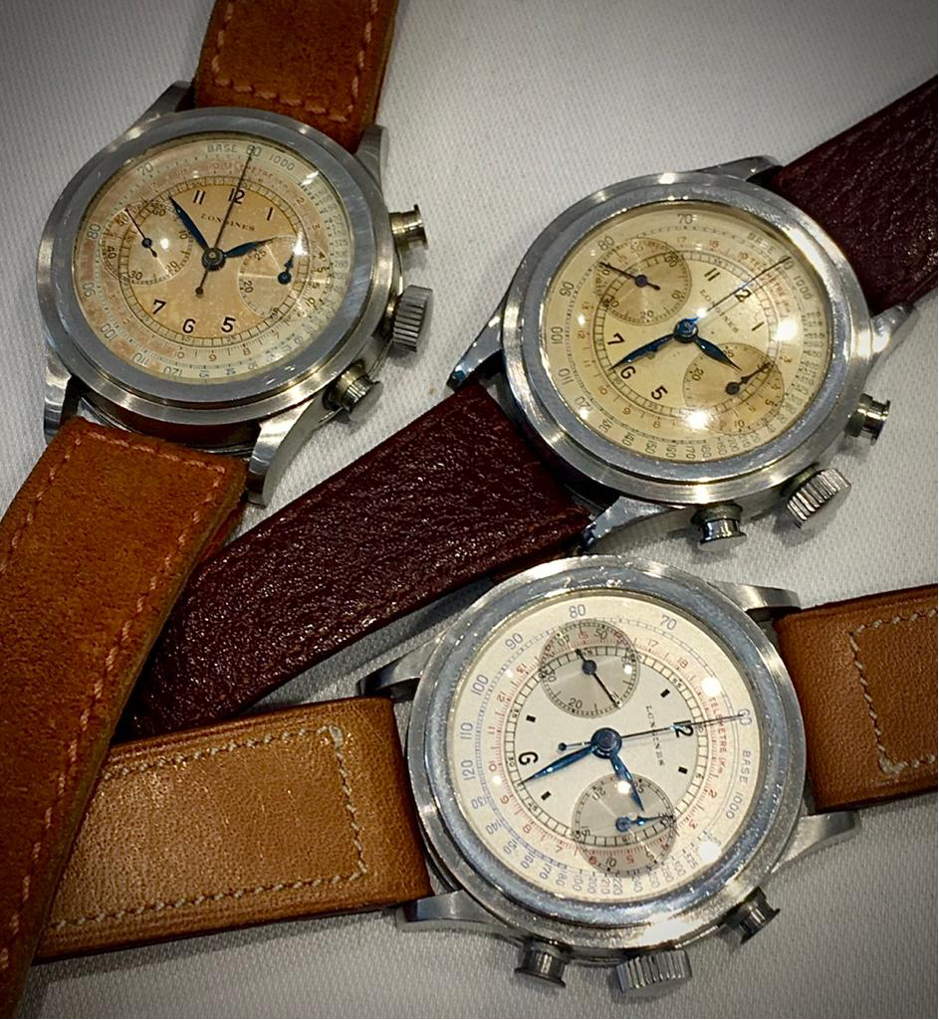
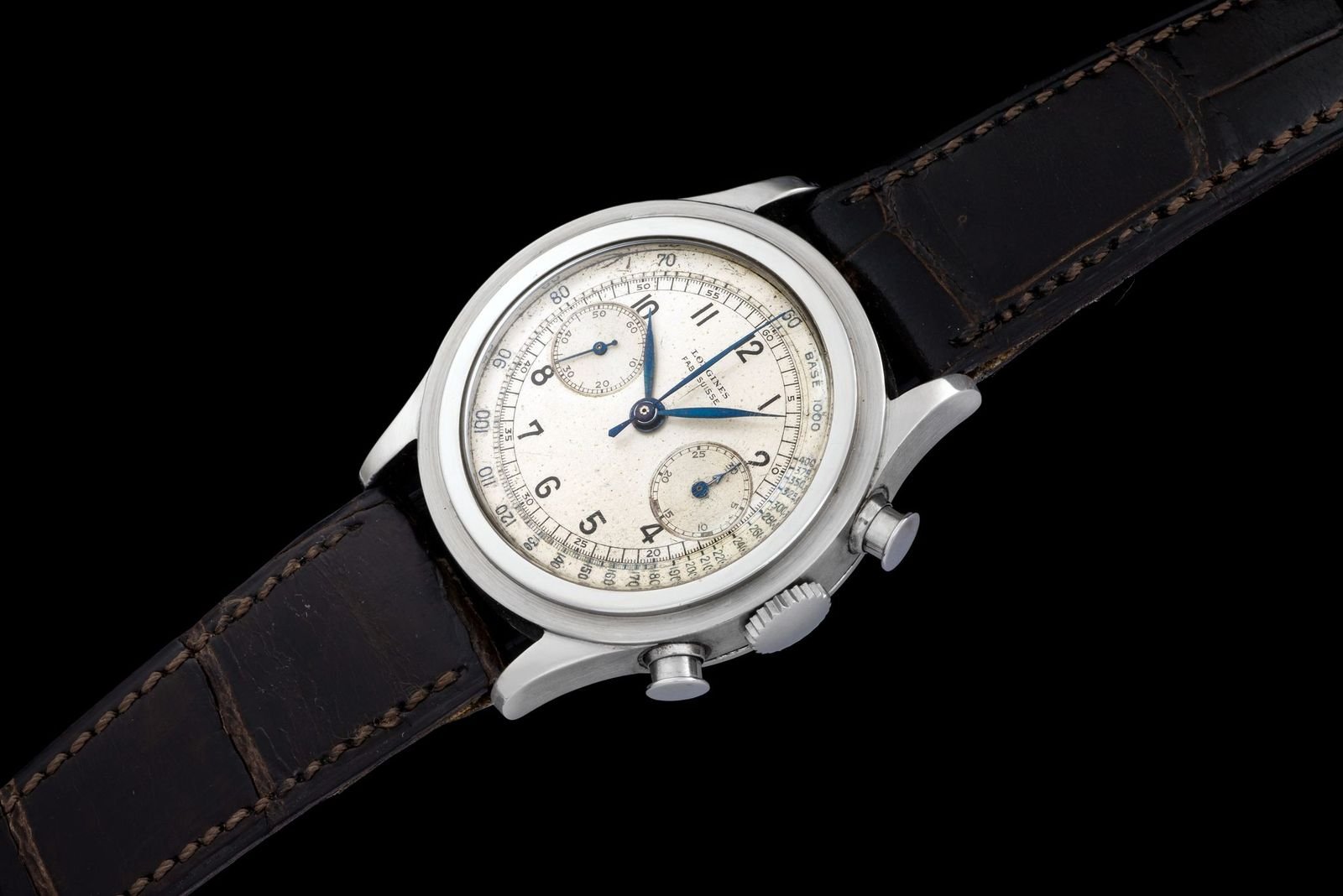
Probably the rarest and arguably the most desirable variant of the famous caliber 13ZN, the reference 4270, also known as the ‘Mushroom Pusher’ or ‘Pulsanti Ombrello’ (umbrella pushers) for the Italian collectors (produced for just 5 years in very small numbers).  One of the earliest waterproof chronograph made, a Longines first and with a unique design, the pushers were patented by Longines on 15 Feb 1938 (see image below).  There are a few interesting and distinguishing features that have always drawn collectors to this extremely rare and unique reference, making it one of the most desired waterproof chronographs from the period.  The reference 4270 was in production for five years, from 1937-1942 (the vast majority being produced 1938 to the early months of 1941 but there were some special cases in 1941 and 1942 which we will come to later).

Longines Terminology

To start, I think it’s important to understand some of the terminology used by Longines so as to avoid confusion.

Cliché Numbers

There are Cliché numbers (what collectors call reference numbers) these are the reference numbers as they would appear in catalogue. 

(This can be analogous to Rolex and the ‘Submariner’ where you’d get many models of Submariner but they all fall under the umbrella of Submariner.

Each Cliché has various order numbers (the order numbers can be found on the case backs). (I.e. case batch number).

Waterproof Pairing Numbers

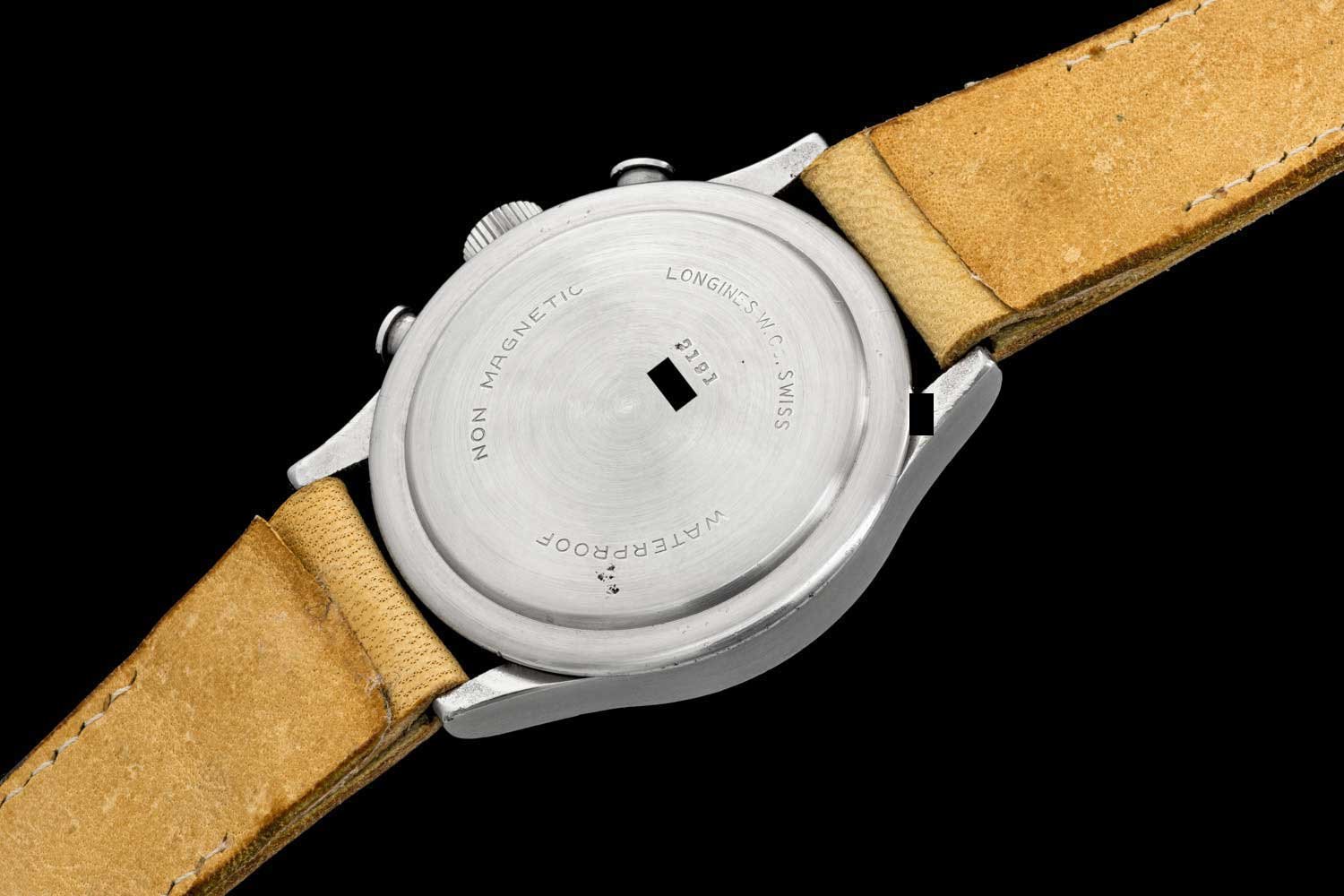
Then there are also two or three digit numbers, located on the case-backs and usually also on the lugs.   Longines used these numbers for waterproof pairing, so the cases and case-backs were put back together along the assembly line.  ( A good idea to call them waterproof pairing numbers).  As collectors we believe these to be in sequence/progressive within the order numbers, but that these numbers do not necessarily correlate to the quantity of watches made within that order number.

Serial Numbers

Serial numbers – always found on the movements (and sometimes also found on the case). Through Longines electronic archive (LEA) they are able to use these serial numbers to correspond with, the reference number (cliché) and order number (case back).  (Therefore, confirming the watch is all matching.)

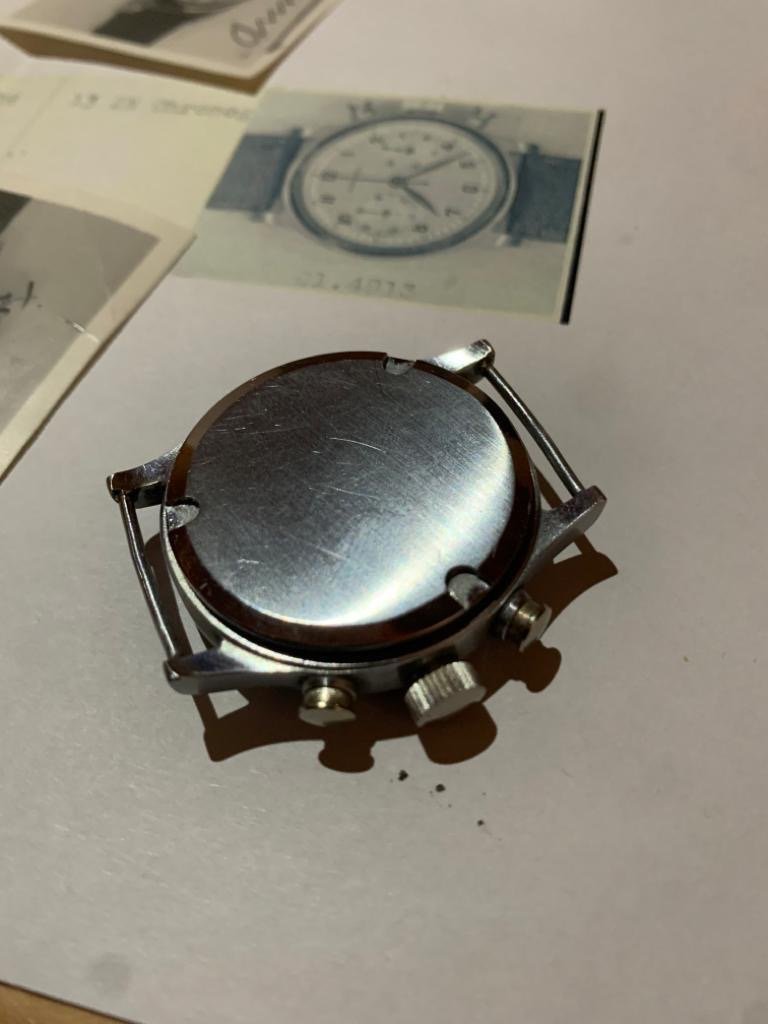
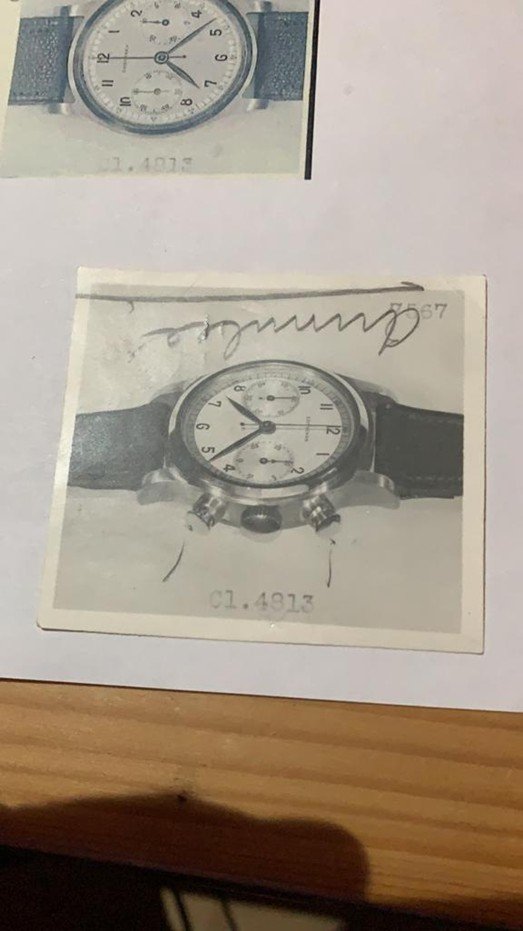
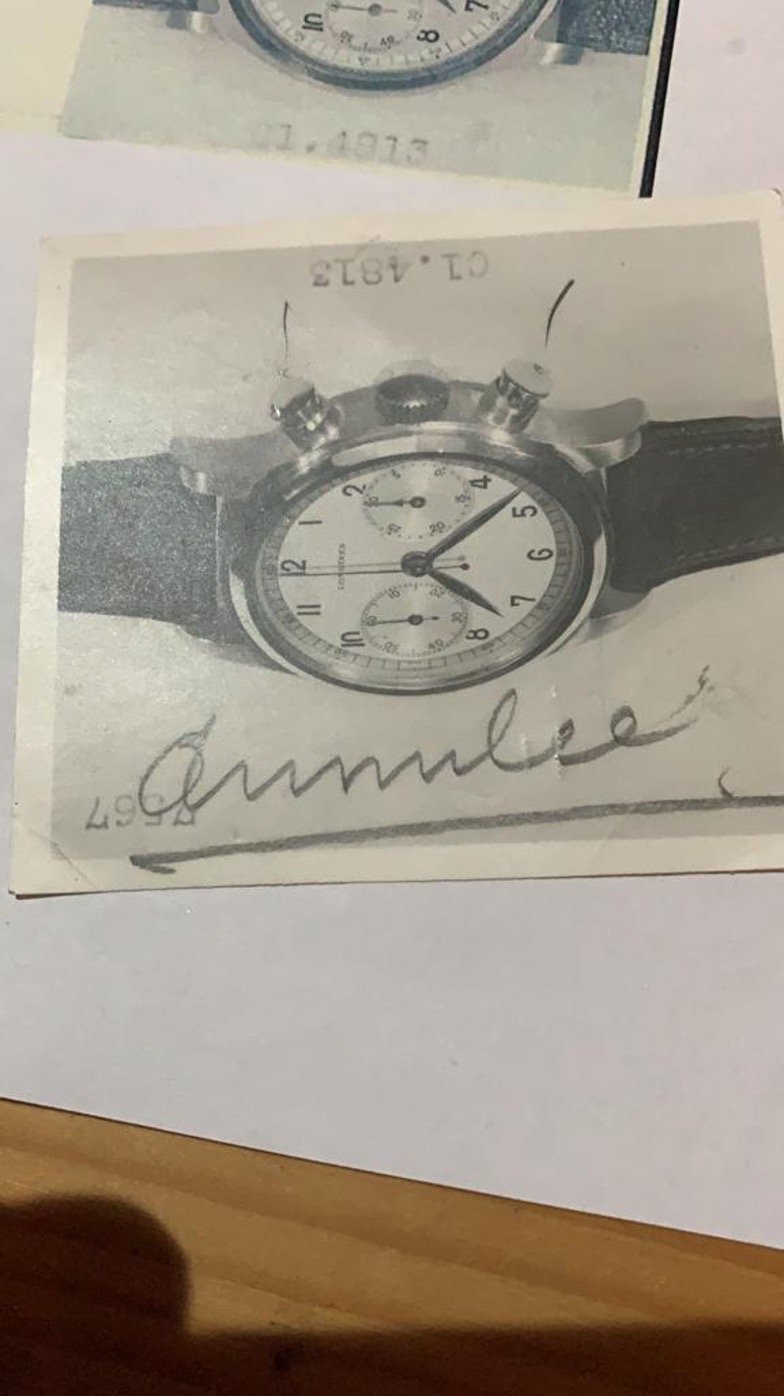
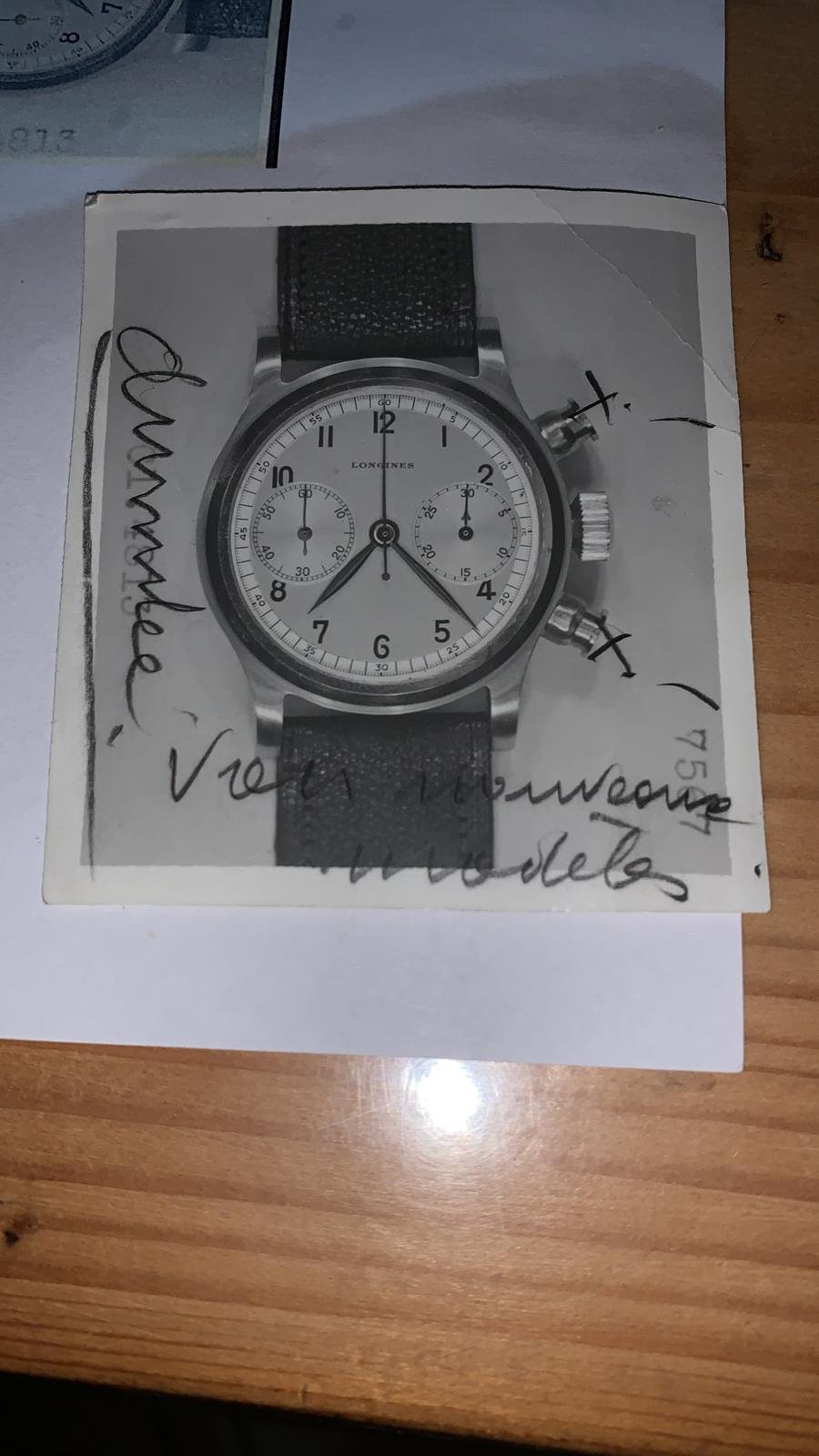
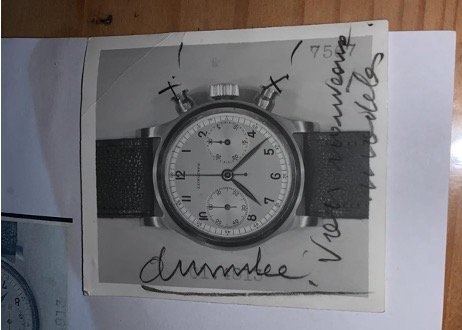
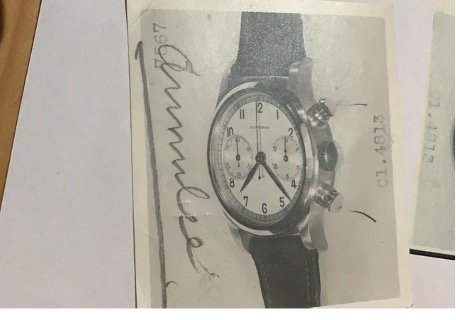
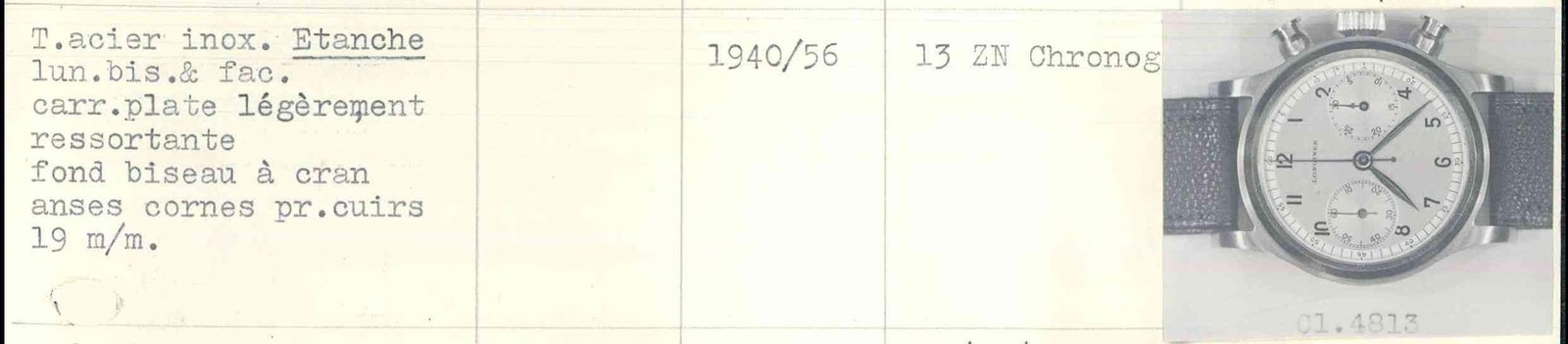
There is only one cliché for a mushroom pusher 13ZN (ref number) 4270.  (Note there was potential for a smaller mushroom pusher with cliché 4813, but the reference was cancelled, see image from Longines archives below.

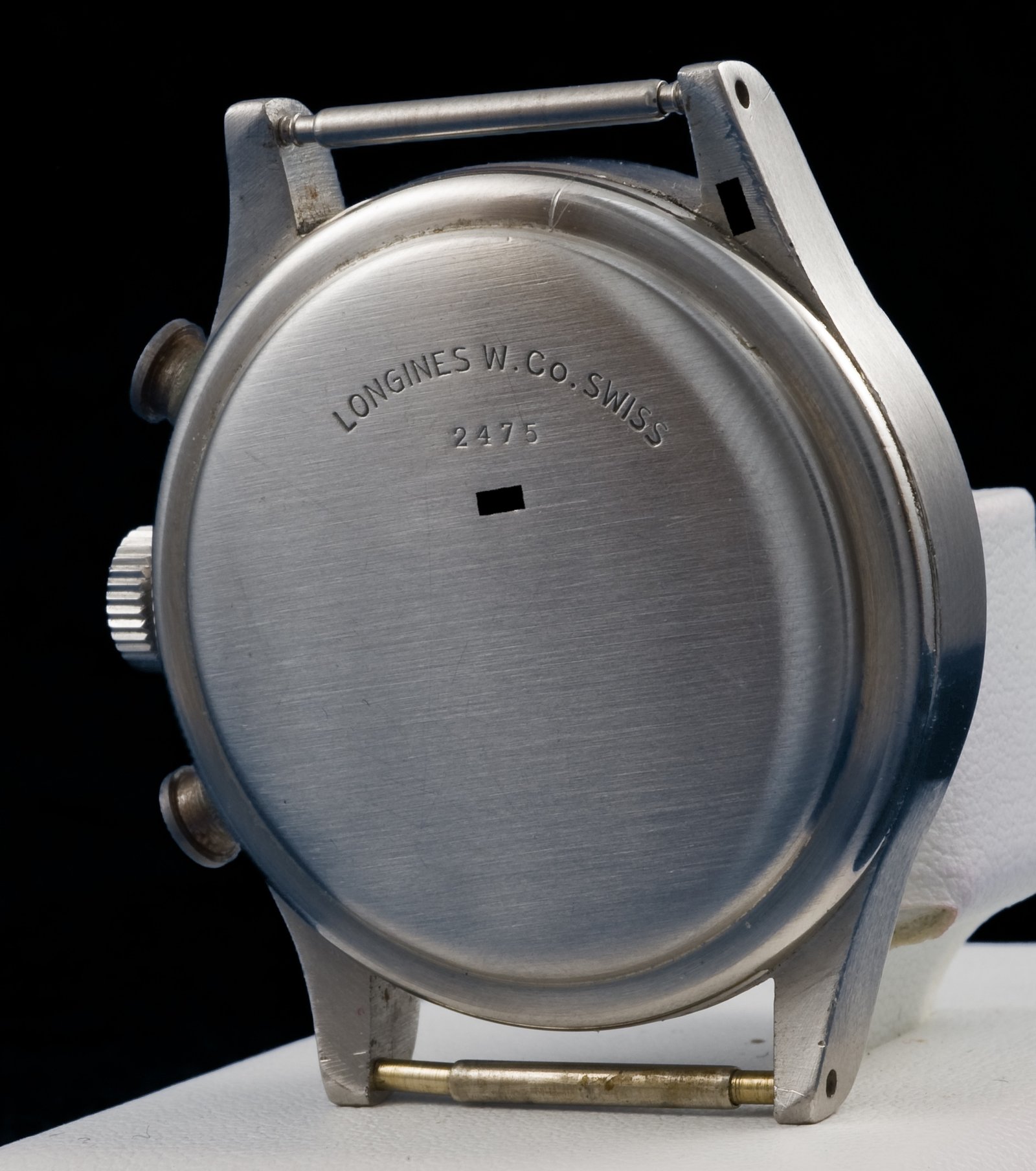
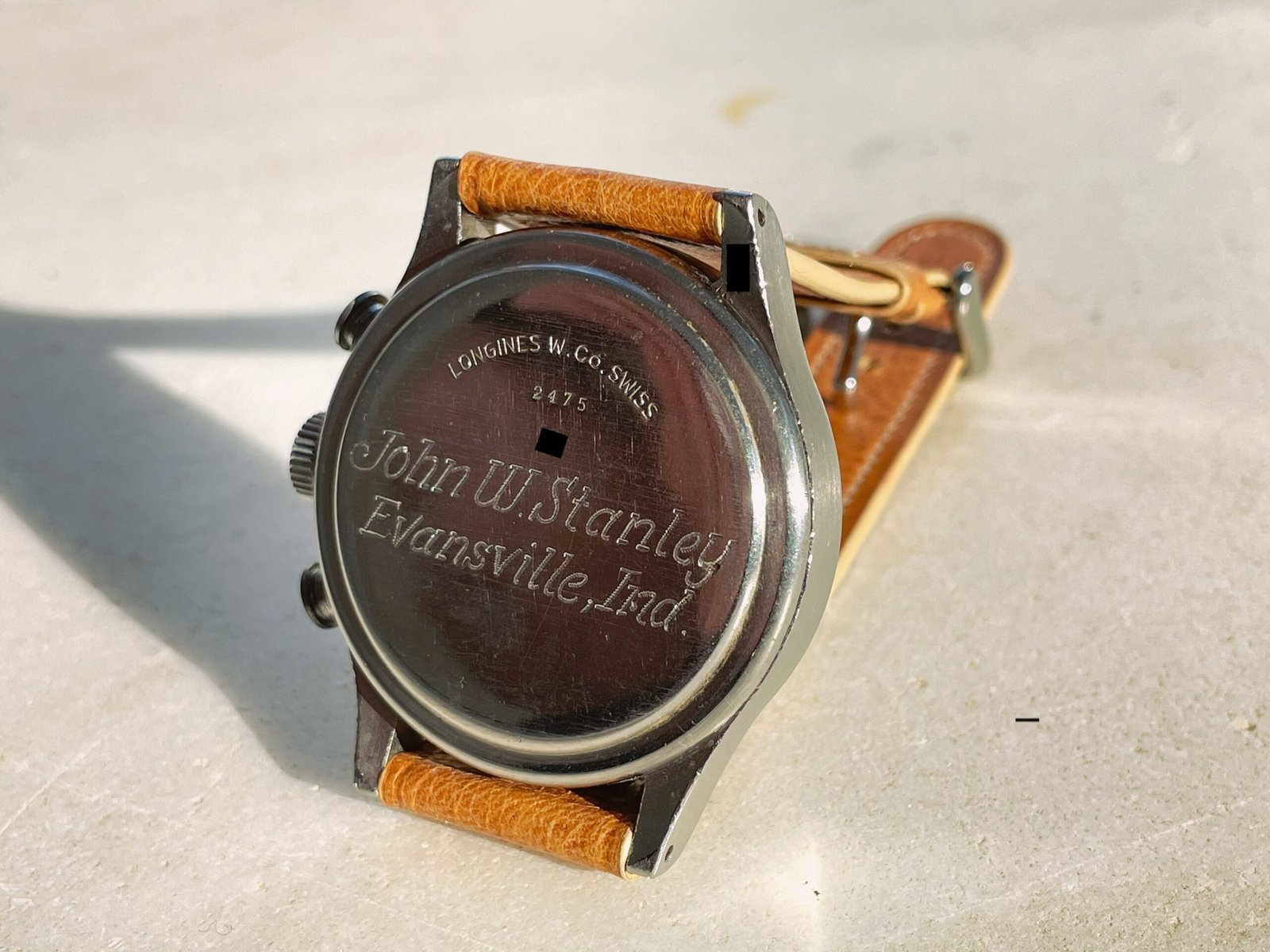
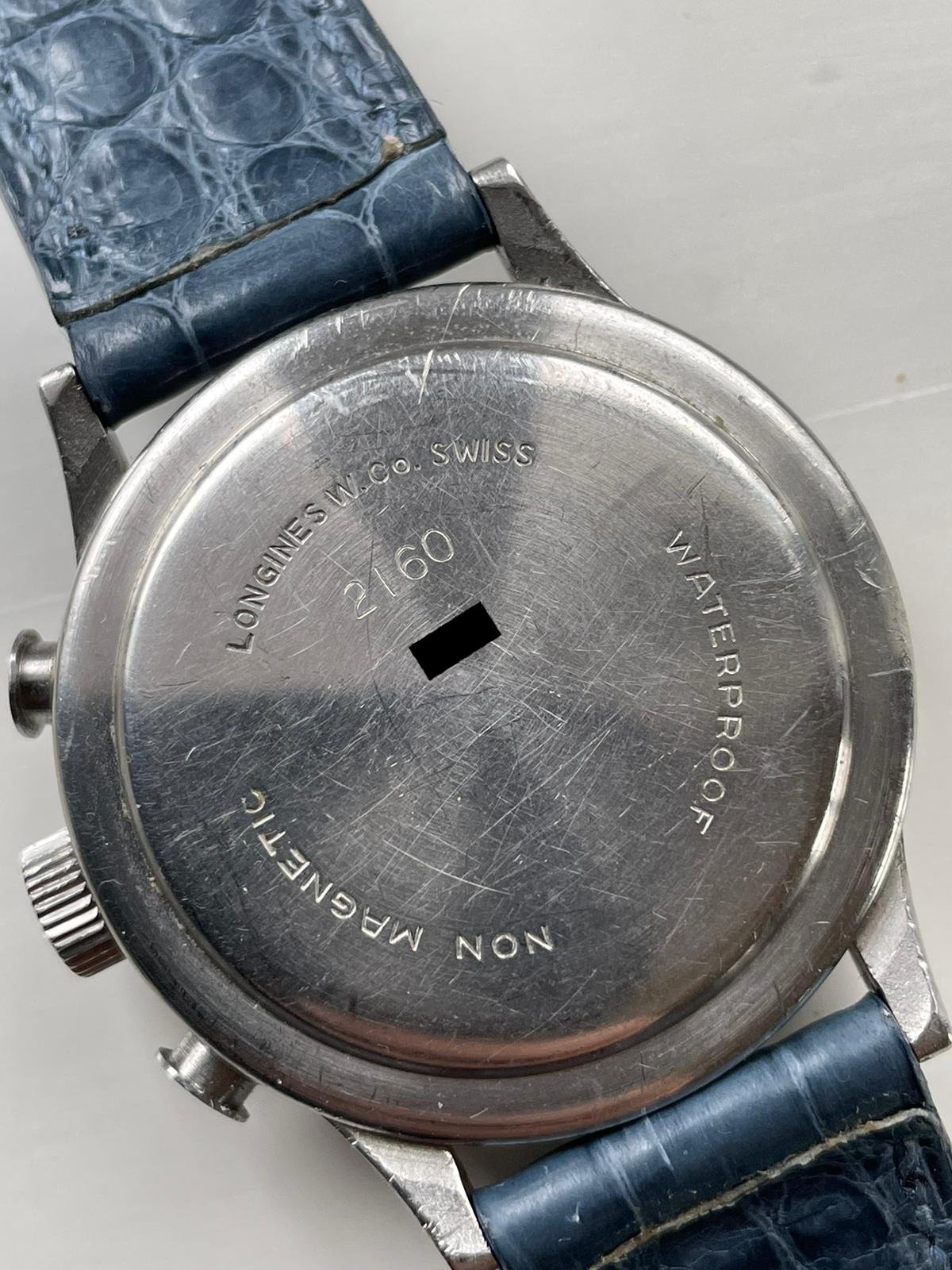
The order numbers for reference 4270 are as followed – 2010, 2352, 2191, 2160 (engraved back), and 2475 (spring bars), (to confuse things a bit the cliché 4270 has also been seen on one case back) and there are even a few anomalies where there is no order number at all.

All these order numbers are very similar, although some have some small differences and details, which are unique to certain order numbers, but they are in essence the same watch.

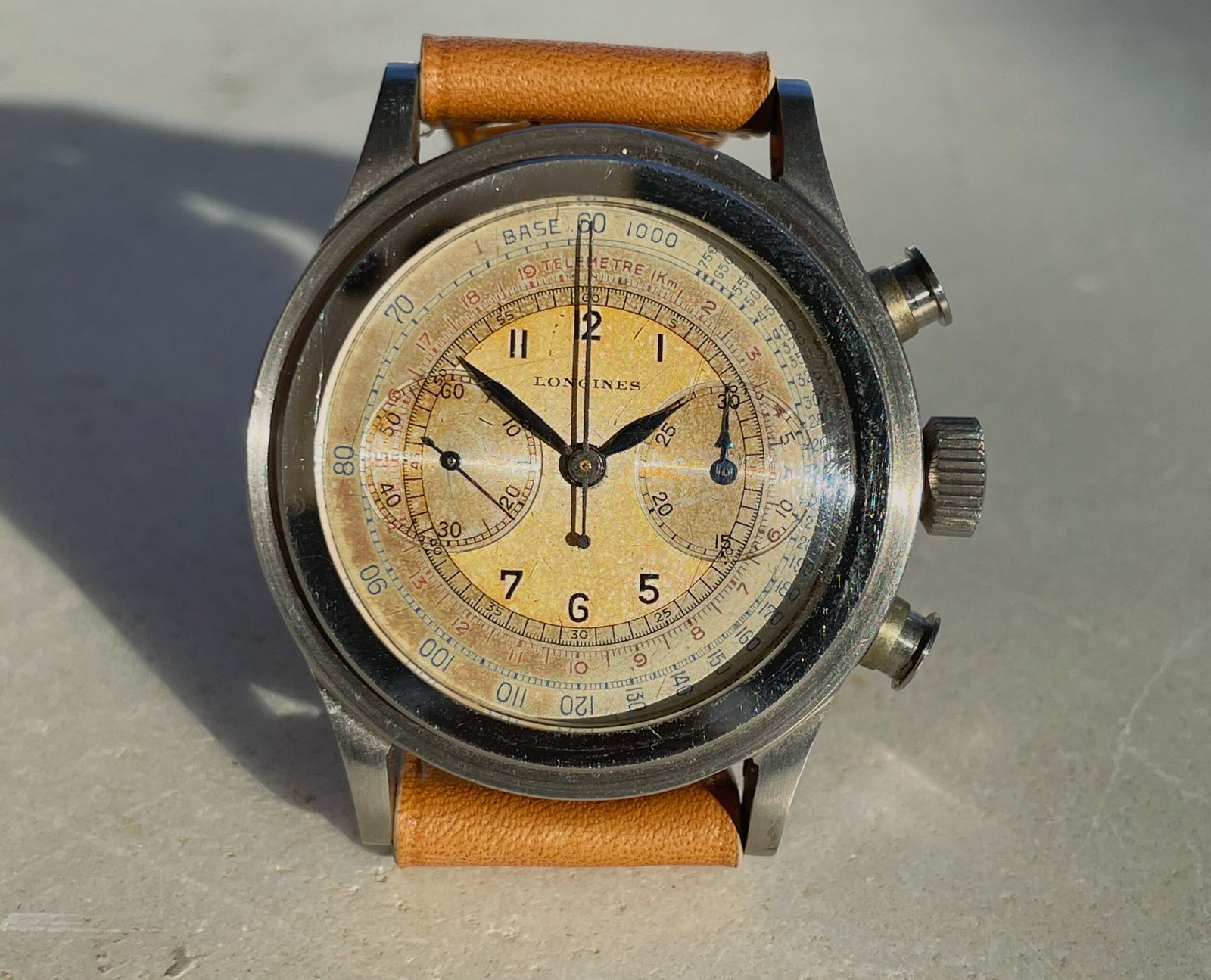
The types of dials that these watches are born with differ in terms of style.  Dials were manufactured by Stern Freres and Flückiger and Cie (Zelim Jacot) of St Imier.  Both made extremely high-quality dials for the best watch manufactures during the period. The dials are 29.5mm in diameter, and come in a variety of styles, some with tachymeter and telemeter scales, others with single scale or even no scale at all.  Depending on the dial maker there are small differences between the two companies dials, most notably the style of fonts used.

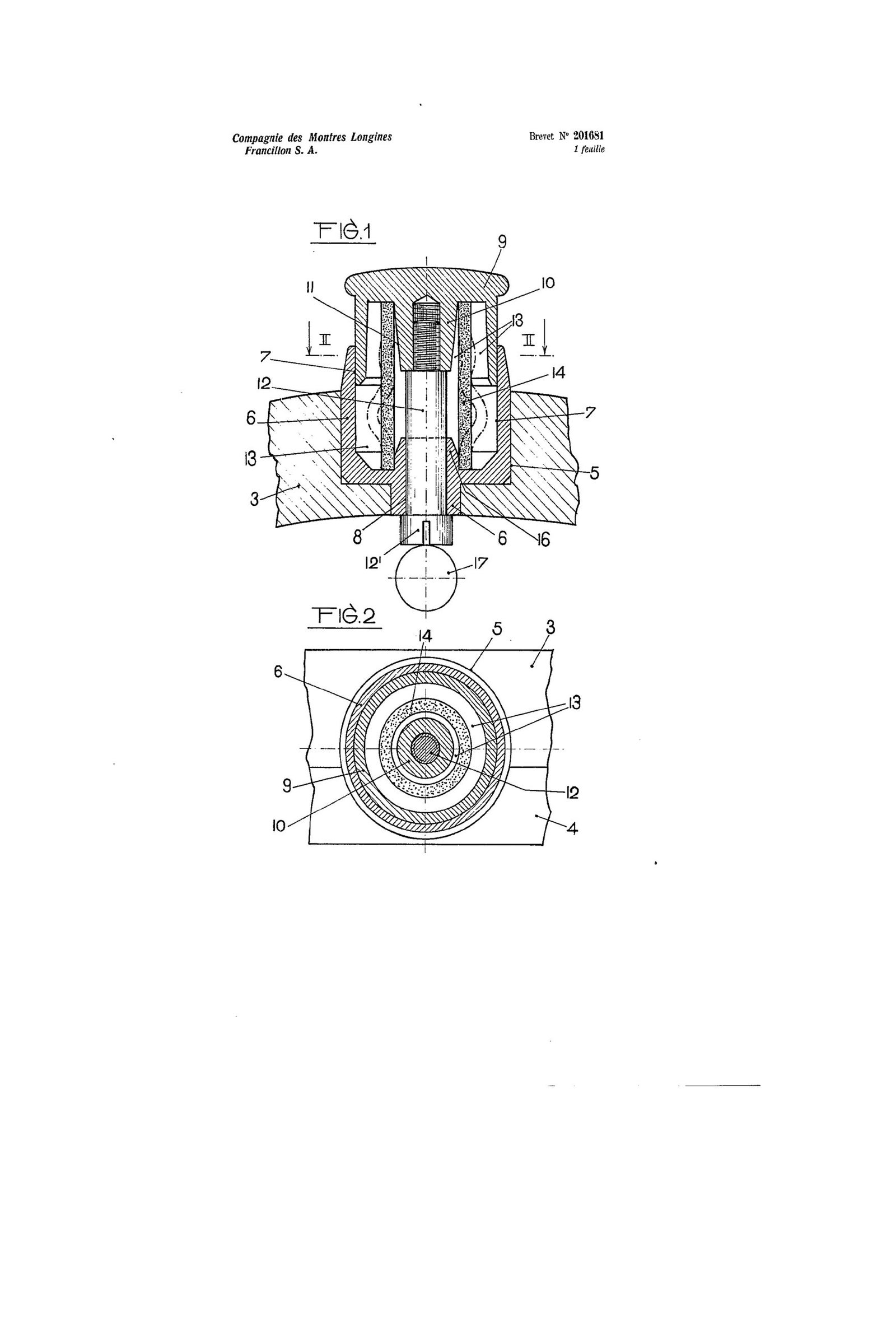
The patent for the ‘Waterproof pusher, for chronograph watches’ what collectors now call ‘Mushroom Pushers or Ombrello Pushers for the Italians’ due to the shape.

The patent more so than the shape, describes the innovative way in which the pushers were to work, obviously with the main aim in keeping water out of the case and movement, they would do this as can be seen in fig 1 of the patent in which a normal push ‘body’ is fixed on to an inner rod, there is a cylindrical opening with corresponding tube the inner being slightly smaller than the outer, the tightness ensures that the pusher does not spring back in the usual way. 

They used what they termed a ‘waterproofing sleeve’, (an elastic waterproof material) which can be squeezed and will squeeze back, and thereby avoiding the spring back you get in normal pushers, (this point being the most vulnerable in terms of water leakage through a standard pusher system).

To achieve this a sleeve made up of elastic/ waterproof material mentioned previously (cork) is inserted into a closed space created between the pusher body, the pusher stem and the guiding tube, so that the water-tightness sleeve be squeezed in axis when pressure is exerted, then when released it regains its normal shape returning the pusher and the stem to its original position.

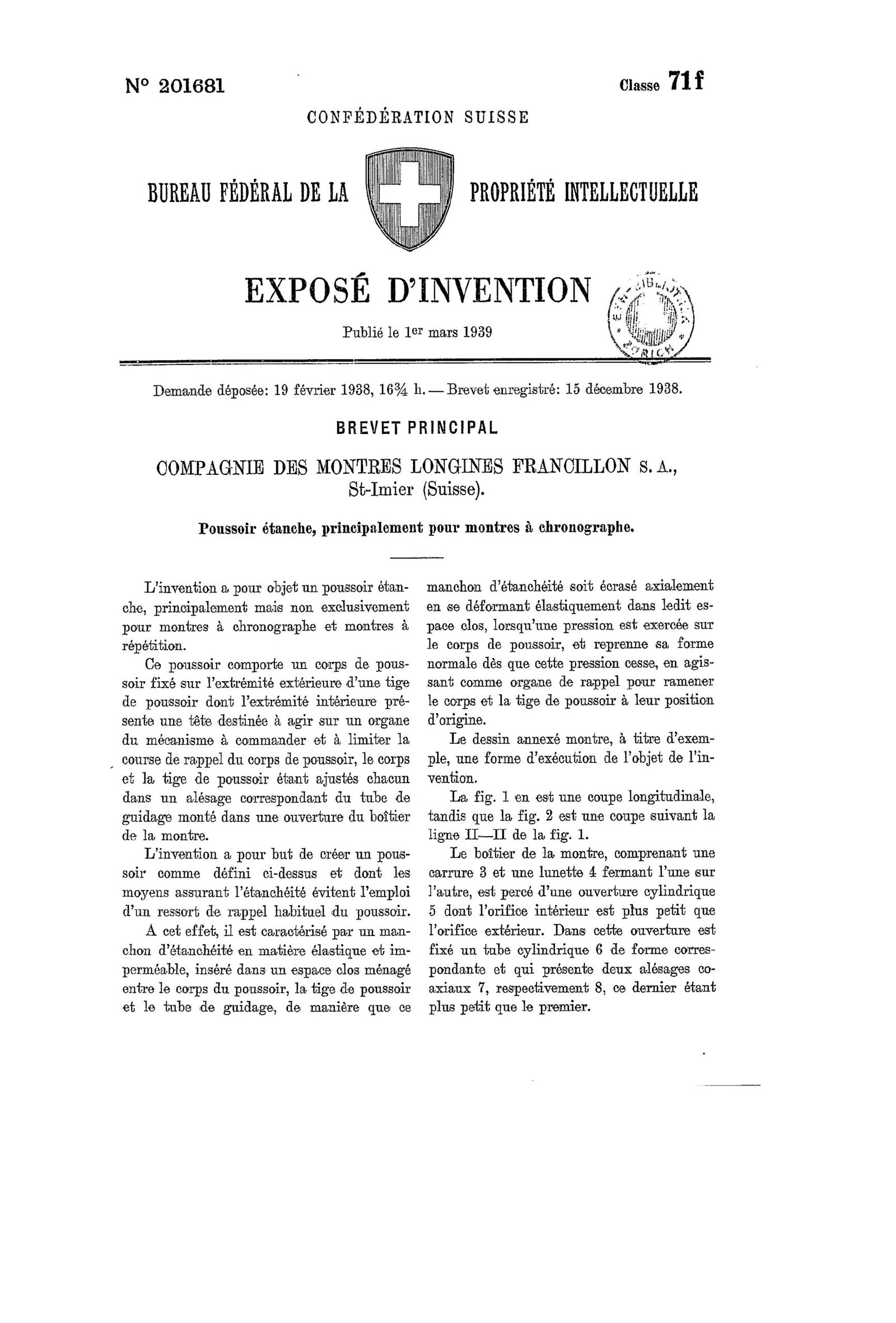
Patent 201681

The patent for the ‘Waterproof pusher, for chronograph watches’ what collectors now call ‘Mushroom Pushers or Ombrello Pushers for the Italians’ due to the shape.

The patent more so than the shape, describes the innovative way in which the pushers were to work, obviously with the main aim in keeping water out of the case and movement, they would do this as can be seen in fig 1 of the patent in which a normal push ‘body’ is fixed on to an inner rod, there is a cylindrical opening with corresponding tube the inner being slightly smaller than the outer, the tightness ensures that the pusher does not spring back in the usual way. 

They used what they termed a ‘waterproofing sleeve’, (an elastic waterproof material) which can be squeezed and will squeeze back, and thereby avoiding the spring back you get in normal pushers, (this point being the most vulnerable in terms of water leakage through a standard pusher system).

To achieve this a sleeve made up of elastic/ waterproof material mentioned previously (cork) is inserted into a closed space created between the pusher body, the pusher stem and the guiding tube, so that the water-tightness sleeve be squeezed in axis when pressure is exerted, then when released it regains its normal shape returning the pusher and the stem to its original position.

Below, two images from Longines electronic archives (LEA).  Recently all digitised, Longines are able to use their archives to find a watch using the serial number.  They are also in many instances able to cross references various ledgers and invoices for the same watch, often giving collectors a great amount of detail in regard to their watch, not just where and when the watch was sold, but also information on the cases, dials and sometimes special information about the order or manufacturing process of the watch, many of these watches were special order and in some cases, went for special water proof testing or had specific requests re the dial.  This of course is an extremely useful tool for Longines collectors and at the time of writing, is still free for all.
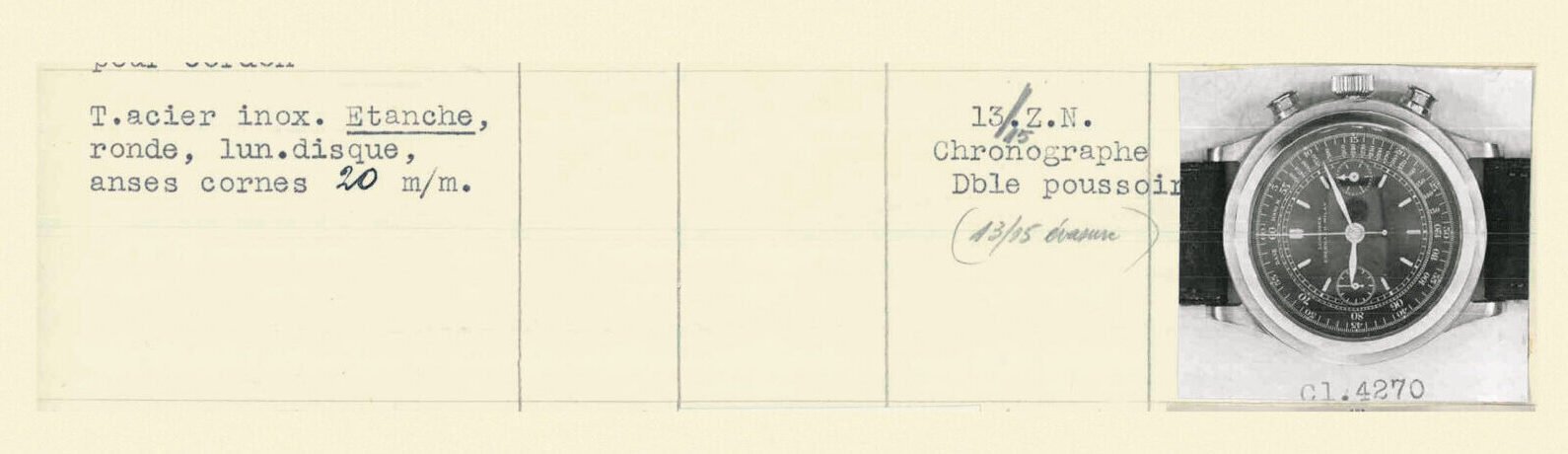
4270 cliché
Image from Longines archives Cliché 4270.
4813 cliché
Another image from Longines archives, this with Cliché 4813. (Must be noted that only one example (a prototype) has ever been seen with reference 4813 and mushroom pushers, (usually this reference has pump pushers).

Case Construction

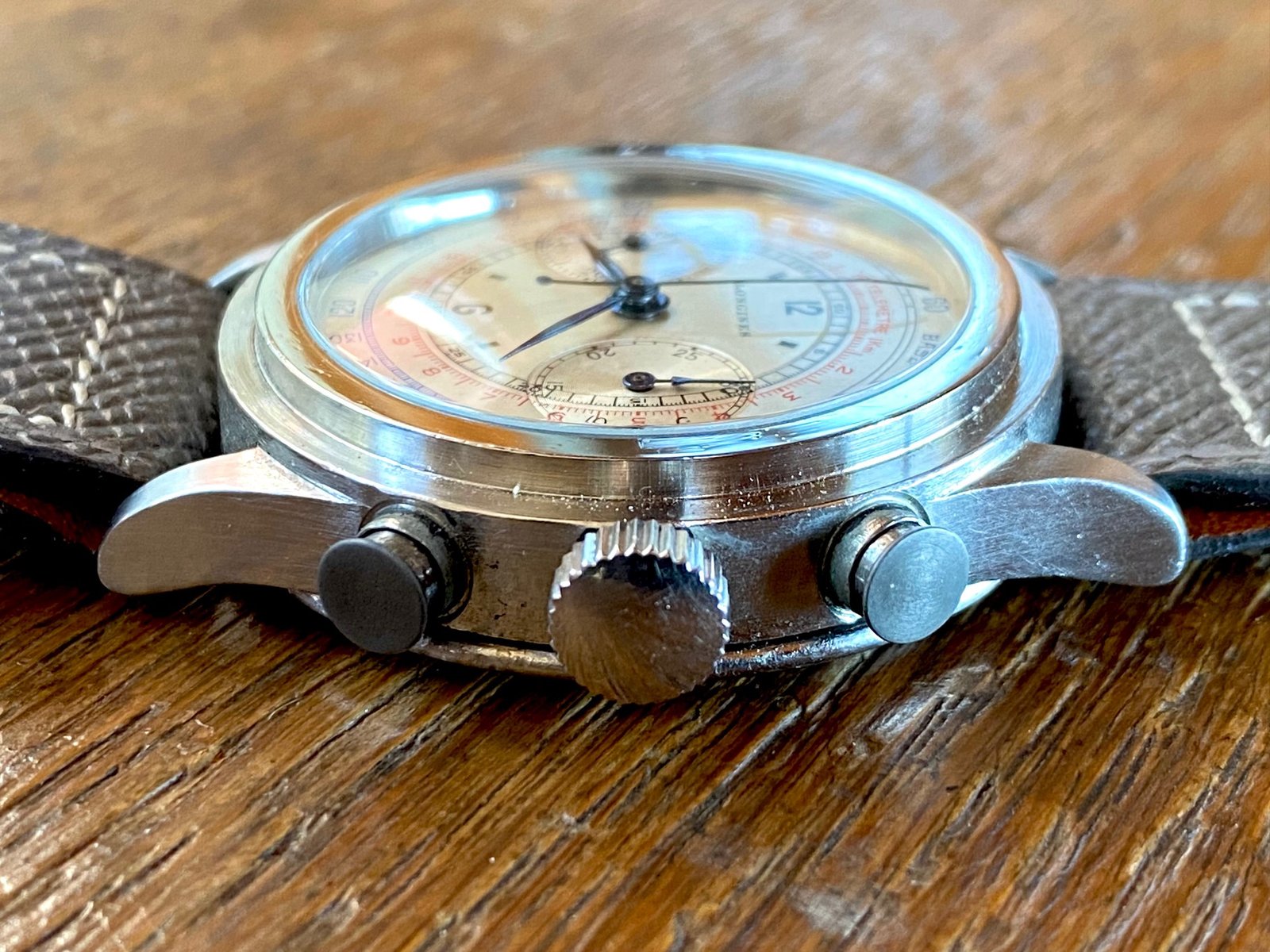
The reference 4270’s case construction represents a remarkable achievement in waterproof chronograph engineering for the late 1930s. The stainless steel case measures an ideal 37.5mm in diameter with a thickness of approximately 13mm, featuring a distinctive snap-back construction with a double-sealed gasket system (it should be noted that certainly across the different order numbers, you can determine differences in case finishing). The defining characteristic of this reference the mushroom-shaped pushers employed an ingenious umbrella like seal mechanism patented by Longines on February 15, 1938 (Patent No. 201681). When depressed, the mushroom cap creates a compression seal against a rubber gasket seated within the case tube, maintaining water resistance even during operation a revolutionary solution that addressed the primary weakness of contemporary waterproof chronographs. The crown, positioned at 3 o’clock, features a similar gasket system with additional threading for enhanced water resistance. Most notably, the movement mounting system differs significantly from standard 13ZN references, utilising a double-fixing clamp arrangement that provides additional stability and helps maintain the integrity of the waterproof seal by preventing movement rotation that could compromise the gasket alignment. The case finishing typically displays a combination of polished bezel and lugs with brushed case sides, though variations exist across different order numbers. The lug width of 19mm and the gently curved lugs ensure comfortable wear while maintaining the robust construction necessary for reliable water resistance.

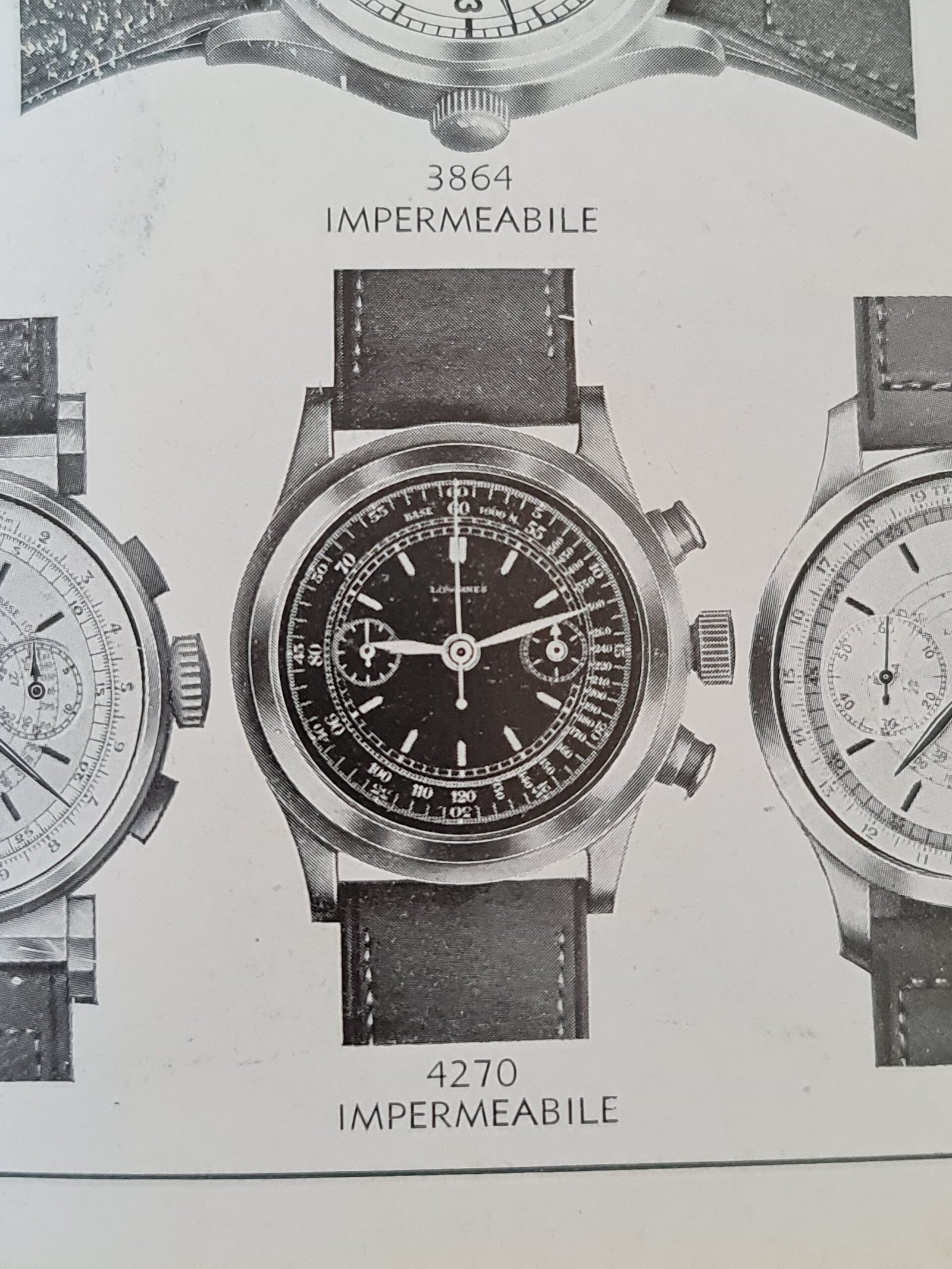
4270 catalogue black
Image from a catalogue circa 1938 showing ref 4270 ‘Impermeable’ as in waterproof case.
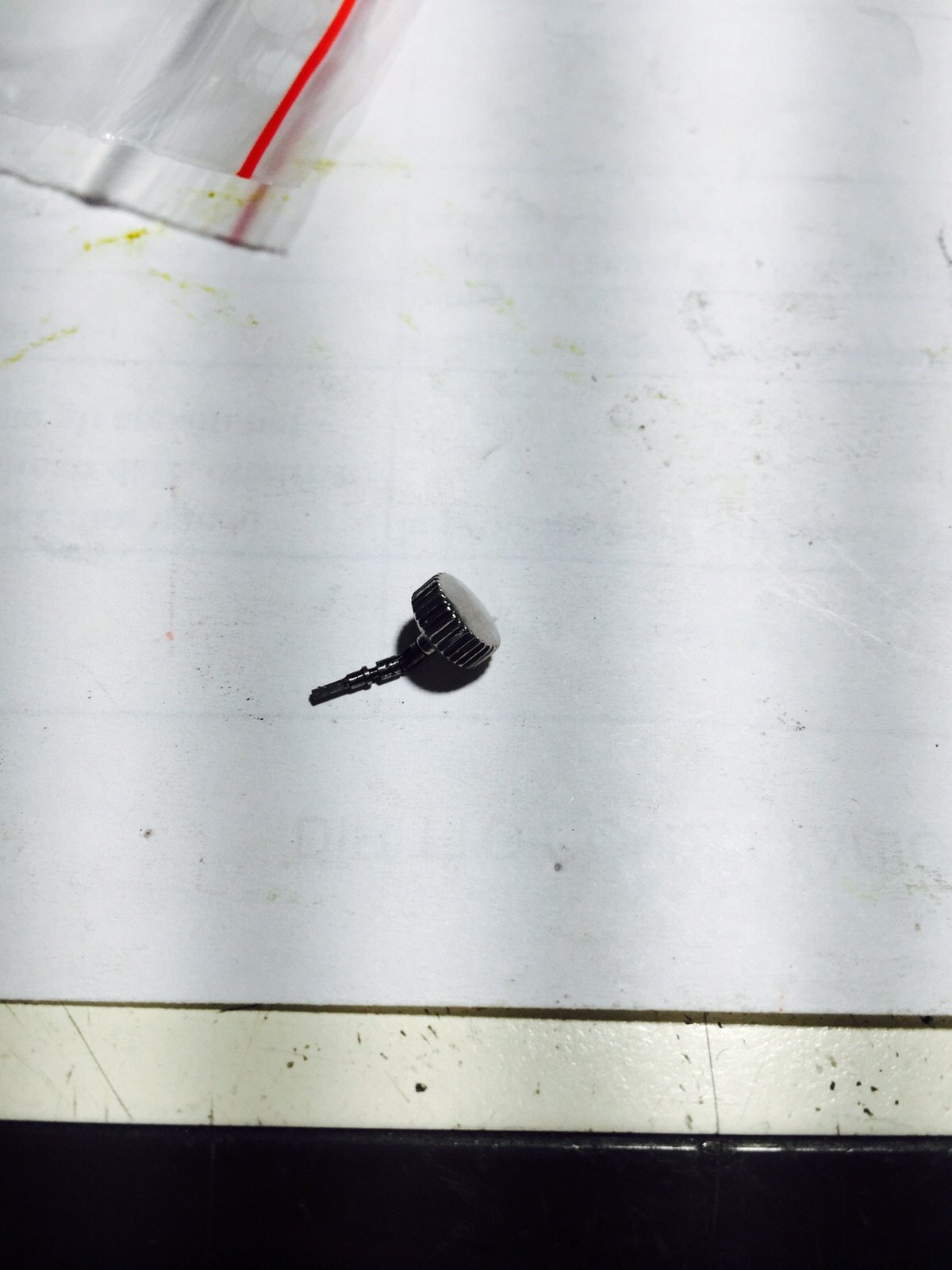
crown image
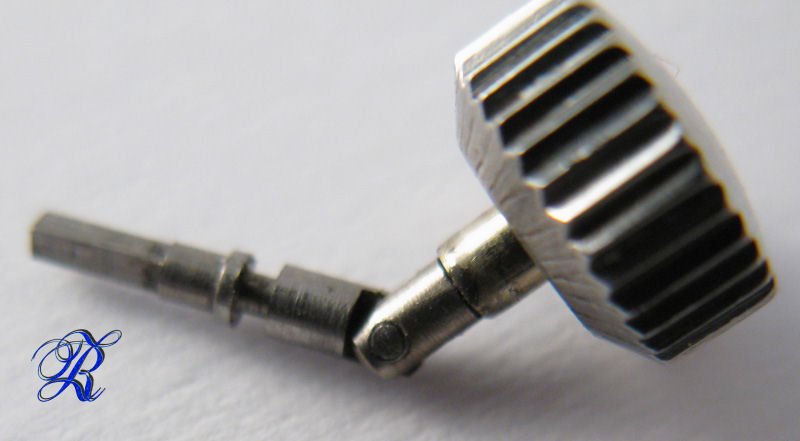
Very distinctive crown used across all order numbers. Very thick waterproof crown (nicknamed ‘millerighe’ by the Italian collectors. This crown has 2 stems, and allows for easier movement of the crown. The crown has 24 teeth like other Longines from the period.

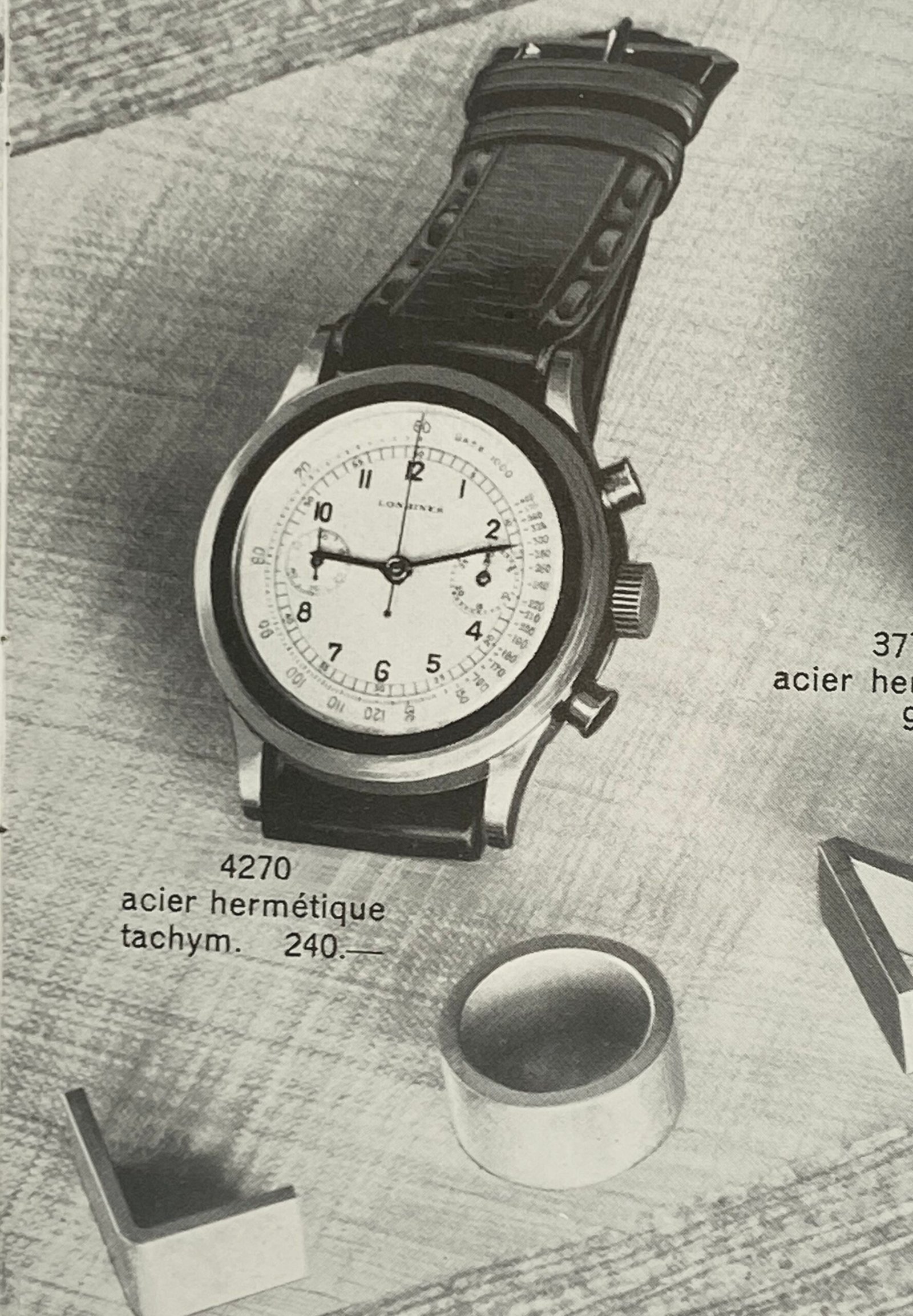
Two catalogue images from the end of the 30’s advertising a reference 4270 for sale.  ‘Acier hermetique’, as in steel water proof case with tachymeter scale.

case collar tubes comparison
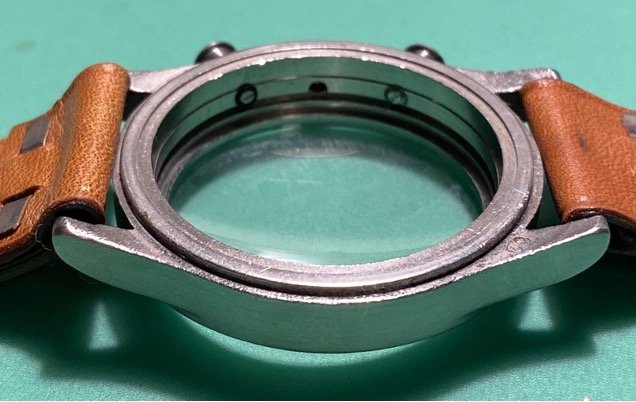
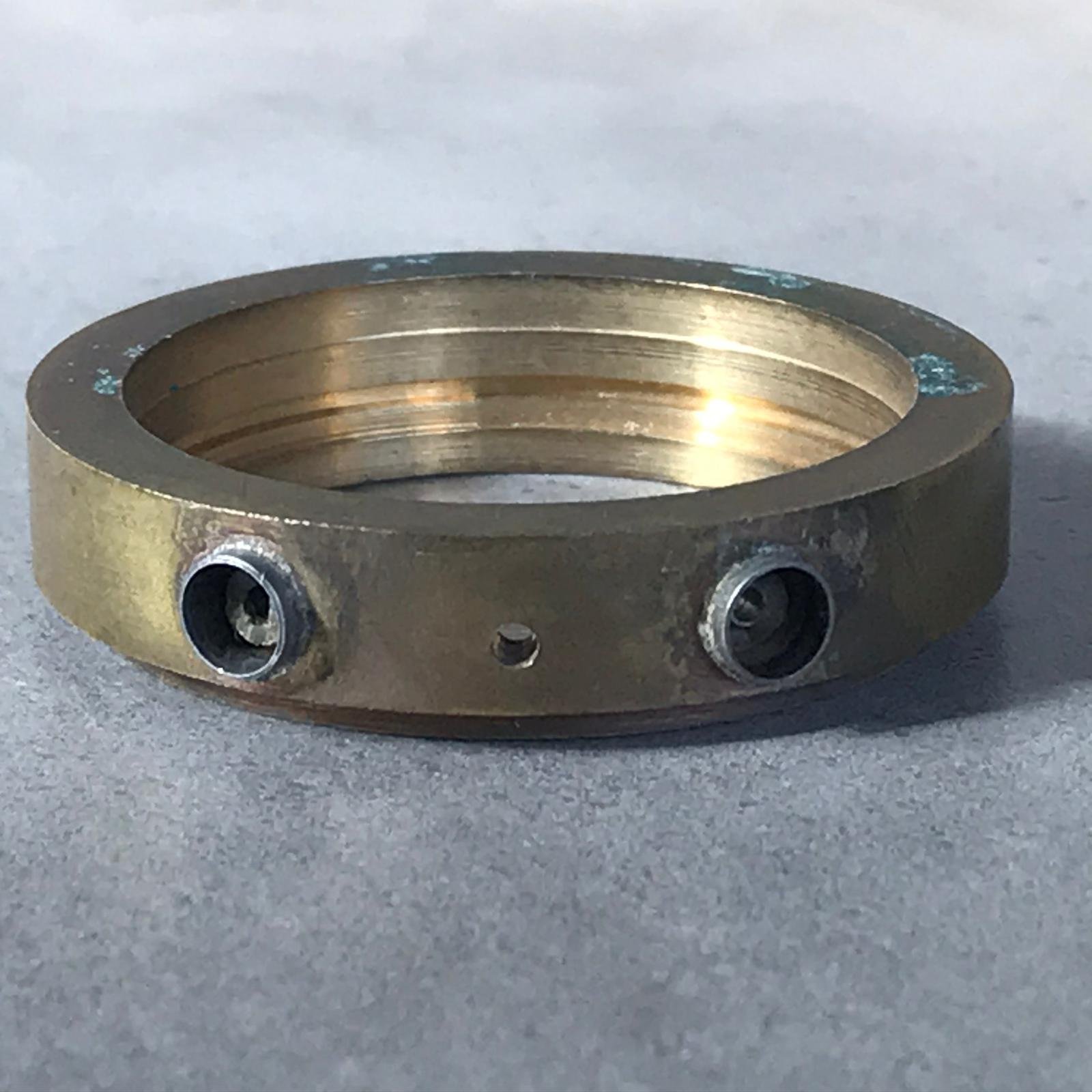
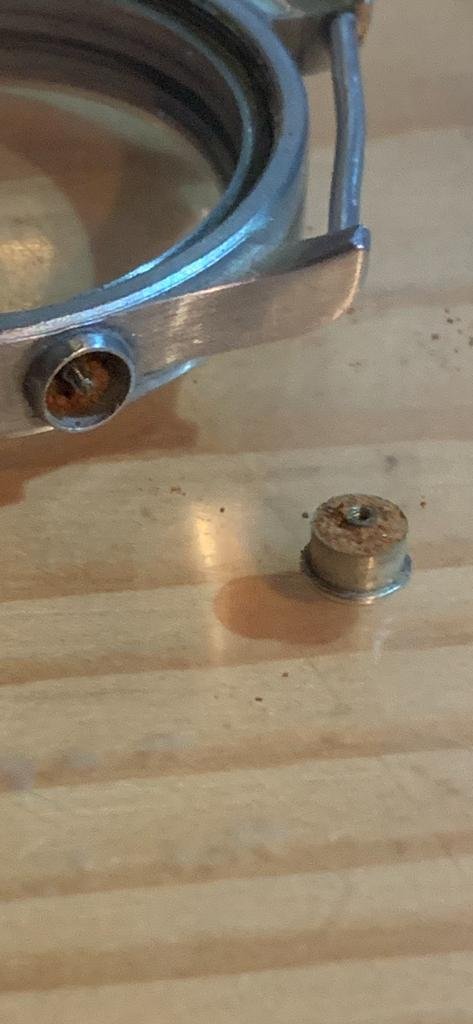
Image above showing how the middle case is machined to house the collar to the pushers and inserted half way through the case.  Originally the pushers would have cork or similar ‘elastic’ waterproof material to help achieve the water tightness as described in the patent.
Millerighe crown Renato
Another nice image showing the crown from Renato Zamberlan, showing clearly the two-stems.
Mushroom inner case
Image from the inside showing how the case was machined. They are hand-made cases and so there are a few variations.
prototype case
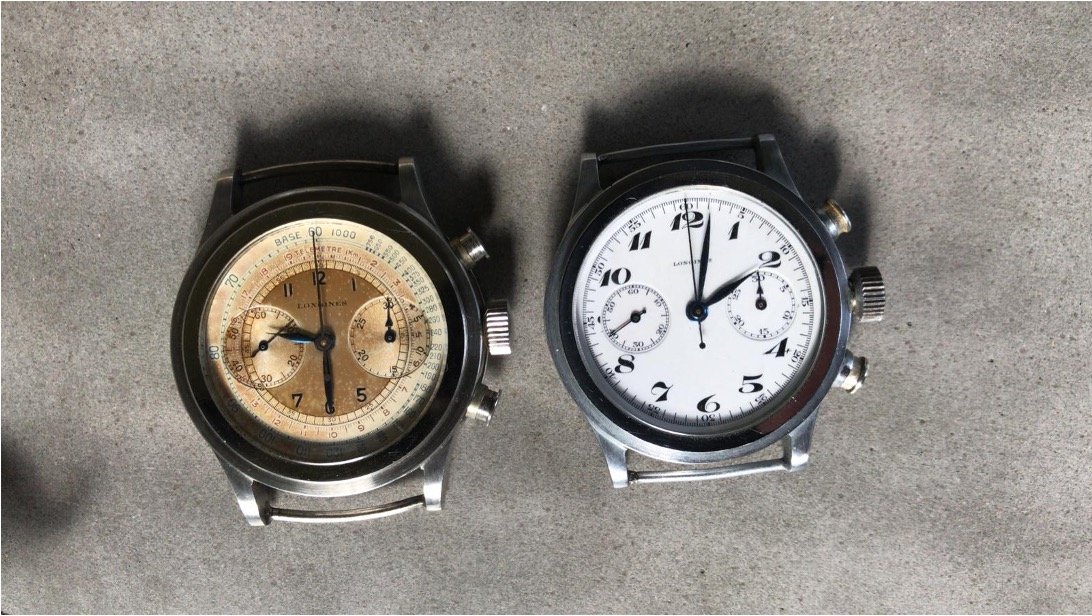
To the left, what seems to be a test case, where they would most likely test pushers and their water tightness, also note the different sizing of the collars along with the sizing and thickness of the tubes, most likely Longines were experimenting with different waterproof pusher systems to improve water tightness.
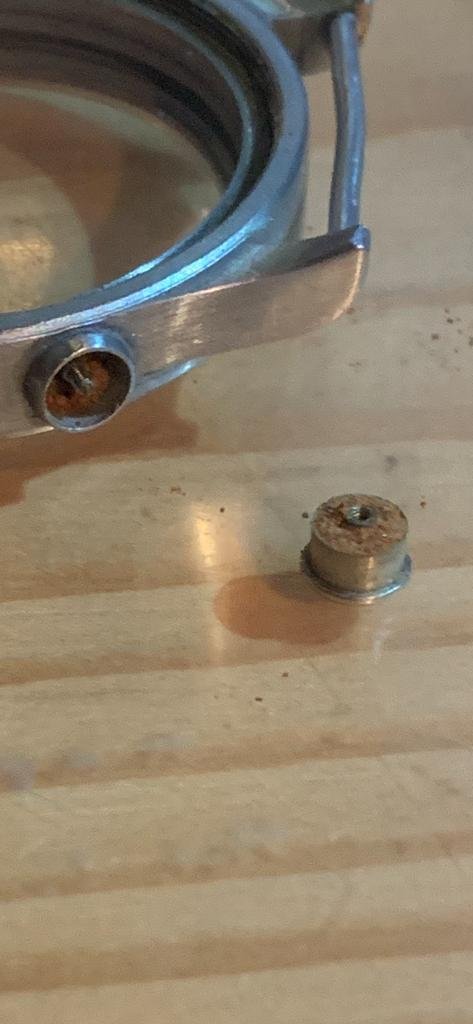
cork 4813 proto
Above right a prototype Cliché 4813, you can see still the original cork insulators still intact. Interesting that this prototype case had the mushroom pushers and screw back case found in later ‘tre-tacche’ models, (as in screw back with 3 notches).
pushers image mine Andrea
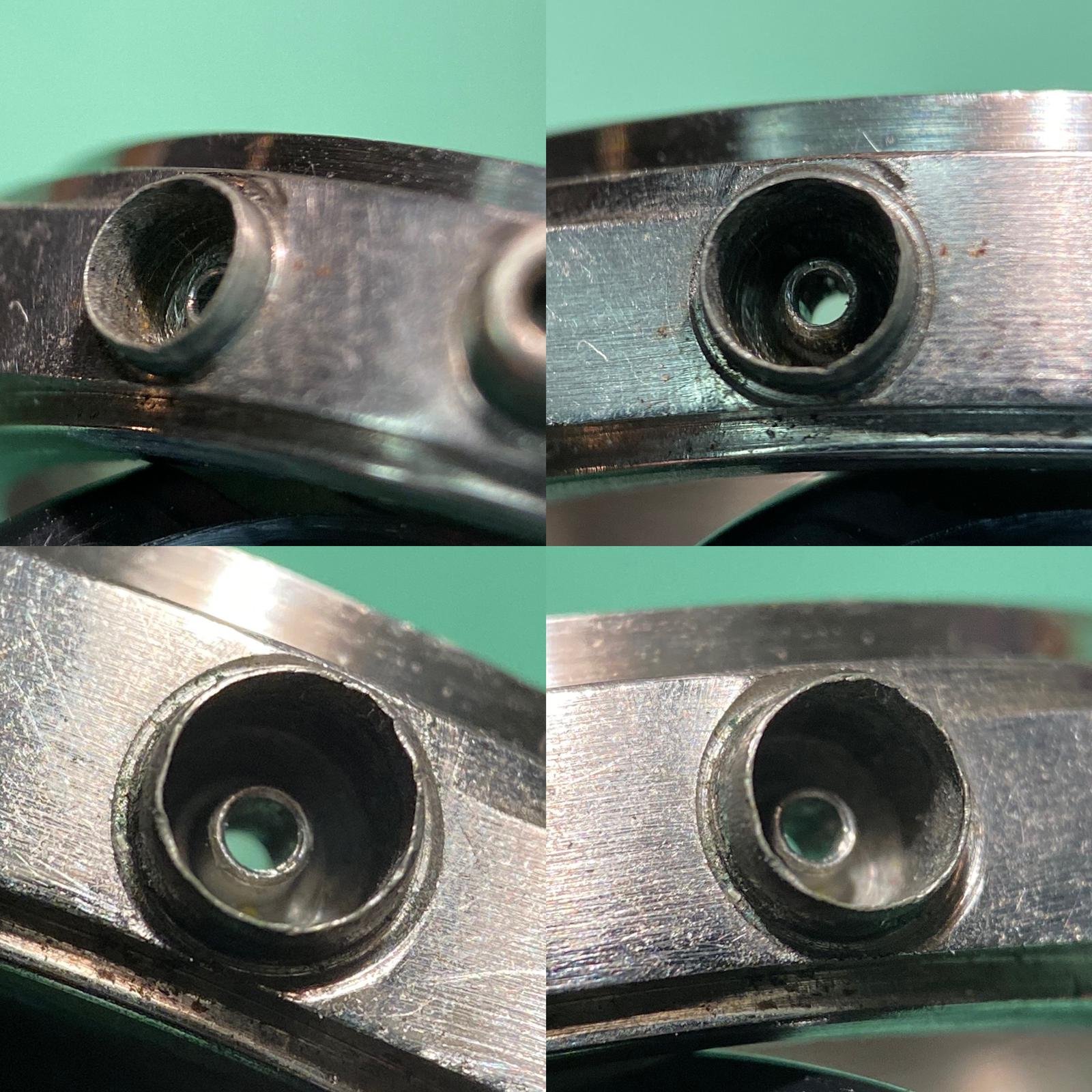
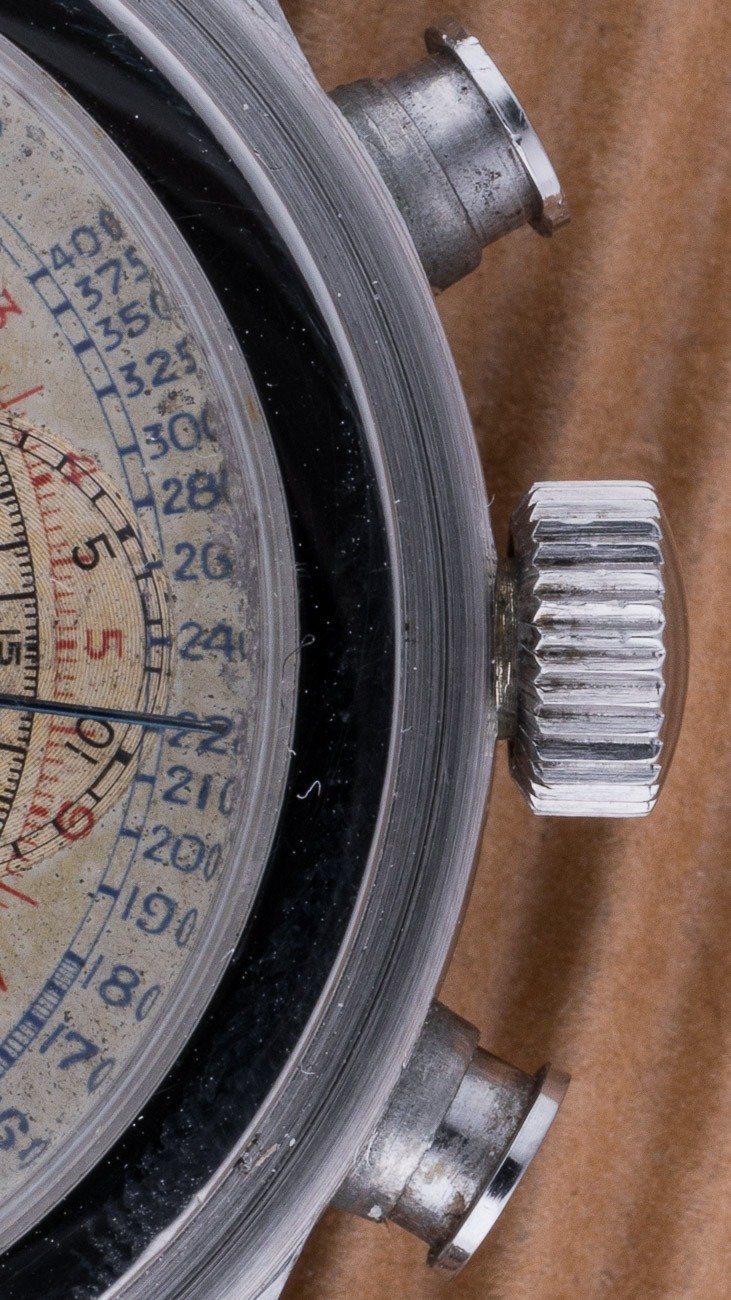
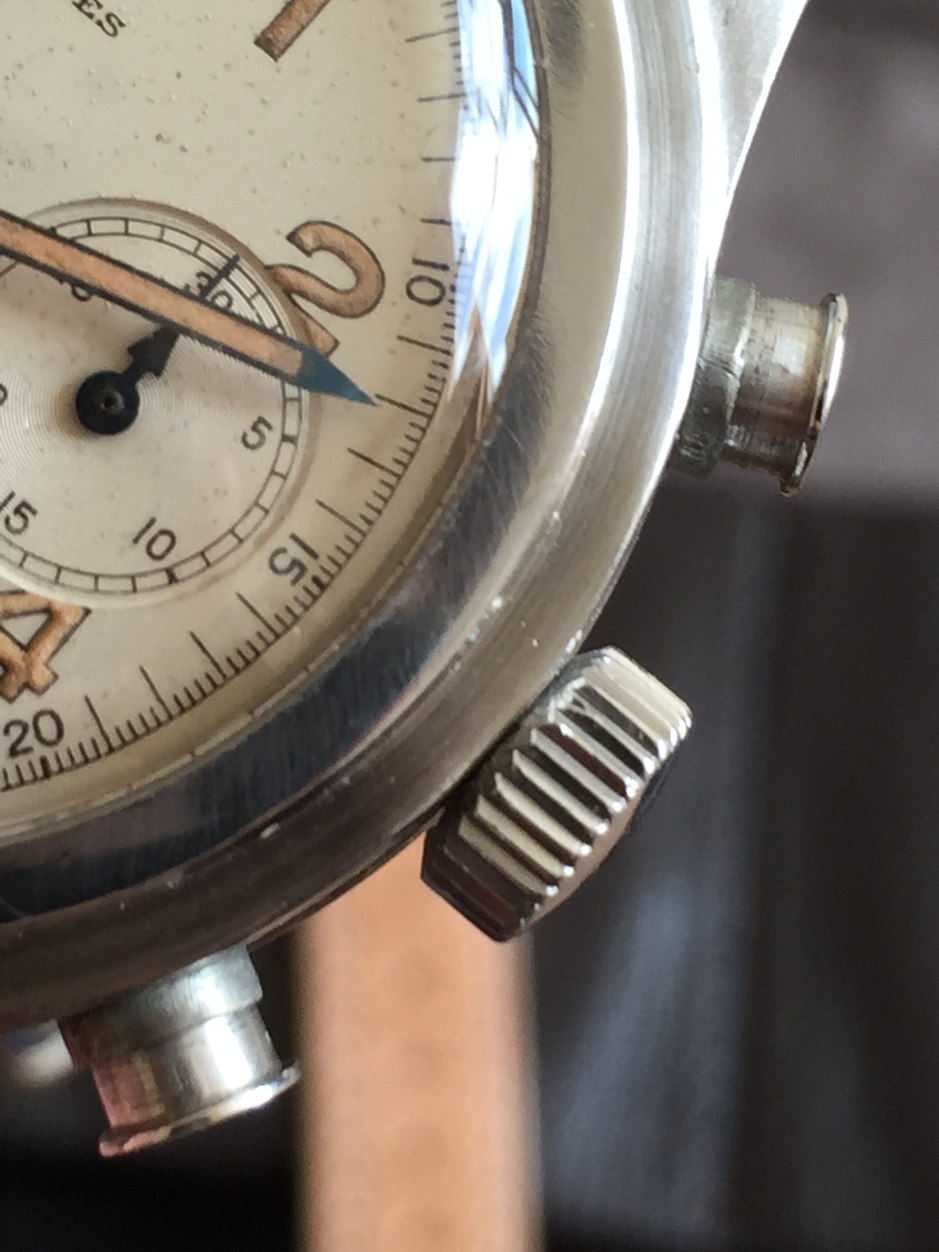
Close-up images of the mushroom pushers. The usual diameter of each pusher is about 5.5mm with depth about 2.5mm. The winding stem is at 1.0 or 1.1mm but the thickness can and does vary between order numbers.
Having shown some of the details regarding the pushers and crown, thanks to many friends around the world, I am able to show now some extremely rare examples of each order number as well as highlight a few differences between them.

Reference 4270 in 18kt Gold

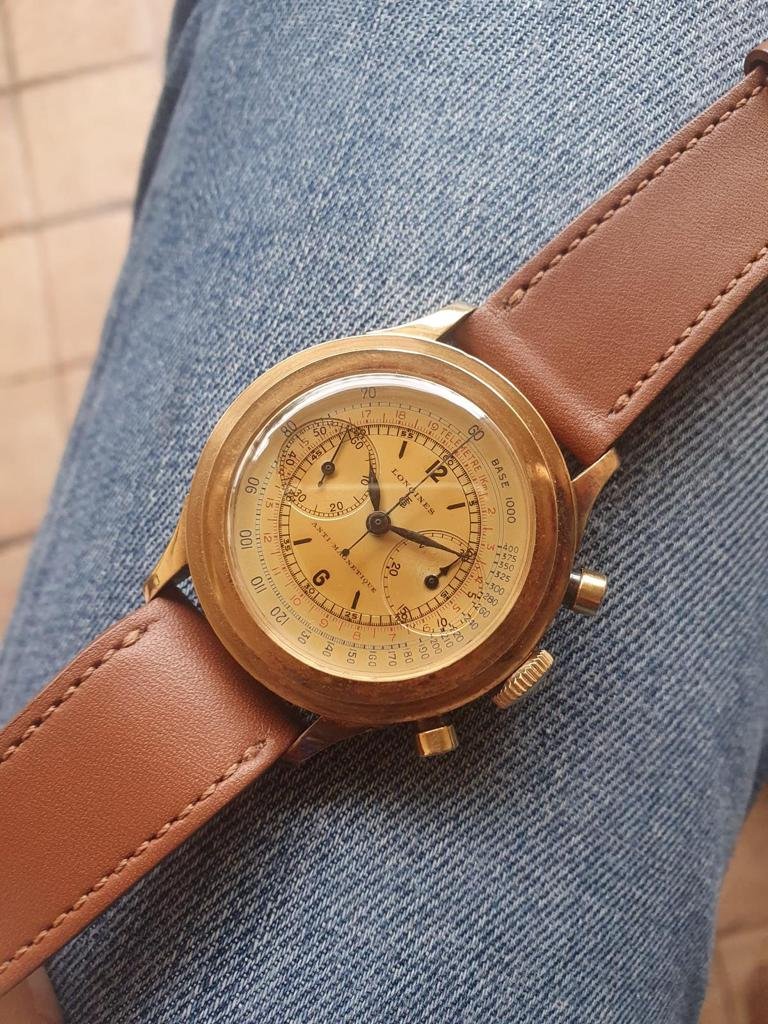
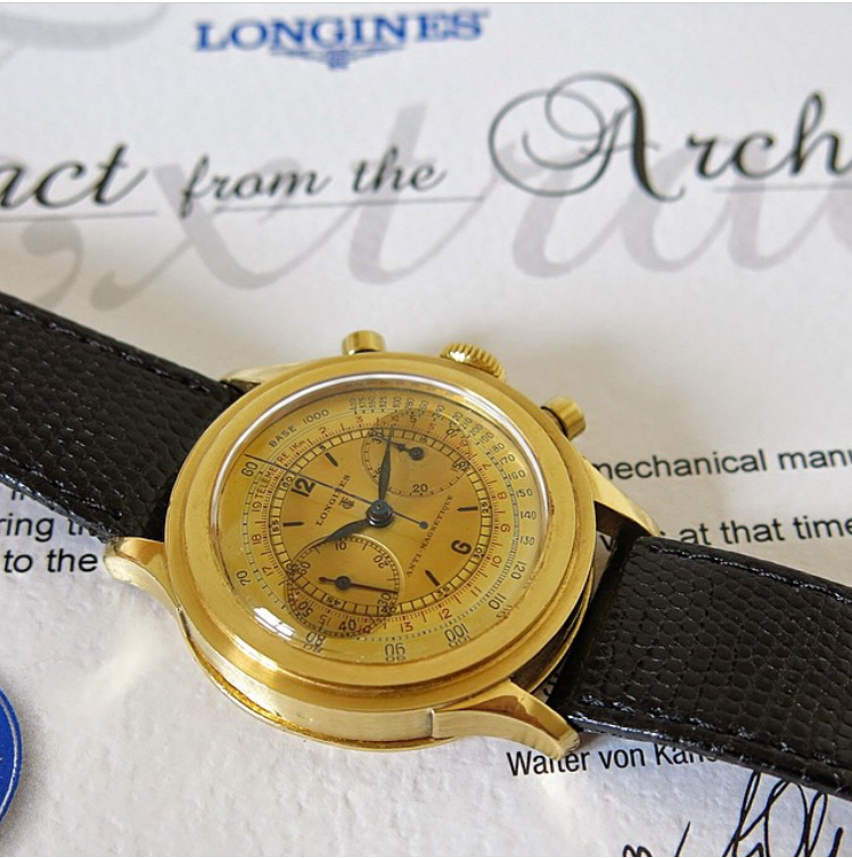
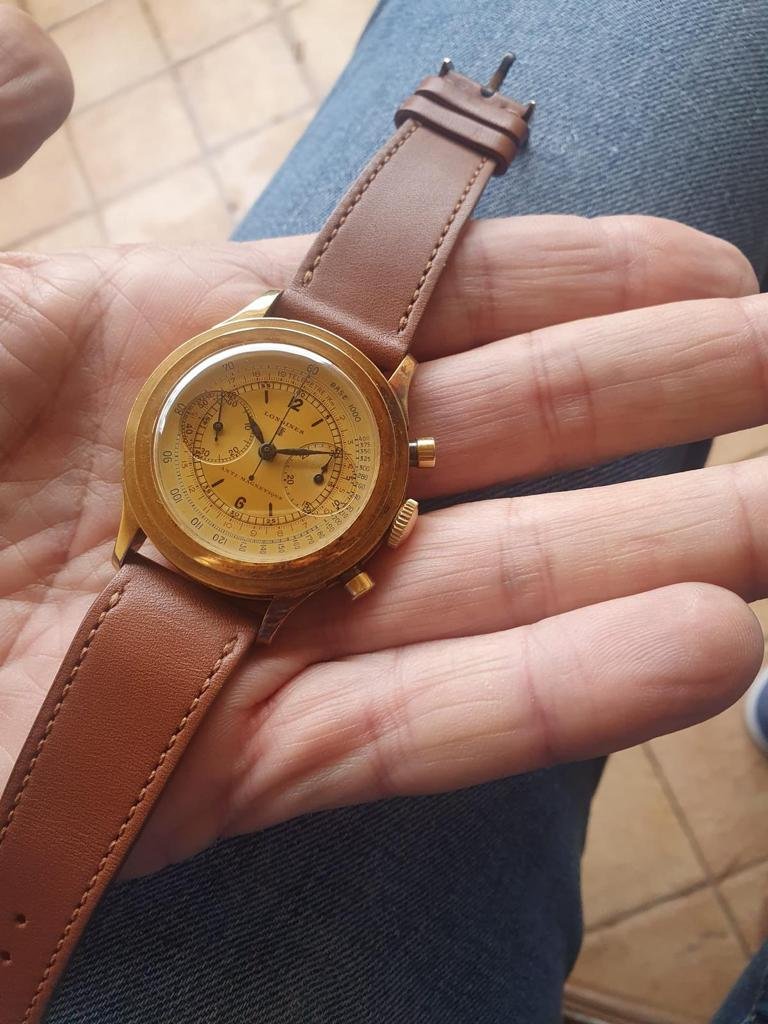
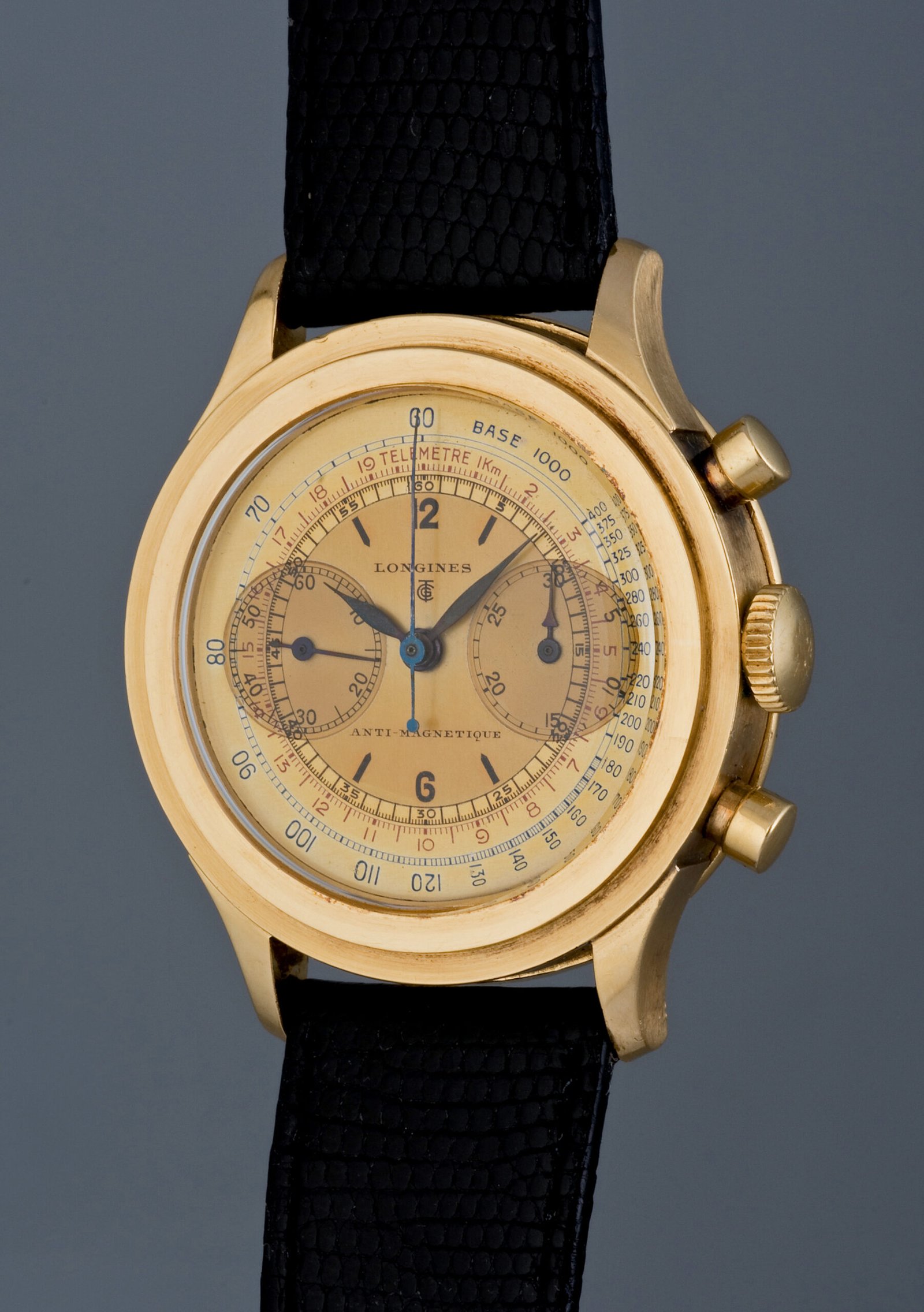
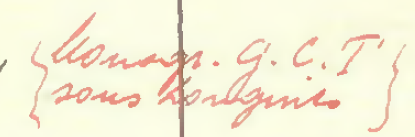
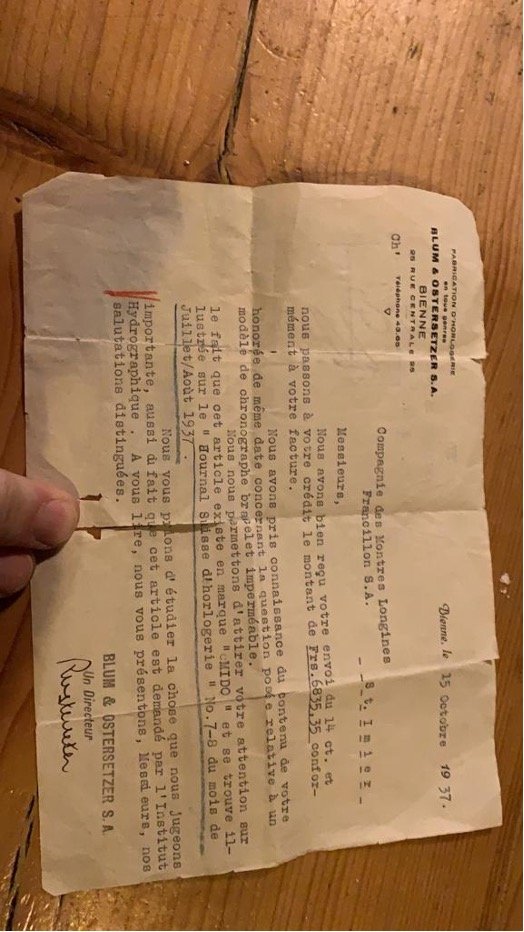
One of two known reference 4270’s (one of 5 ever made) with a gold 18kt waterproof case.  This one all matching and with a two-tone champagne coloured dial, by Stern Freres.  Although it doesn’t have the same mushroom shaped pushers, it shares many characteristics with the steel version, most notably the hard pressure waterproof case-back and step-case design.  As its as gold case, the lugs have a different construction. To that of the steel version.  Undoubtedly one of the most beautiful and important 13ZN ever seen on the market, basically the only gold ‘Mushroom Pusher 13ZN’ in extraordinary condition seen. Although the pushers aren’t the same shape, we can assume they used a similar waterproofing system as seen in the patent above and in all other 4270 variants.  Most likely a special-order watch, as was often the case during the period that they would receive special orders from certain important retailer clients, (but this is just conjecture).  Also of note, the mysterious ‘GCT’ logo on the dial under the Longines font.  Seen on some other time only Longines from the period, also a Record watch, Eberhard and Movado from the same period. What the logo means is still a mystery (we are sure it is not Greenwich Civil Time). We believe the connection to be Italy, as all the watches (with this logo) were sent to Italy more specifically Milano (the Longines main agent in Milan being Ostersetzer).

Through Longines archives we were able to deduce that the logo is actually G.C.T.  We had found this using another time only watch showing the same logo below the Longines font. And cross referencing with LEA.  The meaning still remains a mystery.  Most likely a retailer.

Order 2191.

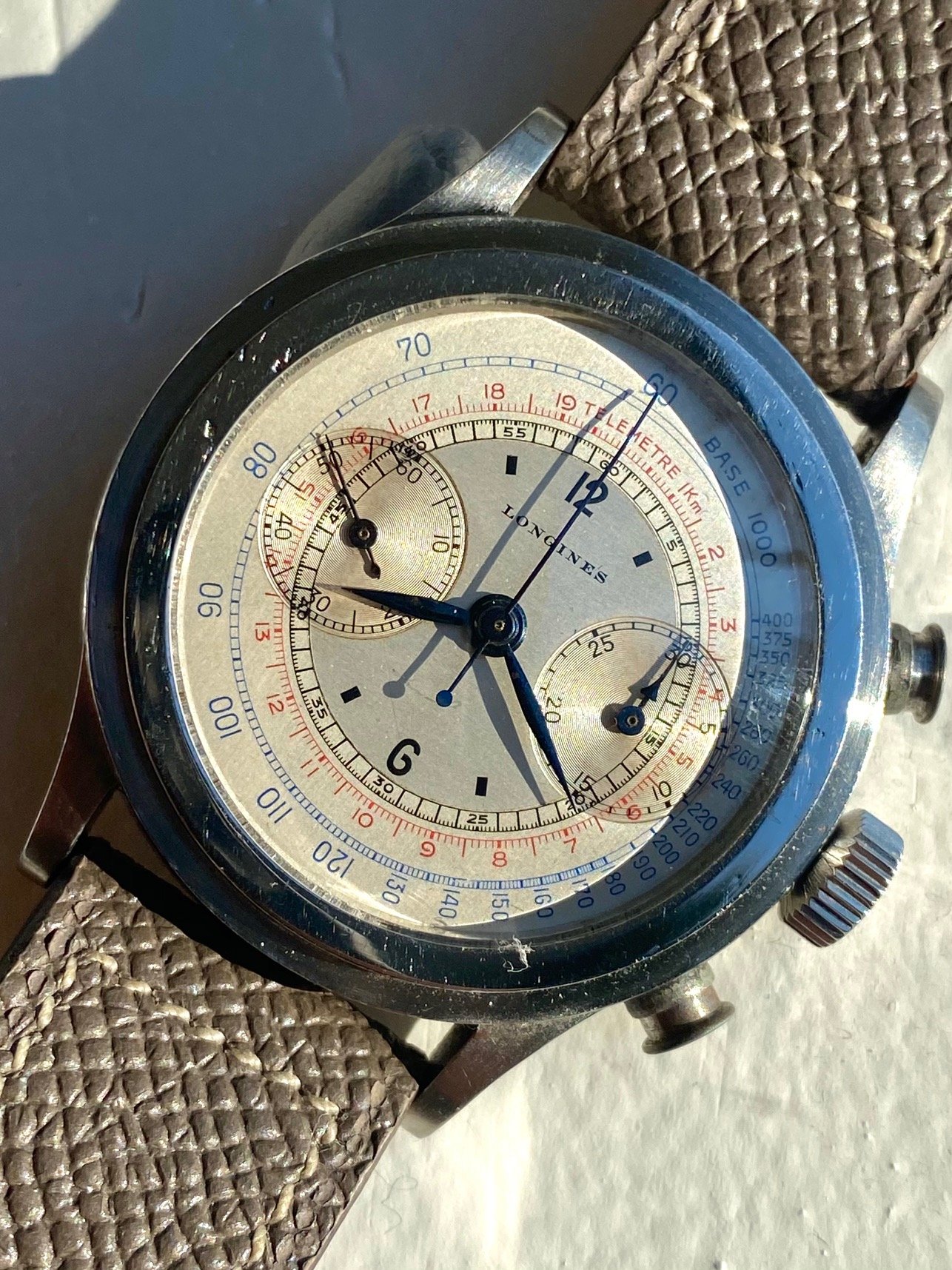
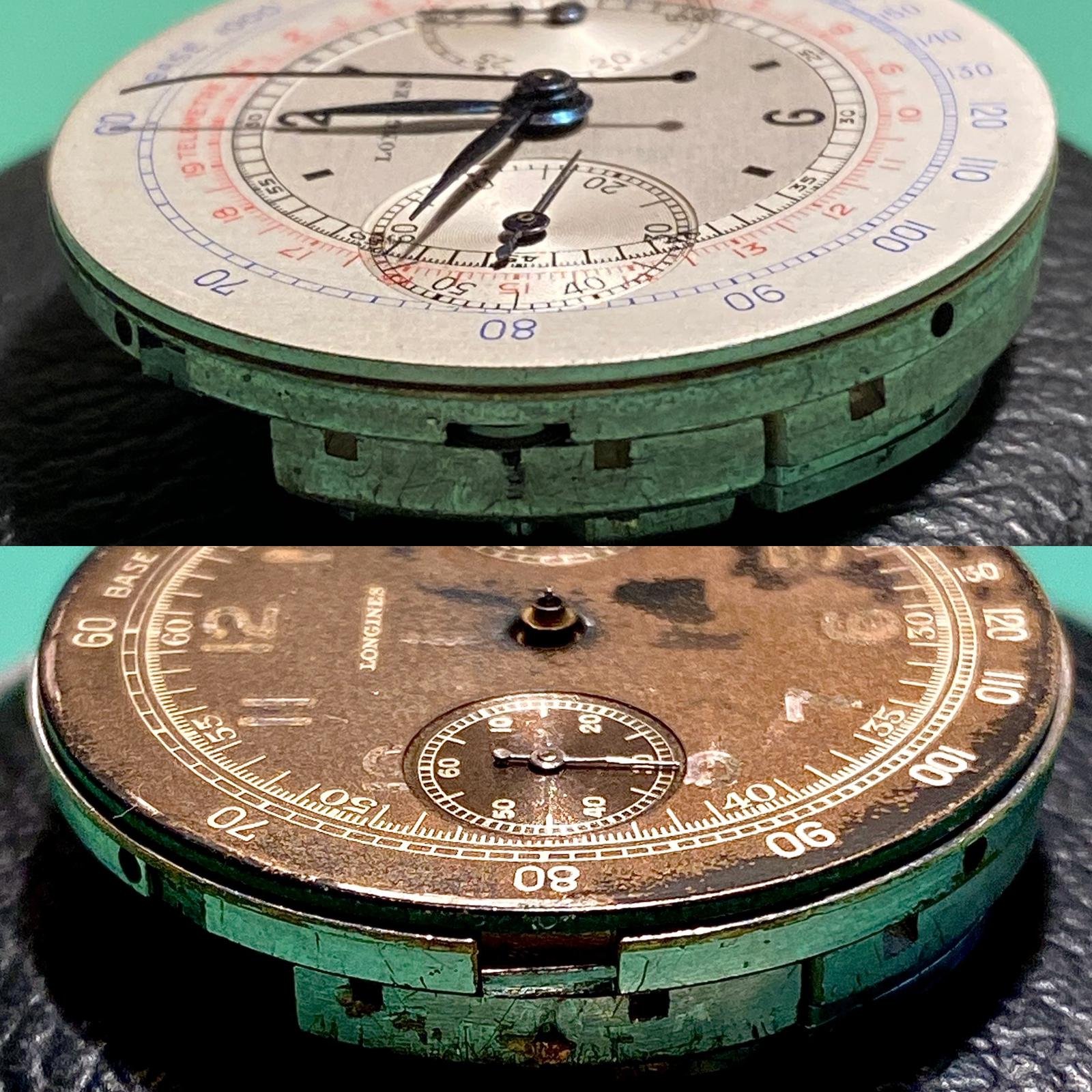
An extremely rare (one of 4 known) reference 4270 with order number 2191.   Two-toned matt silvered dial by Stern Freres, with black Arabic numerals at 12 and 6 index’s and baton index at 1, 5 7 and 11.  Also, tachymeter and telemeter scales, for calculating average speed and average distance respectively.

Interesting to note that all Mushroom Pusher 13ZN so far with order number 2191 (around 4 seen on the market so far) all have been sent to Chile, the serial range are also all very close (5,8xx,xxx).  The style in dials can vary in their design as is the case across all the order numbers.

Info from Longines archives. – ‘Wrist-chronograph in stainless steel bearing the reference 4270., the order number is 2191.   It is fitted with a Longines manually wound mechanical movement, calibre 13ZN and was invoiced on 30 November 1940 to the company Weil, which was at that time, our agent for Chile’.

2191 George Case Back
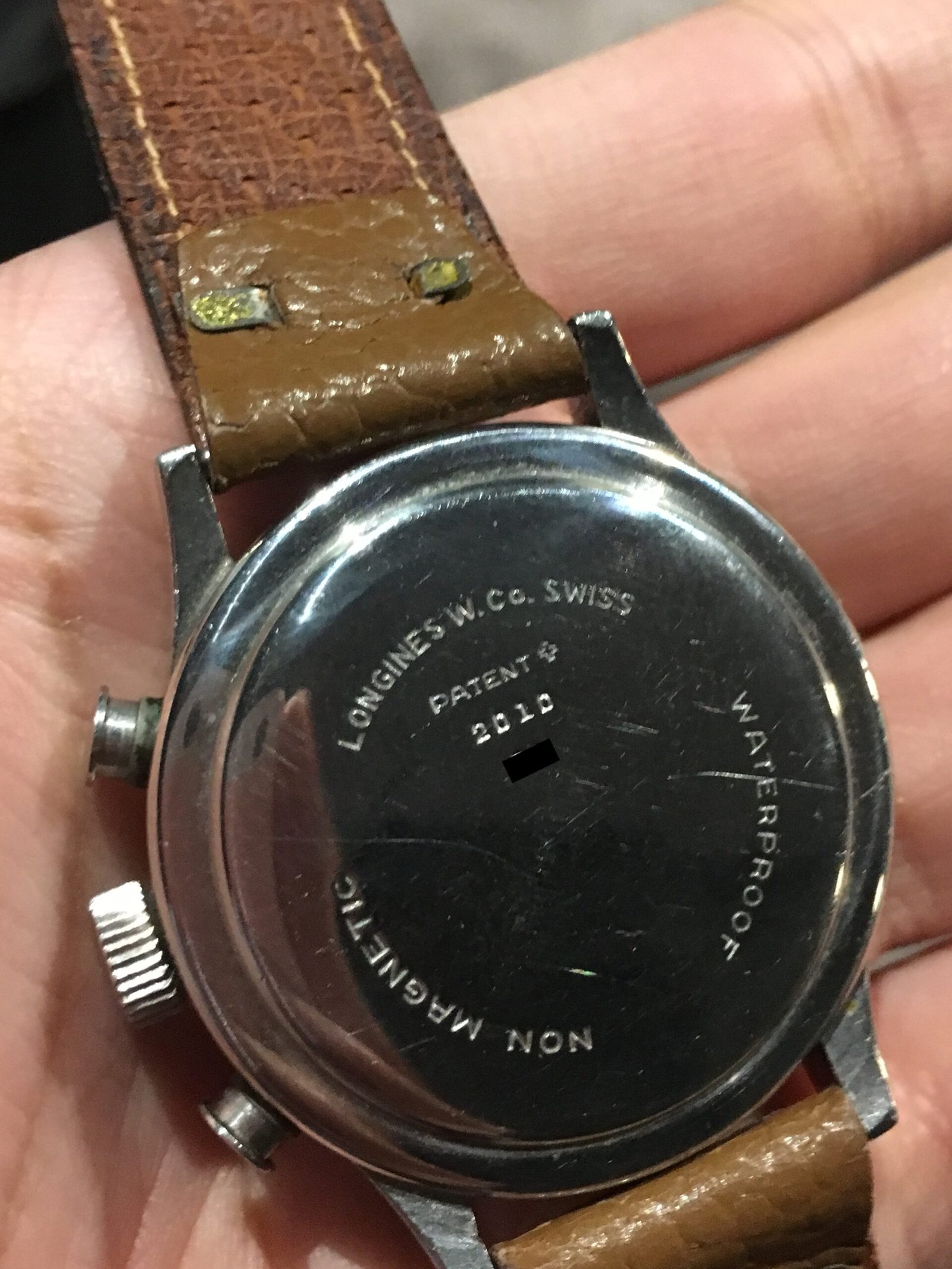
Stainless steel hard pressure case back, stamped ‘Longines W.Co. Swiss’ along with ‘Waterproof and Non-magnetic’ stamping. Also stamped with order no 2191 along with a two-digit number matching on the upper left lug (also stamped). Unlike order 2010, where Patent + Pending is stamped on the outer case back, here with order 2191, Modele + Depose is stamped on the inner case (as in registered patent).

Order 2010

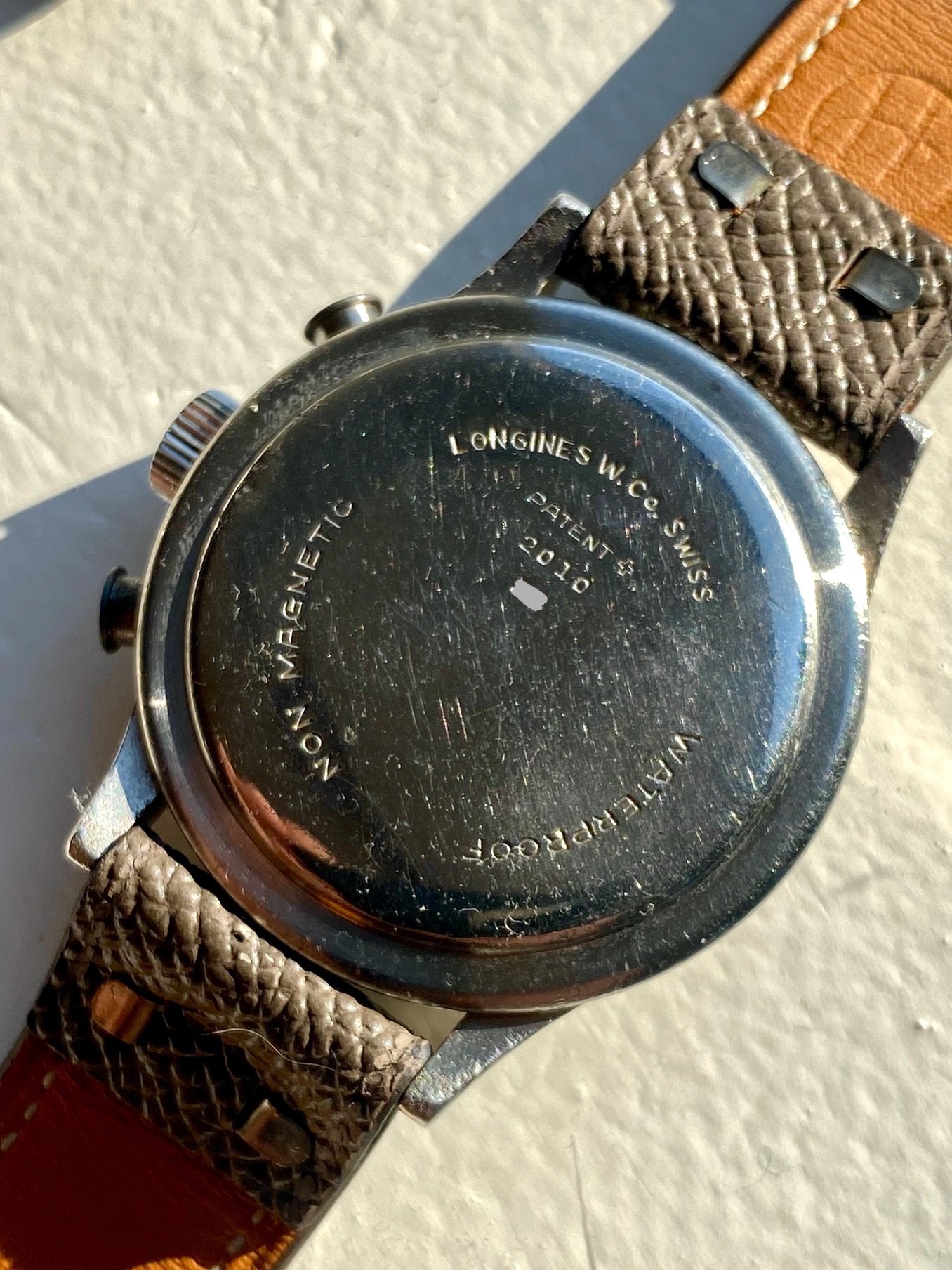
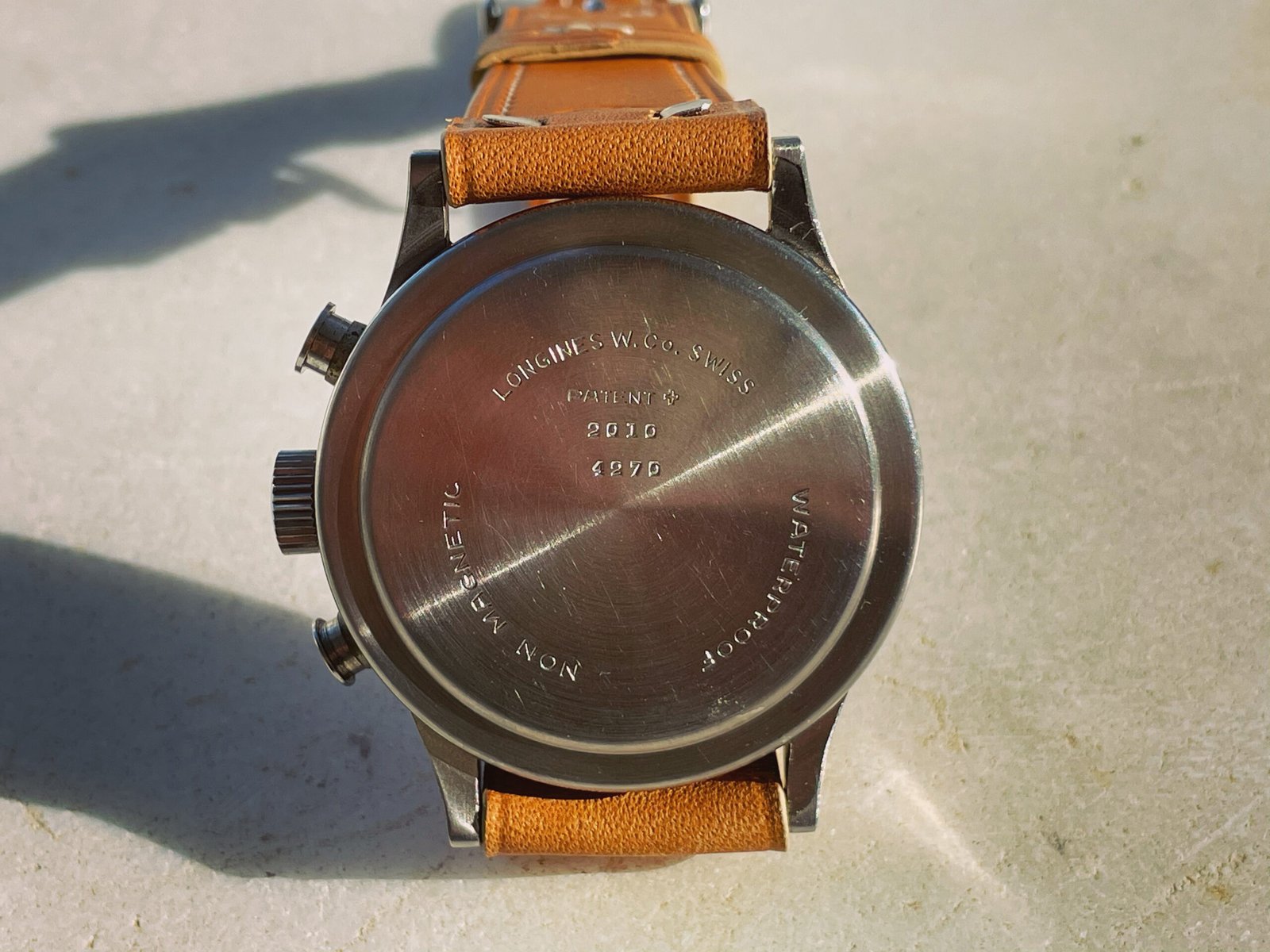
A great example of an order 2010.  Probably those with order 2010 have the nicest caseback with the Patent + marking also on the outside (in reference to the patent re the pushers that was still pending mentioned above).  Interesting to note that order 2010’s do not have waterproof pairing numbers stamped on the lugs. This one has a two-toned matt silvered dial in amazing condition, again by Stern Freres, with black Arabic numerals at 12 and 6 index’s and baton index at 1, 5 7 and 11. Also, tachymeter and telemeter scales, for calculating average speed and average distance respectively.  The dials are 29.5mm in diameter. The serial range for order 2010’s are 5.58-5.6xx,xxx.

2010 back
Longines W. Co. Swiss’ and Patent + on case back. Order no 2010.

Another beautiful example of order 2010, this one with an extremely rare, glossly black gilt (galvanized) dial by Stern Freres. Note the scales and indexes are gilt, whereas the Longines font has the white graphic. 2010 case-back again with Patent Pending.

Unique example with both Cliché 4270 and order 2010 on case back

Longines-ref-4270-batch-2010-3
As is the case with many of these watches seen, there are a few anomalies, this one order 2010 with the Cliché also stamped on the case back.
Longines-ref-4270-batch-2010-5
So far, a unique example of order 2010, with the cliché also on the case back.

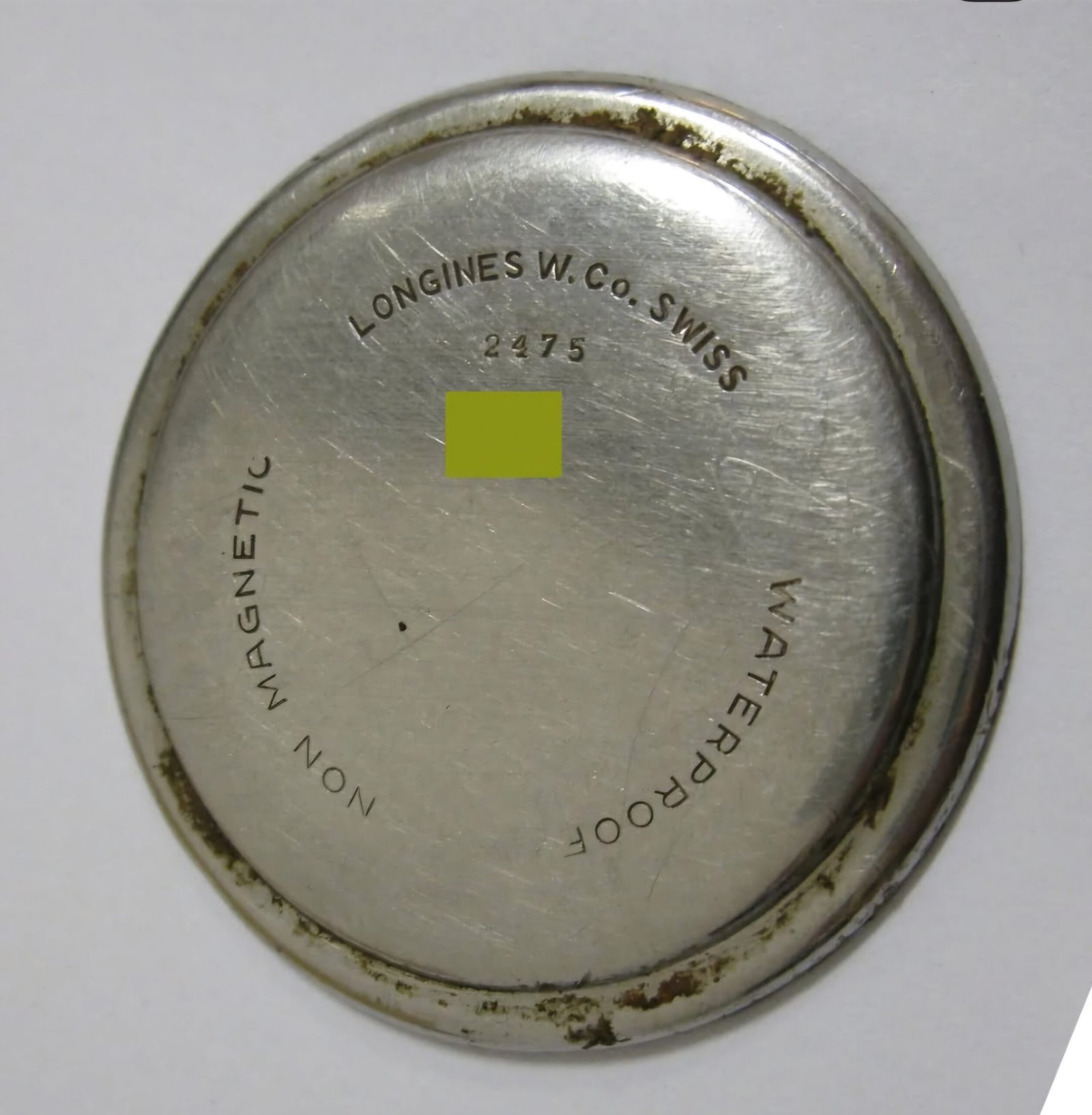
Order 2475

Another very interesting version, with order no 2475.  One of two 2475 seen on the market.  This one shown has some very interesting characteristics.  Note order 2475 is the very last of the Mushroom Pushers made.  Therefore the serial numbers are late dating to 1941 (5,981,xxx).  The case backs contain the order no, and two-digit number below, along with the stamping Longines W. Co. Swiss.’  Note the absence of stamping ‘Waterproof and Non-Magnetic’.  Order 2475 is the only order number with spring bars instead of the fixed bars seen on all other order numbers.  The hard pressure case back, pushers and thick waterproof crown still use the same system.  Also, interesting that the clamping system used to secure the movement the case is also different without the double fixing, instead with the clamp as shown below (note this same clamping system is used on the screw back waterproof 13ZN ‘tre-tacche’ cliché 4974).  The dial is also very nice and native, with radium indexes and single scale by Fluckiger (ZJ).
2475 Renato

2475 JAT caseback
Spring bars unique to order 2475, all the other order numbers have fixed bars. Longines W. Co Swiss’ stamp on caseback. Order 2475 stamp.

Above the second known example with order 2475, the second one ever seen on the market.  The serial is only 6 numbers away from the previous 2475 shown, and obviously shares all the same characteristics, i.e spring bars, same fixing clamp (like a tre-tacche), same case back etc. 

The info from Longines states that ‘originally, the serial number identifies a wrist-chronograph in stainless steel bearing the reference 4270 and order number 2475. It is fitted with a Longines manually wound mechanical movement, caliber 13ZN and was invoiced on 14 March 1941 to the company Longines–Wittnauer Company, INC., which was at that time our agent for the USA.

Order 2352

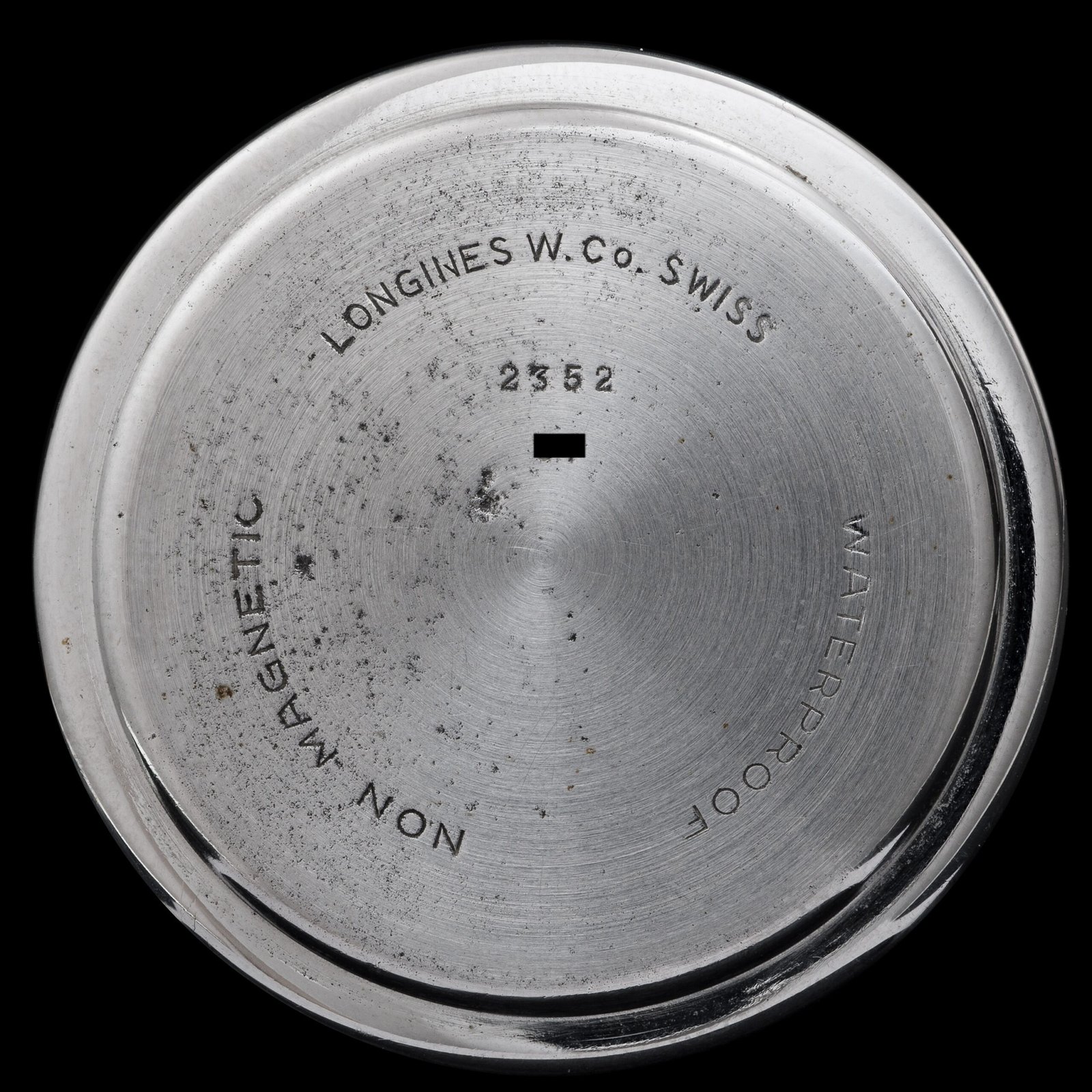
Ref 4270 with order no 2352, also extremely rare, circa 10 examples seen on the market.  Serial range 5,86-5,88x,xxx.  A typical dial layout for this ref with tachymeter and telemeter scales. Two-tone matt silvered dial by Stern Freres, with black Arabic numerals at 12 and 6 index’s and baton index at 1, 5 7 and 11.

Stainless steel snap back. Stamped with the order no and case progressive.

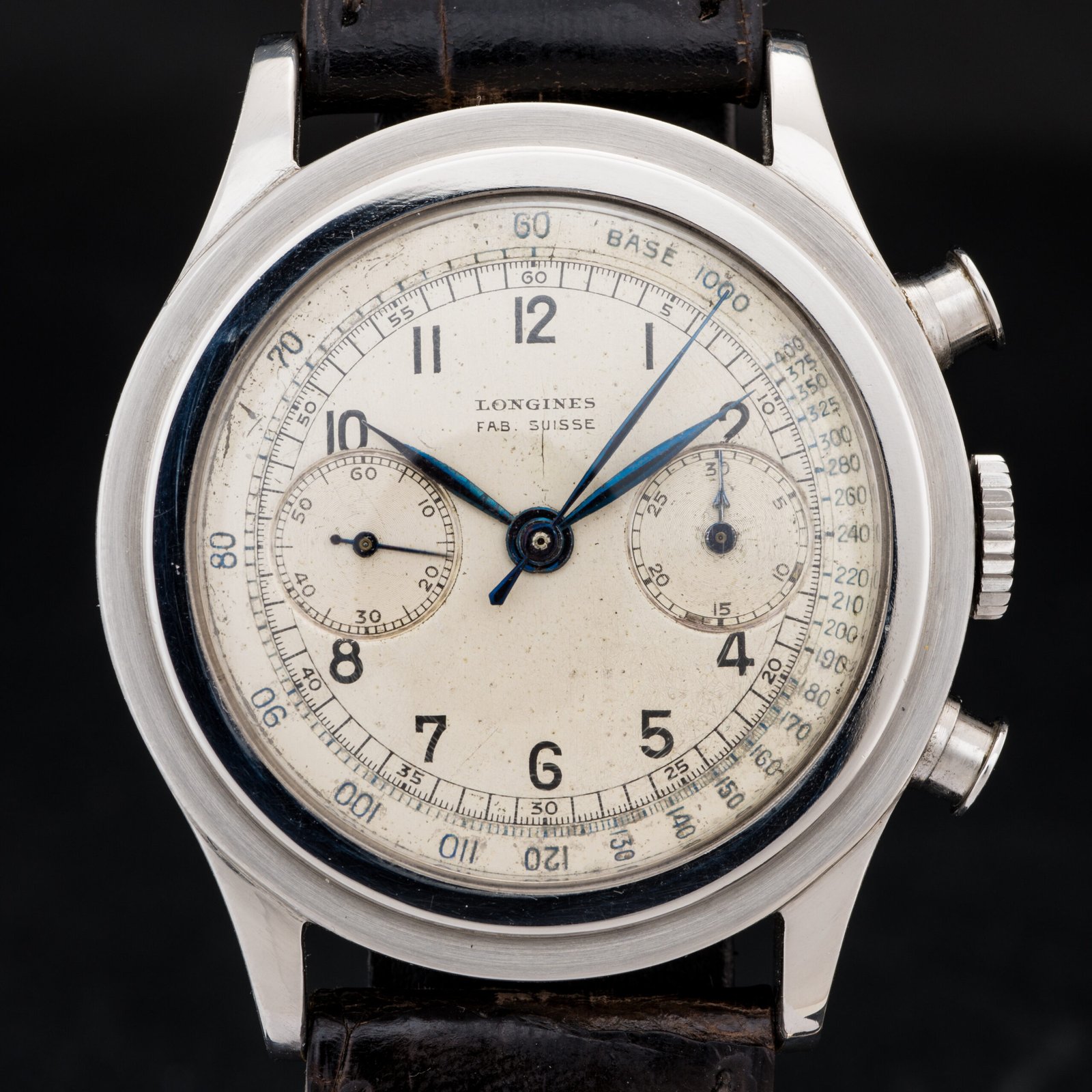
Another beautiful and rare example of order 2352.  Most seen so far are in the 5,86x,xxx serial range.  This one with a matt-silvered dial by Stern Freres, with outer blue tachymeter scale and ‘Fab Suisse’, below the Longines font.  It has often been suggested that ‘Fab Suisse’ on dials means or suggests that the watches were sent to the French market, but at least with Longines, this is not always the case, have seen watches sent to Chile for example where the watch was born with a dial that has Fab Suisse, obviously all confirmed by the Longines archives.  This example was invoiced on 21 May 1940 to the company Sadar, which was at the time our agent in Celje (now Croatia).  Also, very interesting that the watch was born with this dial with Fab Suisse, again highlighting that having Fab Suisse on the dial did not necessarily mean the watch was sent to France.

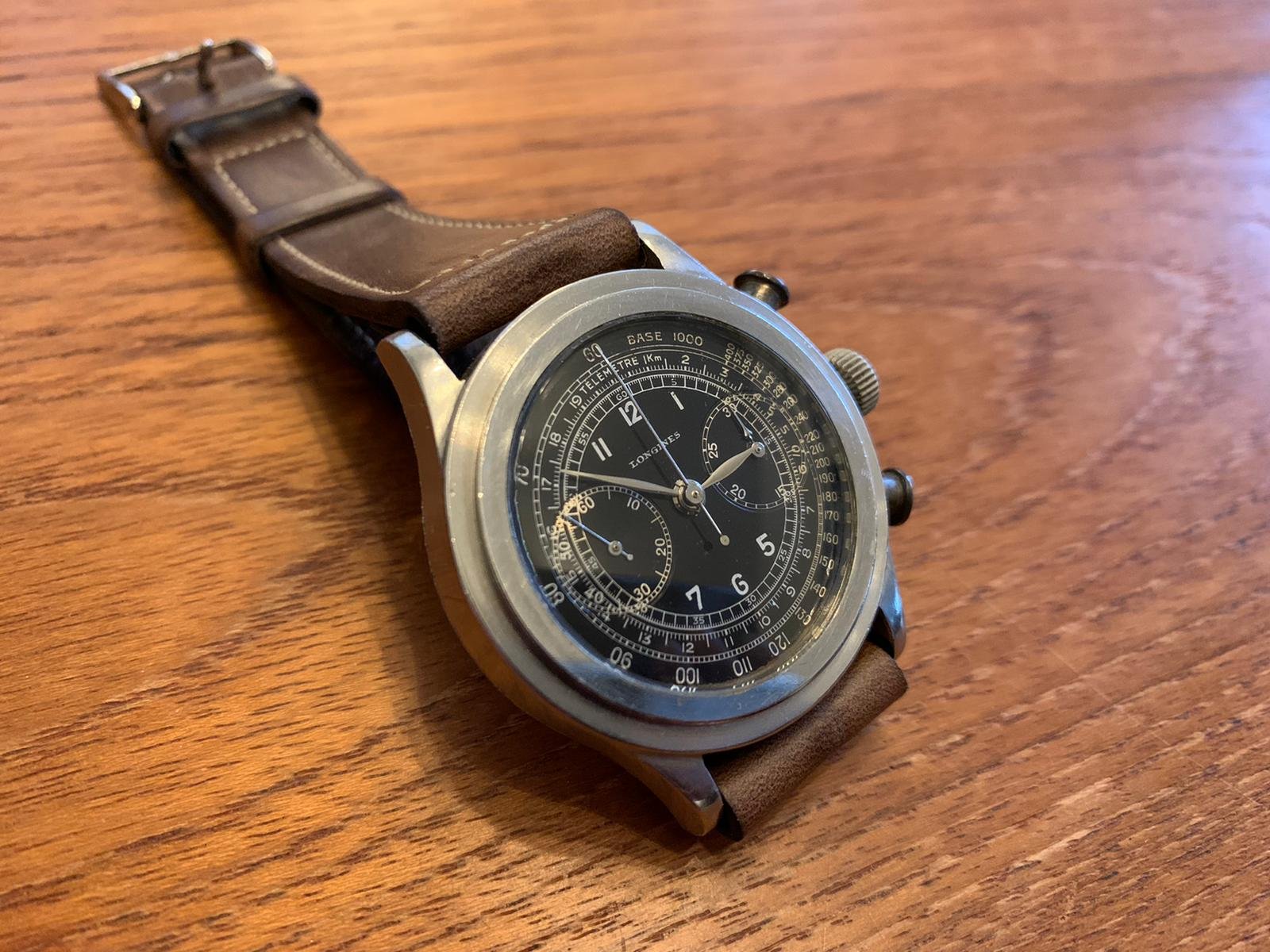
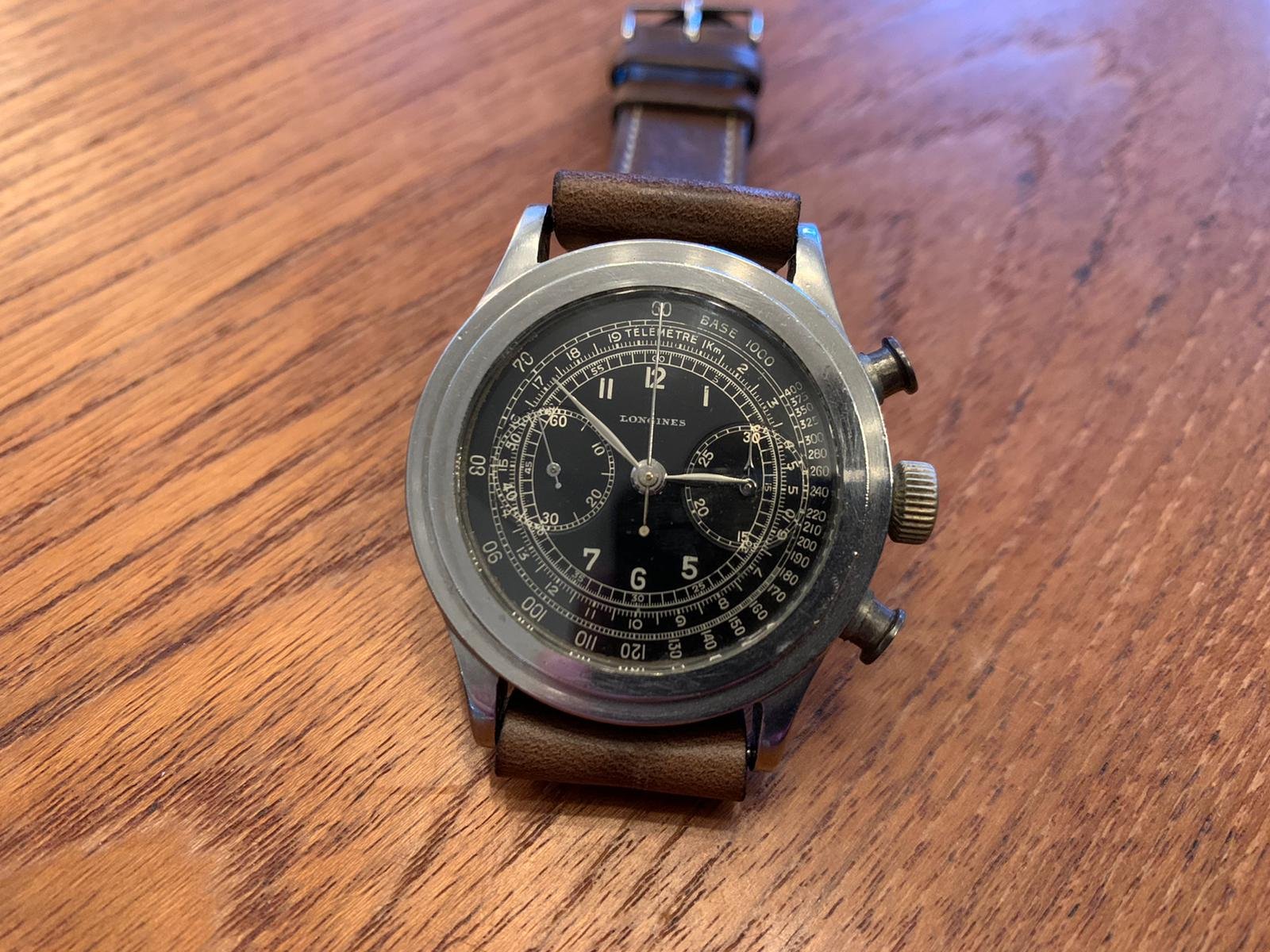
Another extremely rare example of order 2352, with glossy black galvanic (brass) dial with tachymeter and telemeter scales with white graphic by Stern Freres.  The black galvanic dials with white graphic (like this example) are one of the rarest variants and also one of the most desirable, they are nearly impossible to find, especially in the mushroom pusher case.  It should also be emphasised that these cases were all produced by the piece (one by one) and as such there are small variation’s in the cases even within the same order number.

Order 2160

This example with Cliché 4270 and order number 2160.  The case is identical to the other order numbers, two-part case, signature stepped bezel and hard pressure water-proof case-back with ‘lip.  A very nice matte silvered dial by Stern Freres, with tachymeter scale on outer track (29.5mm in diameter.)  The serial range for order 2160 is 5,7xx,xxx.  This example manufactured in 1939 and sold 5th October 1939, to Ostersetzer, who were Longines main agents in Milan.

Interesting to note, on all order 2160, there is no Patent Pending + mark.  Also note this is the only order number where it is engraved on the case-back and not stamped as is the case with all the other order numbers.

The Movement

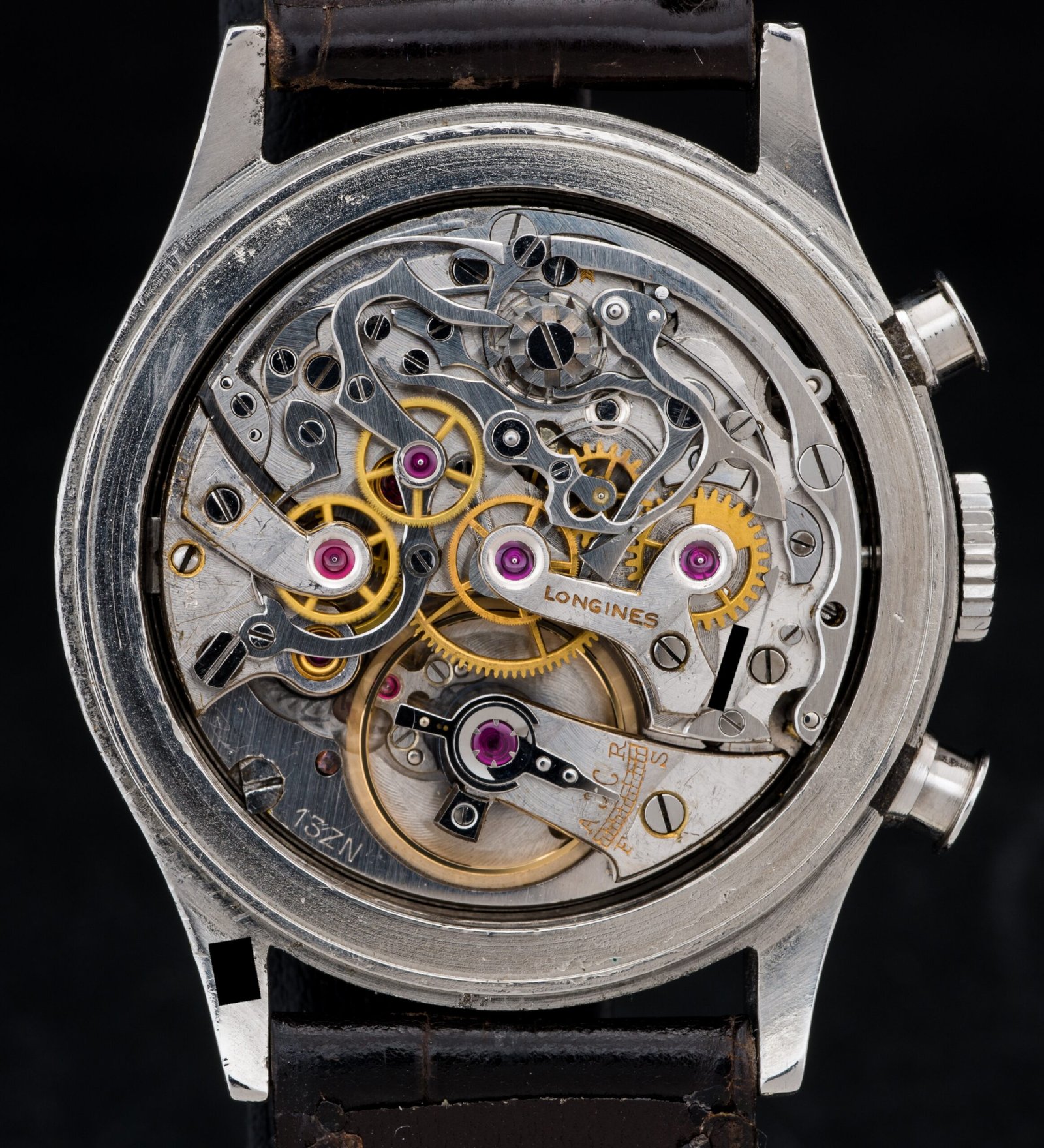
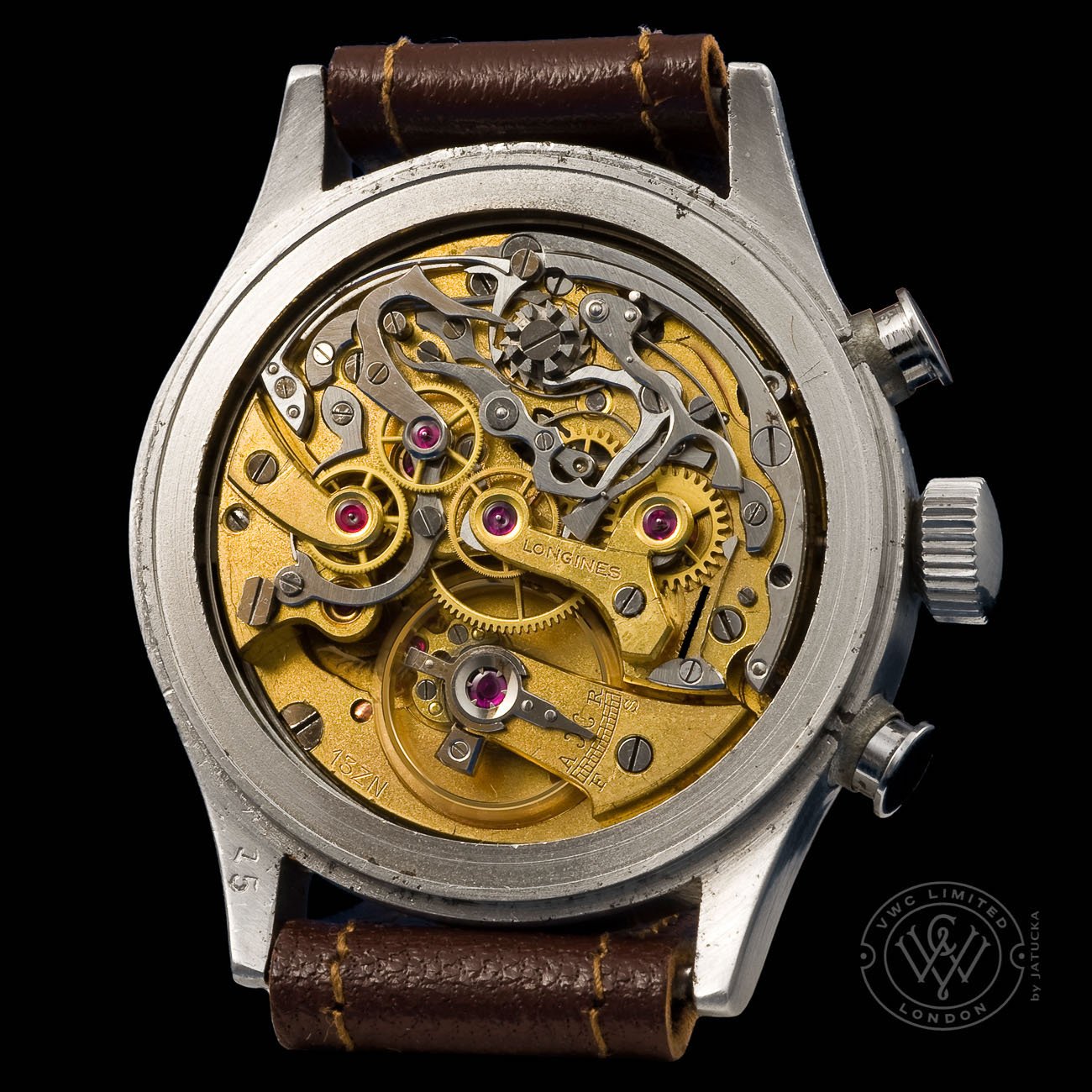
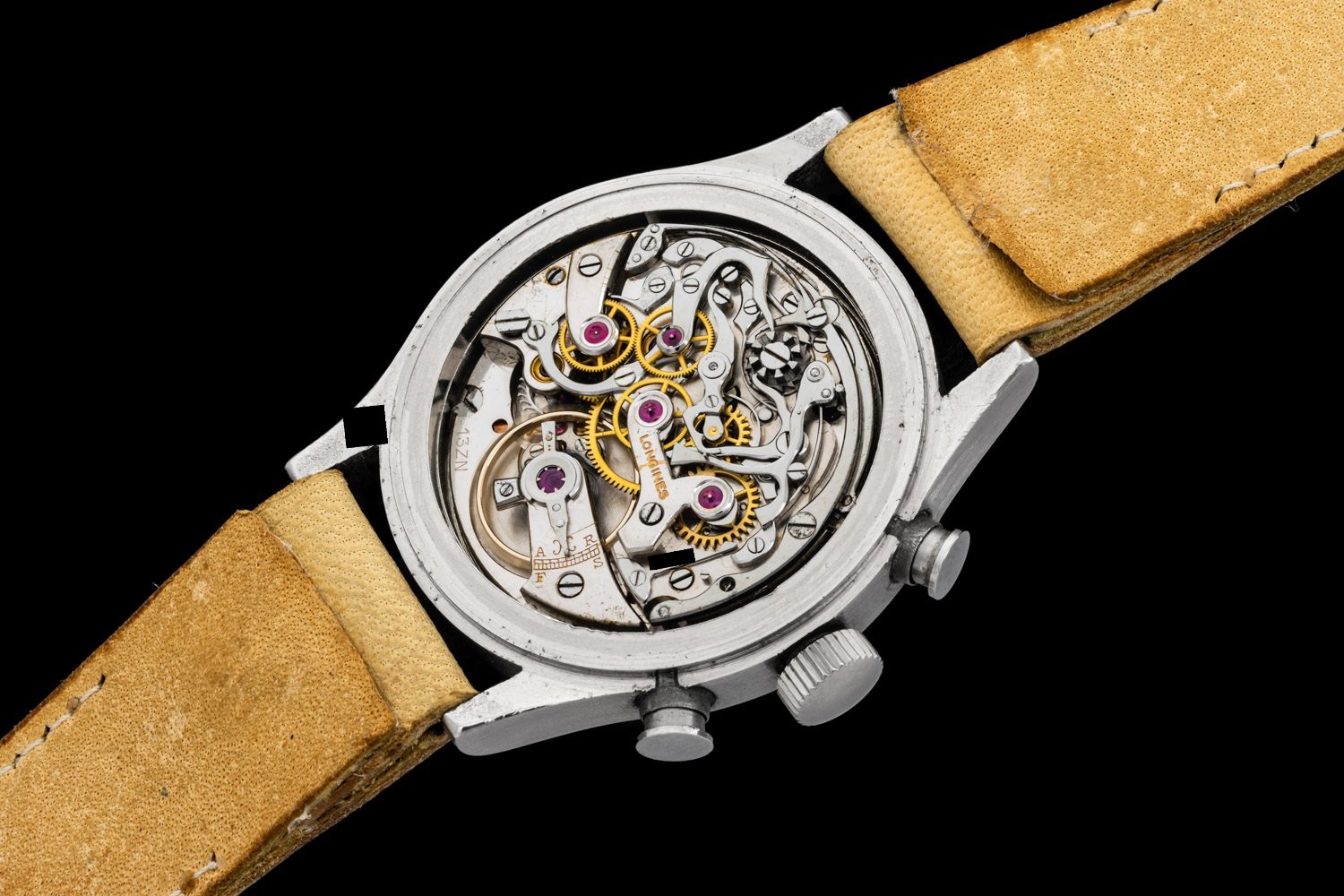
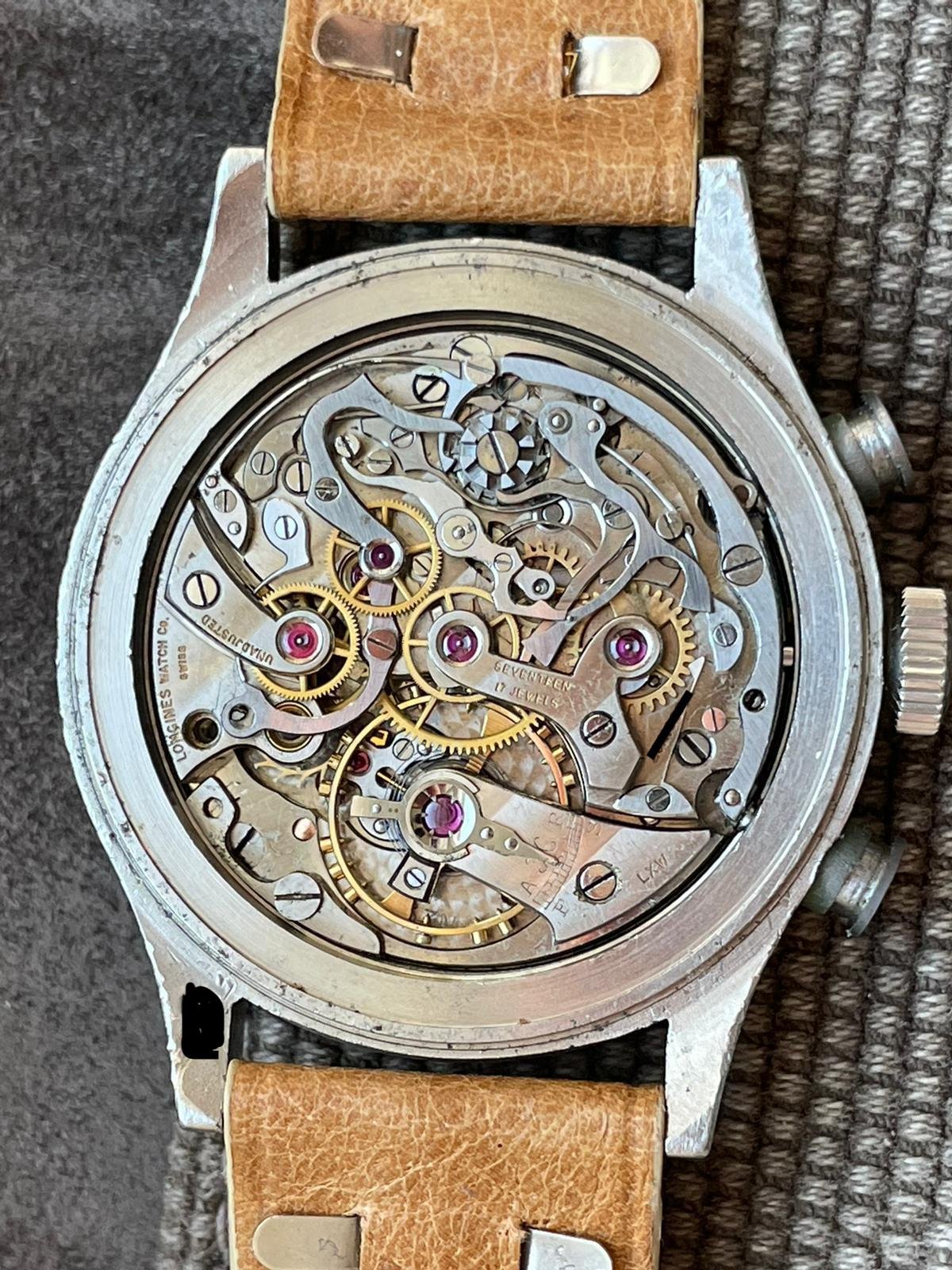
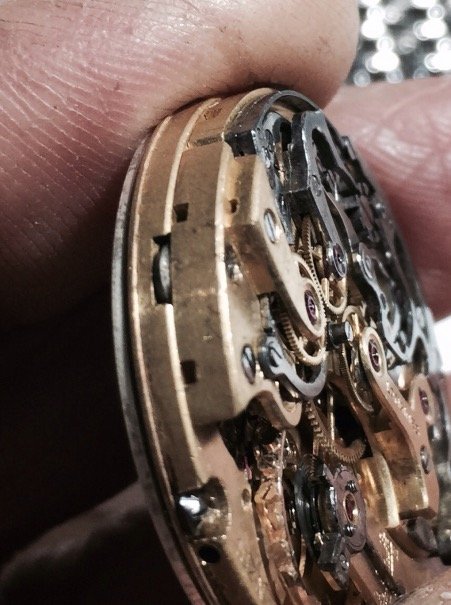
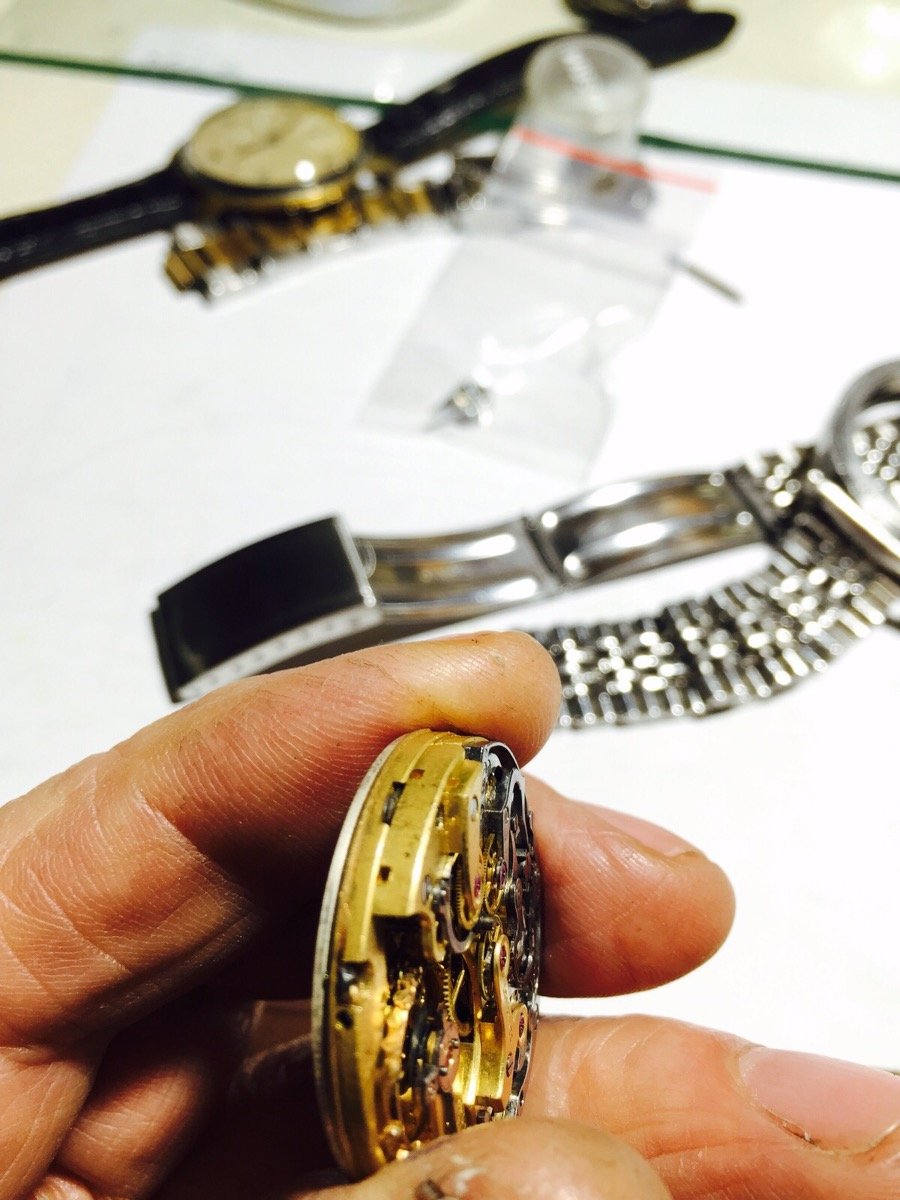
The Longines 13ZN Chronograph “Mushroom Pusher” came with two types of movement finishing, namely those with nickel finished (or rhodium plated) movements as seen on this page, and those with gilt (or galvanic gold) finishing. (see right)

The real difference between a “standard” 13ZN reference and the 13ZN “Mushroom Pusher” is the way in which the movements are attached to the cases. The ref. 4270s have (in most cases, although there are one or two exceptions), a double fix, i.e. an extra fixing clamp, as can be seen in the image here.

Extra fixing clamp (or double fixing) unique to ref 4270. There are some exceptions, note order 2475 have a different fixing clamp see below.

Both types are exactly the same calibre 13ZN and have the fly-back function, with bimetallic balance, 29.8mm in diameter, 6.05mm in height, 17 jewels, 18000vph, with breguet hairspring and shock absorber.

The real difference between a ‘standard’ 13ZN reference and are the way in which the movements are attached to the cases.  They have (in most cases, there are one or two exceptions, a double fix, i.e an extra fixing clamp, as can be seen on the image below.

The estimated serial range for 13ZN with reference 4270 is 5.5xx-6.0xx.

As mentioned previously, for order 2475, the fixing clamp is just below the balance wheel. This form of clamping is also found in the 13ZN “Tre Tacche” (Italian for “three notches”), another extremely desirable variant of the 13ZN

Final Thoughts

The 13ZN Mushroom Pusher or Ombrello, rightly so is one of the most coveted vintage watches from the 30’s and 40’s.  It is unique, both in terms of its rarity and its design, probably the ‘perfect’ size at 37.5mm, but even more so it reflects a pursuit of excellence, a moment in time in which Longines strived to make the best waterproof chronograph possible.  In many ways the birth of the modern chronograph/chronometer as we know it, to top it all off, they are in my opinion some of the most beautiful watches aesthetically that you can find, to find a comparable waterproof chronograph from another brand, I cannot think of one, other than the 1463 Patek which was not to be produced until 12 years later.

Credits and thanks

  • Special thanks to Jennifer Bochud (Longines Musuem Curator) for archive images and info, without whom this article would not have been possible.
  • Special thank you also to Ms Syrte for her kind help with the translation of the patent doc.
  • Glenn Maraconda and Adonya Ouralishman for their detailed images
  • Alfredo Paramico, Auro Montanari and Andrea Foffi for the images of the gold 4270
  • Roberto Randazzo for supplying many images of many of the watches
    Nabil, Guus and Dave for the images of their watches.

References

  • LEA (Longines Electronic Archives)
  • Lachat Stéphanie , Longines Through Time, The Story of The Watch
  • Longines Movement Catalogue no.9 French
  • Gerd .R Lang Chronograph Wristwatches: To Stop Time
  • Zamberlan Renato.

(Extra chapter) The prototype cliché 4813

As mentioned above, Longines did experiment the a smaller cased cliché 4813 with mushroom pushers, and a screw-back (tre-tacche (3 notches case back), but the watch was never put into production.  Reference 4813 would eventually be released without mushroom shaped pushers and a snap back waterproof case with double lip (see story on 4813).